The story
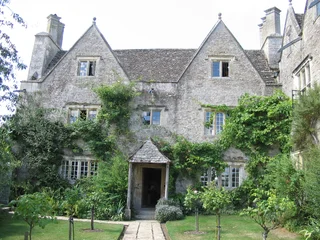
In May 1871 William Morris, the designer and poet, came to see a stone farmhouse by the upper Thames, on the edge of the Cotswolds, and called it heaven on earth. He took the lease jointly with the painter Dante Gabriel Rossetti. That first summer Morris travelled to Iceland, and Rossetti stayed on at Kelmscott with Morris's wife Jane, whom he painted again and again.
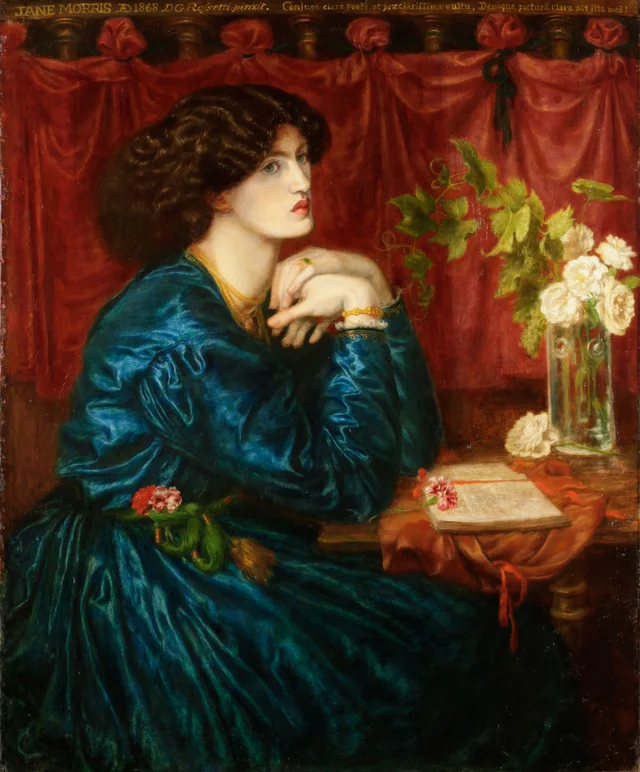
Jane is the face visitors meet in the house today. Rossetti's portrait of her in a blue silk dress, from 1868, shows her at a table with her hands folded under her chin. She designed the loose dress herself, and a Latin inscription painted into the picture says she is famous for her poet husband and for her beauty, and will now be famous for this painting too. Rossetti gave up his share of the lease in 1874.
The house itself was built around 1600 for a farming family, the Turners, and enlarged in the 1660s, which is why the White Room and the Tapestry Room have higher ceilings and grander fireplaces than the rest. Morris kept it until his death in 1896. His London home, and later his Kelmscott Press, took their names from it, and the fruit-stealing thrushes of its garden went into his textile design Strawberry Thief.
His daughter May, an accomplished embroiderer, lived here from 1923 until her death in 1938 and left the house to the Society of Antiquaries of London. The Society reopened it in 2022 after a major restoration, with Morris's own bed still hung with embroideries May designed for it.