The story
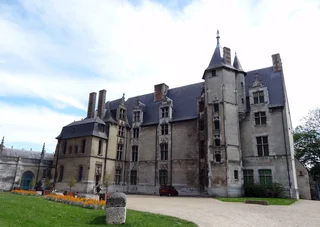
The lowest gallery of the Évreux museum lies below ground, and one of its walls is the Gallo-Roman town rampart itself, on which the southern half of the building rests. That level was dug out in 1985. Above it stands the former bishops' palace, built at the end of the 15th century under Bishop Raoul du Fou and joined by a cloister to the cathedral next door. The museum, founded in 1873, moved in during 1961.
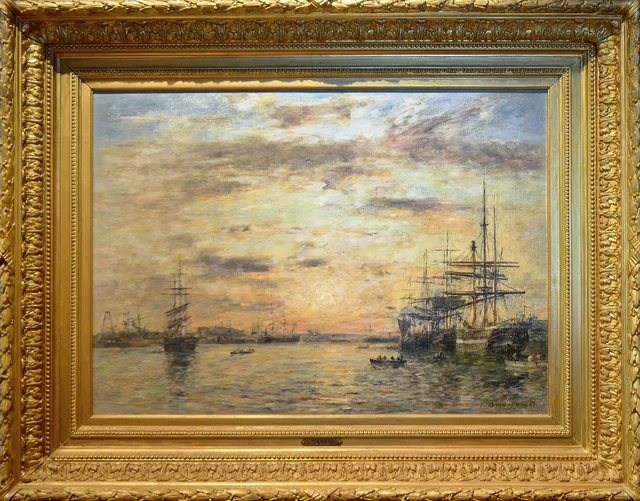
The prize of the archaeology rooms comes from Gisacum, a Gallo-Roman sanctuary about six kilometres from town, where excavators in 1840 found a bronze Jupiter almost a metre tall, cast in six pieces in the 1st century. The upper floors move on through medieval objects and old clocks to 19th-century painting and sculpture, with Hippolyte Flandrin, the religious painter from Lyon, and Eugène Boudin, the Normandy painter of harbours and skies. One Boudin here shows the Eure basin in the port of Le Havre, painted in 1885.