The story
In June 1812 Pope Pius VII arrived at Fontainebleau as Napoleon's prisoner. He had been taken from Rome three years before, and here he was lodged in an apartment of 11 rooms that had once belonged to Anne of Austria, mother of Louis XIV, and treated, for appearances, as a guest. He stayed until January 1814. The palace also shows a version of Jacques-Louis David's portrait of the same pope, painted in 1805, when Pius came to Paris for Napoleon's coronation.
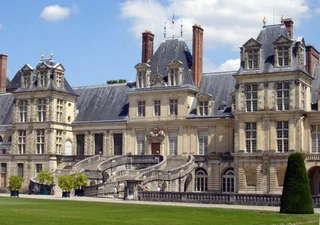
That episode is one layer among many. French kings stayed here from the 12th century, and from 1528 Francis I rebuilt the old castle as a Renaissance palace. He brought in Italian artists, above all Rosso Fiorentino and Primaticcio, and the long gallery named after him, with stucco figures framing painted panels, became the model for what is called the School of Fontainebleau.
Napoleon, who called the palace the true home of kings, left his throne room and private apartments here. In April 1814 he said farewell to his Old Guard in the great entrance courtyard, known ever since as the Court of Farewells. Half a century later the Empress Eugénie arranged her Chinese Museum in the palace, full of objects from Asia.
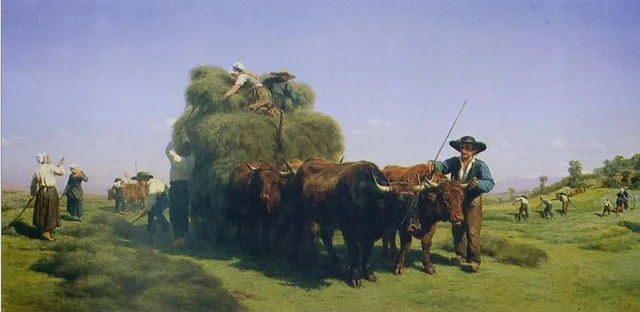
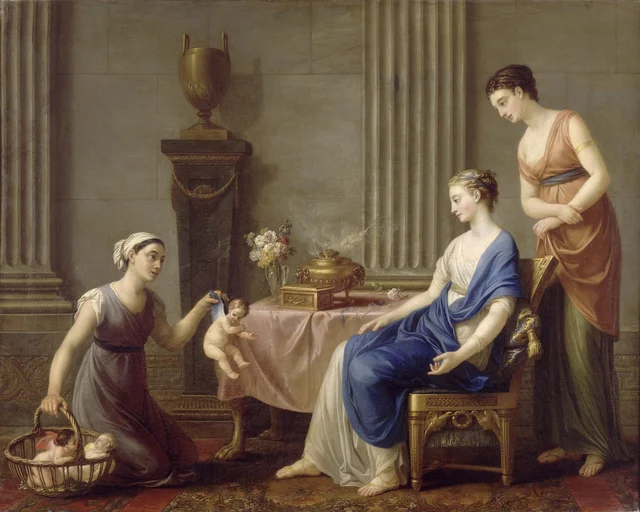
The paintings belong to the same long story. They include Rubens's Aeneas preparing to leave Troy, and The Cupid Seller by Joseph-Marie Vien, a 1763 picture based on an ancient Roman wall painting. Rosa Bonheur, who later lived at the edge of the forest, is here with Haymaking in the Auvergne, shown at the Paris World's Fair of 1855.