The story
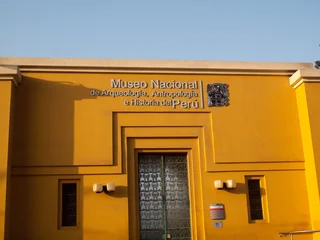
Of the national museum Peru founded in 1822, a year after independence, almost nothing survived. During the Chilean occupation of Lima in the War of the Pacific its collection was dispersed, and the Raimondi Stela, a carved stone slab from the ancient temple of Chavín de Huántar, is said to be the one piece that remained. It is on show here today in Pueblo Libre, along with another Chavín carving, the Tello Obelisk.
The present museum is the result of more than a century of splitting and merging. Revived in 1905 as a museum of national history, it was later divided between archaeology, led by Julio C. Tello, the founder of Peruvian archaeology, and colonial and republican history. The two halves were joined for good in 1992, and the collection now runs from the earliest cultures through the Paracas textiles to the Republic.
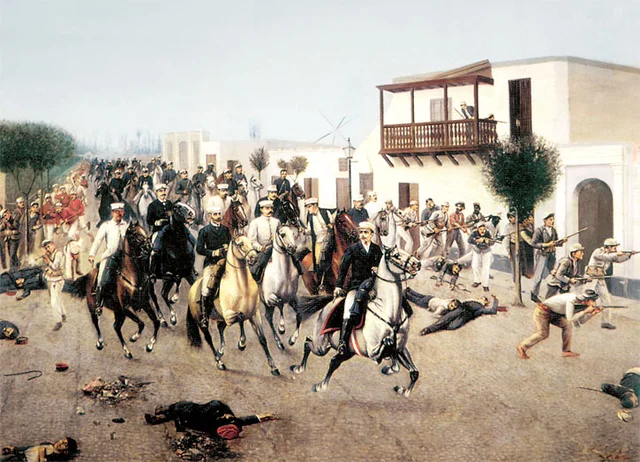
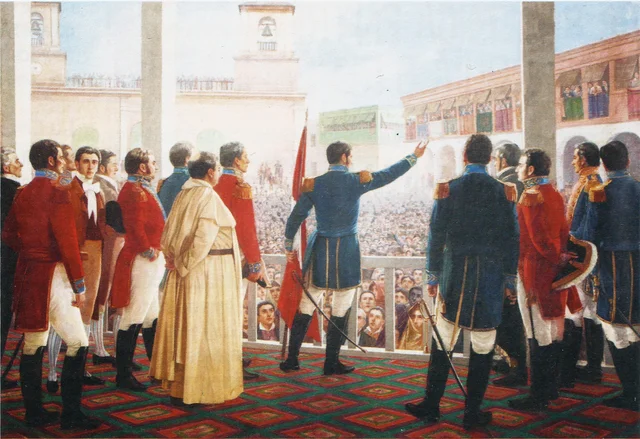
The history galleries are in the old house on the main square of Pueblo Libre where José de San Martín lived in 1821 and 1822, and Simón Bolívar from 1823 to 1826. They hold portraits by José Gil de Castro, the painter of the independence leaders, and large history scenes by Juan Lepiani, among them his Proclamation of Independence of 1904, which shows San Martín declaring Peru independent in Lima in July 1821.