The story
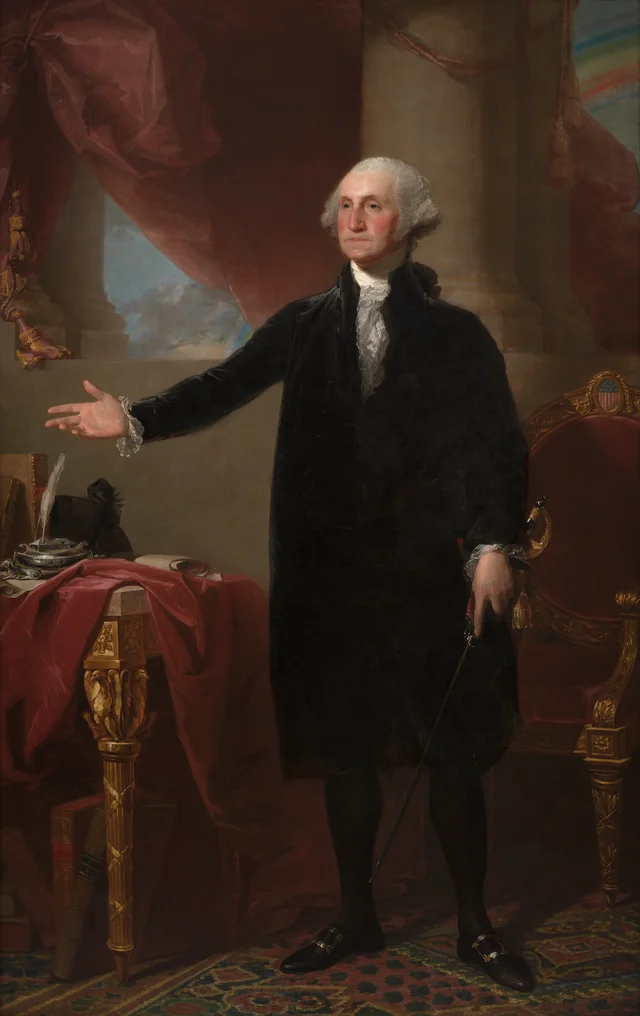
Gilbert Stuart's Lansdowne portrait shows George Washington at full length in a black velvet suit, one arm stretched out as if he were addressing a room. It was painted in 1796 as a gift for the Marquis of Lansdowne, a British admirer of the young republic, and it spent most of the next two centuries in England. When its owners decided to sell, a 20 million dollar gift from the Donald W. Reynolds Foundation in 2001 kept it in Washington, where it now anchors the gallery's exhibition of American presidents.
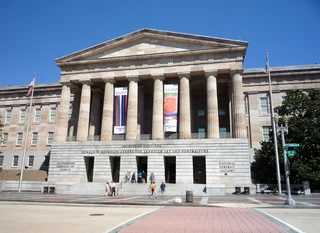
The museum was created by Congress in 1962 and opened in 1968 to collect portraits of the people who shaped the United States. It shares one of the city's oldest public buildings, the Greek Revival Patent Office, with the Smithsonian American Art Museum. During the Civil War these halls served as a hospital, where the poet Walt Whitman sat with wounded soldiers, and in 1865 they held Abraham Lincoln's second inaugural ball.
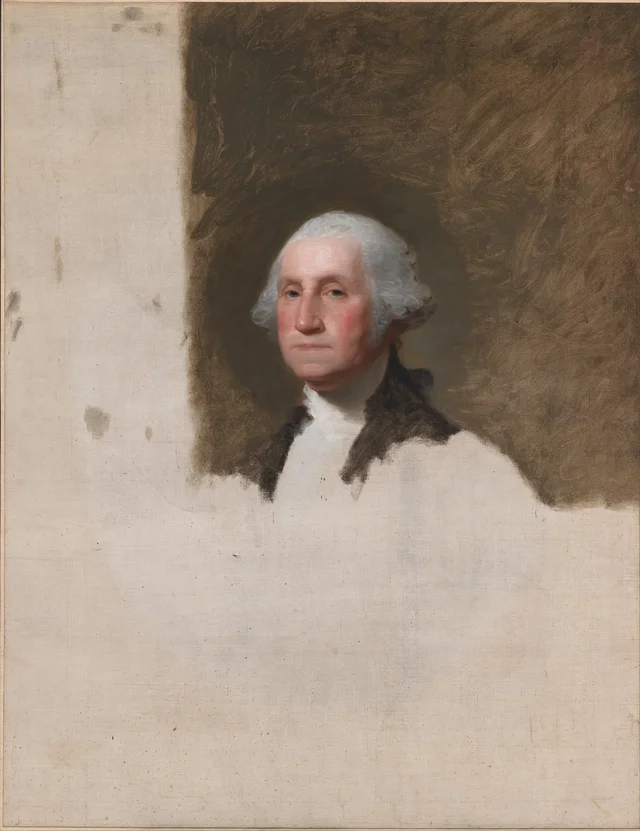
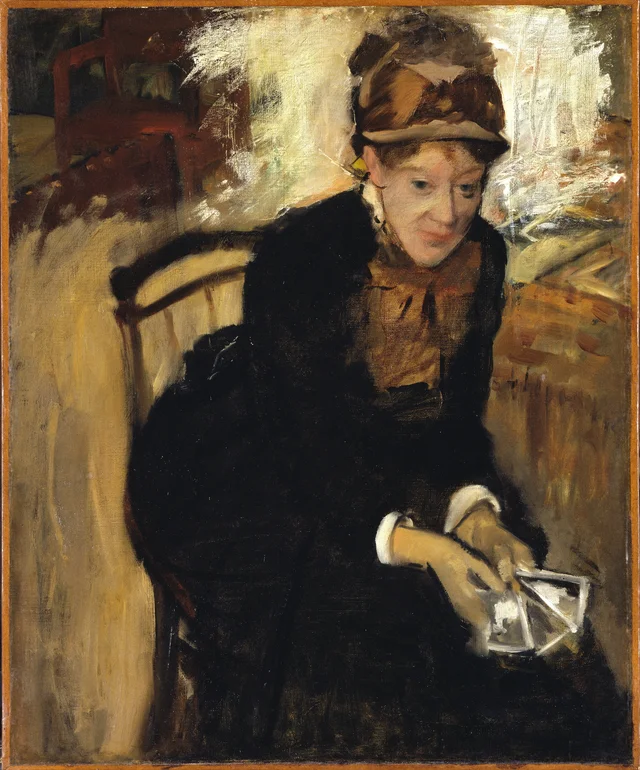
Stuart appears again in the Athenaeum portrait, the unfinished head of Washington that became the model for the face on the one-dollar bill, owned jointly with the Museum of Fine Arts in Boston. Nearby hangs a smaller surprise, Edgar Degas's portrait of his friend, the American painter Mary Cassatt, leaning forward with a fan of cards in her hands. Cassatt disliked it, and in 1912 she asked her dealer to sell it without saying that she was the sitter.