The story
In the garden hall at Mosigkau the paintings still hang the way they were hung in the 1750s, frame beside frame, set into recessed panels in the walls. A Baroque picture hang preserved this completely is a rarity in Europe. Five tall glass doors open from the hall onto the garden.
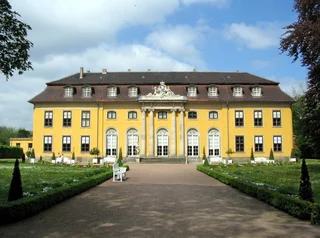
The house belonged to Anna Wilhelmine of Anhalt-Dessau, the unmarried favourite daughter of Prince Leopold I, the Prussian field marshal, who gave her the Mosigkau estate. She had it built between 1752 and 1757 as a Rococo summer residence. The builder was Christian Friedrich Damm, probably working from designs by Georg Wenzeslaus von Knobelsdorff, the architect of Frederick the Great's Sanssouci.
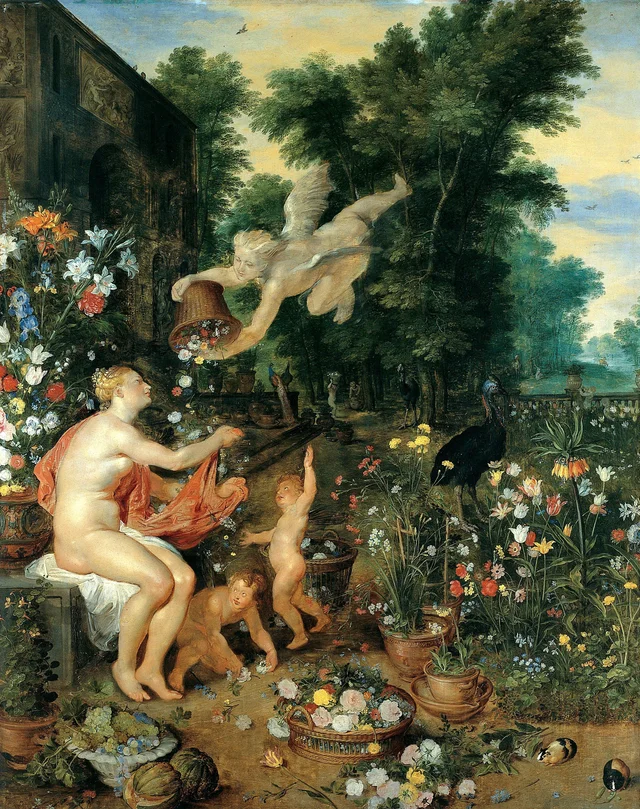
Many of the pictures came through the family's Dutch ties. They go back to Amalia of Solms-Braunfels, wife of a Dutch stadtholder, whose daughter married into the house of Anhalt-Dessau. That is why Flemish and Dutch masters fill the walls, from Anthony van Dyck's portraits of the young princes of Orange to Flora and Zephyr of around 1618, a joint work in which Peter Paul Rubens painted the figures and Jan Brueghel the Elder the flowers.
After the princess died in 1780, the house became a foundation for unmarried noblewomen and remained one until 1945. Their long tenancy left the rooms largely unaltered, and since 1951 the palace has been a museum of Rococo interiors.