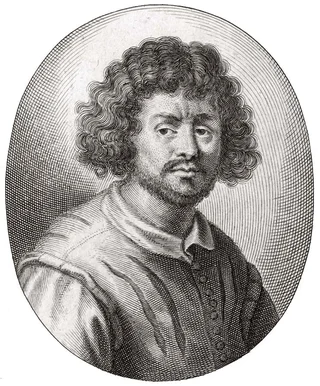
Claudio de Lorena
1600–1682 · Ducado de Lorena · Clasicismo
La historia
En la Roma de mediados del siglo XVII, un pintor del ducado de Lorena se había vuelto tan solicitado que otros falsificaban su obra para lucrarse. Claude Gellée, conocido simplemente como Claude de Lorena, pintaba puertos luminosos y paisajes pastoriles bañados por un sol suave que salía o se ponía, y los cardenales y aristócratas de Europa pagaban mucho por ellos.
Su respuesta a los falsificadores fue un libro. Desde alrededor de 1635 mantuvo el 'Liber Veritatis', el Libro de la Verdad, un álbum encuadernado en el que dibujaba una copia cuidadosa de casi cada cuadro terminado según salía de su taller, anotando a menudo el nombre del comprador y la fecha. Llegó a unos 200 dibujos, y permitía distinguir un Claude auténtico de una falsificación.
En realidad era más pintor de la luz que de los lugares. Las figuras mitológicas o bíblicas de sus escenas suelen ser pequeñas, arrinconadas, mientras la mirada viaja hacia el fondo, hacia un sol brumoso en el horizonte. Ese efecto fijó la idea europea del paisaje ideal durante casi dos siglos, y el pintor inglés Turner, más de 100 años después, pidió en su testamento que dos lienzos suyos colgaran junto a los de Claude en Londres.
Obras
34 obras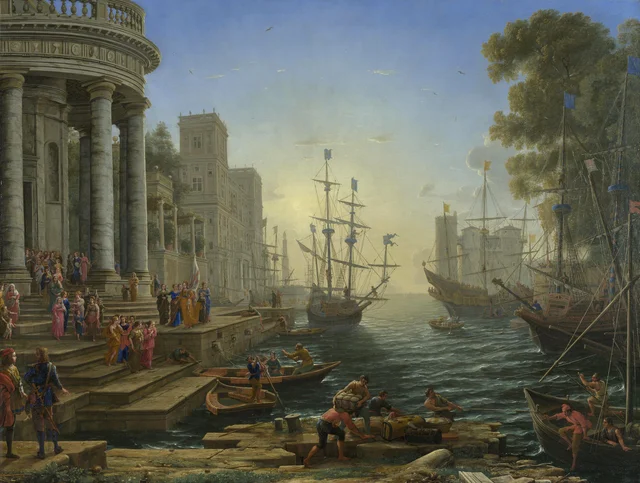 Puerto de mar con el embarque de santa ÚrsulaClaudio de Lorena, 1641
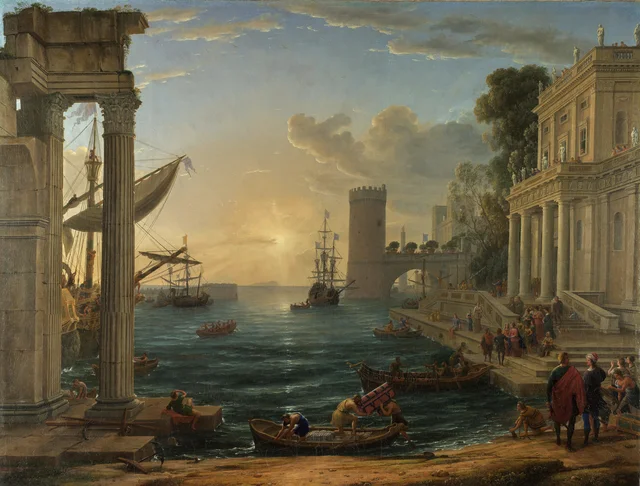 El embarque de la reina de SabaClaudio de Lorena, 1648
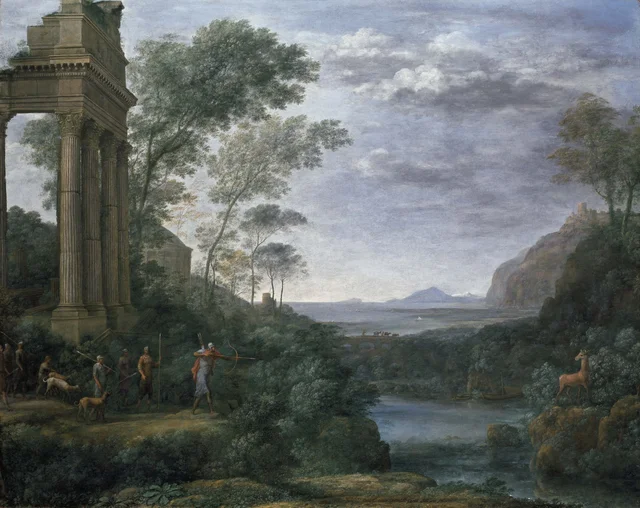 Ascanio disparando al ciervo de SilviaClaudio de Lorena, 1682
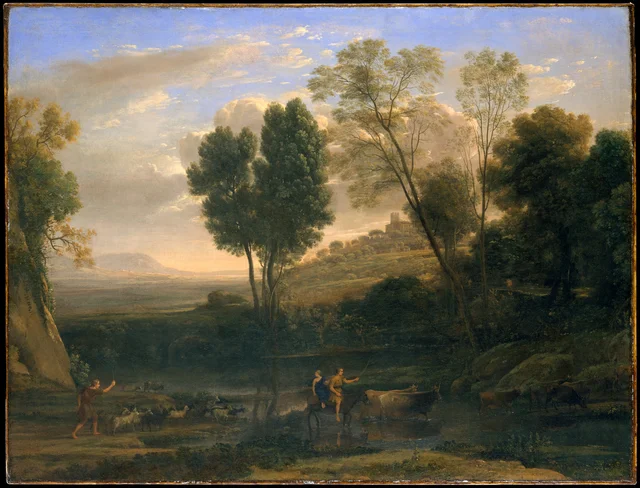 AmanecerClaudio de Lorena, 1646
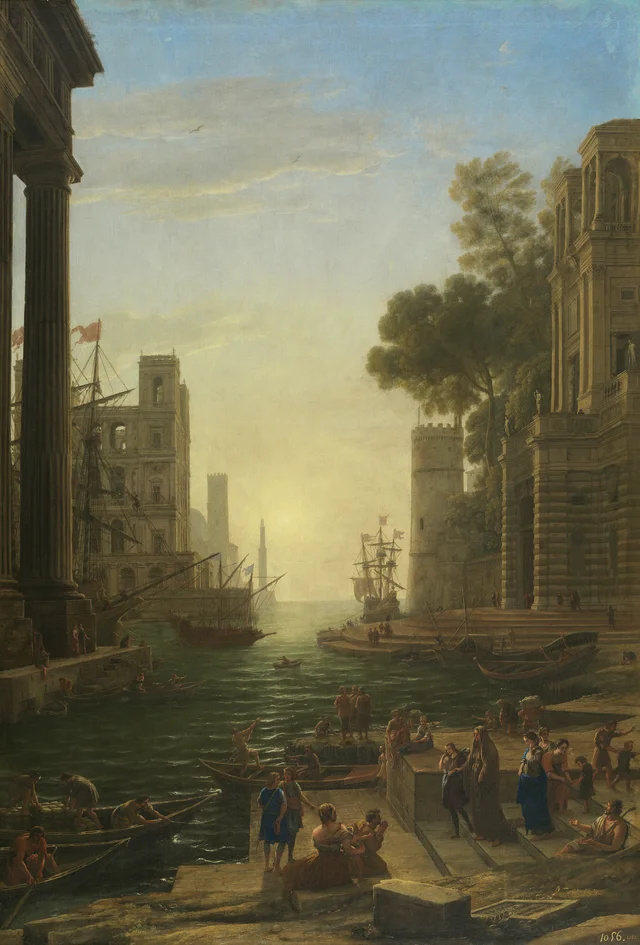 Paisaje con el embarque de santa Paula Romana en OstiaClaudio de Lorena, 1639
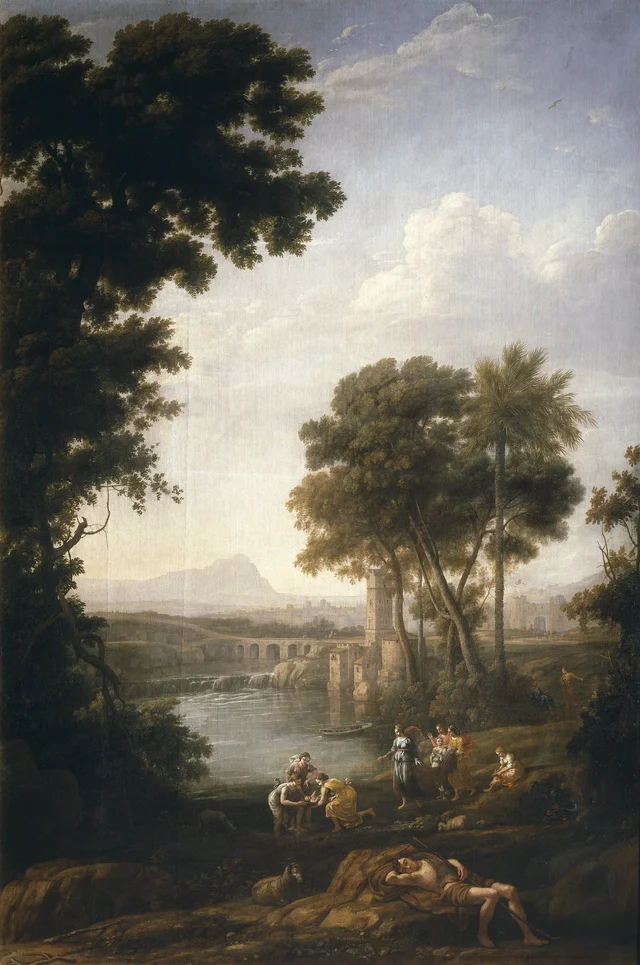 Paisaje con el hallazgo de MoisésClaudio de Lorena, 1639
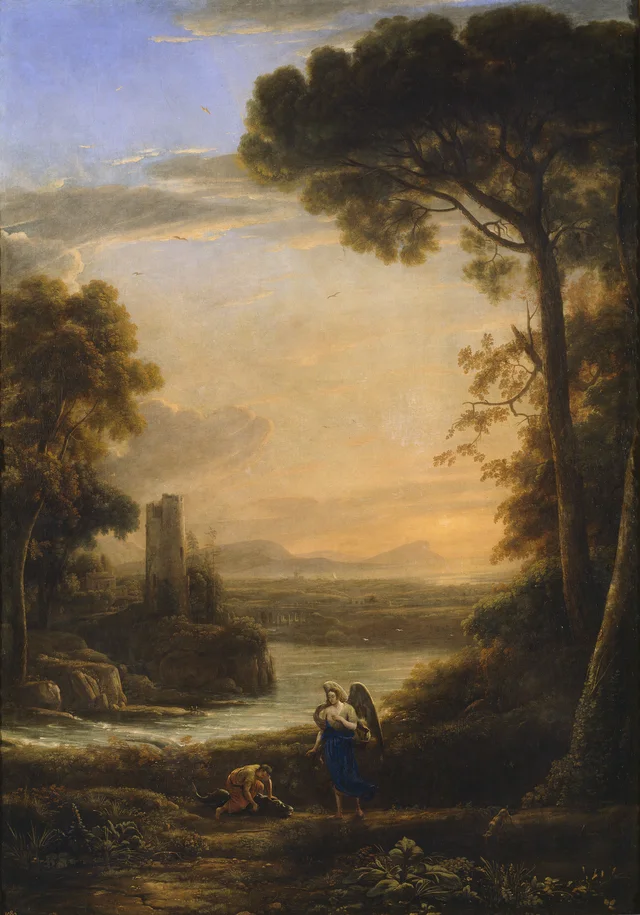 Paisaje con Tobías y el ángelClaudio de Lorena, 1639
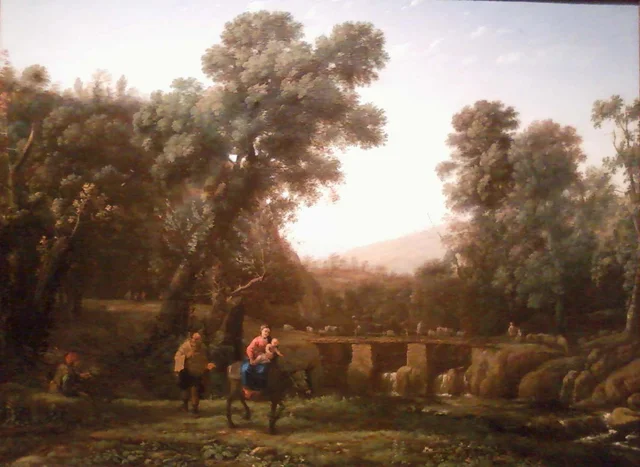 La huida a EgiptoClaudio de Lorena, 1635
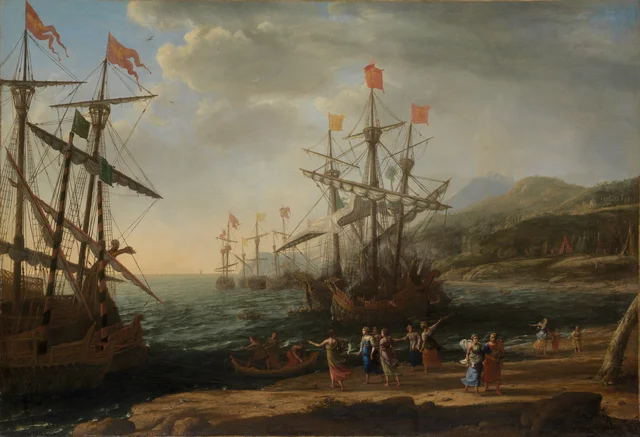 Las troyanas incendiando sus navesClaudio de Lorena, 1643
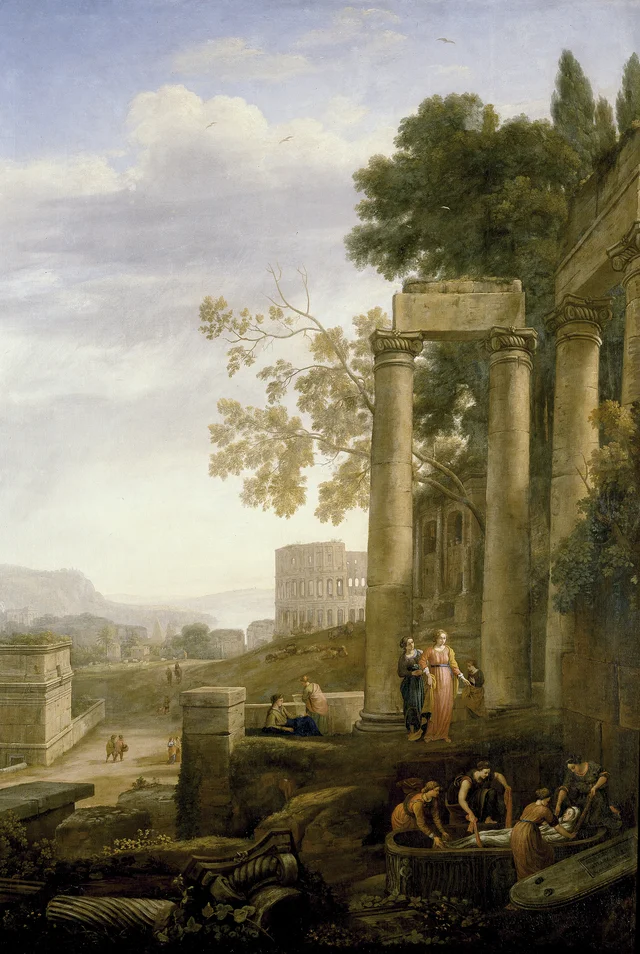 Paisaje con el entierro de Santa SerapiaClaudio de Lorena, 1639
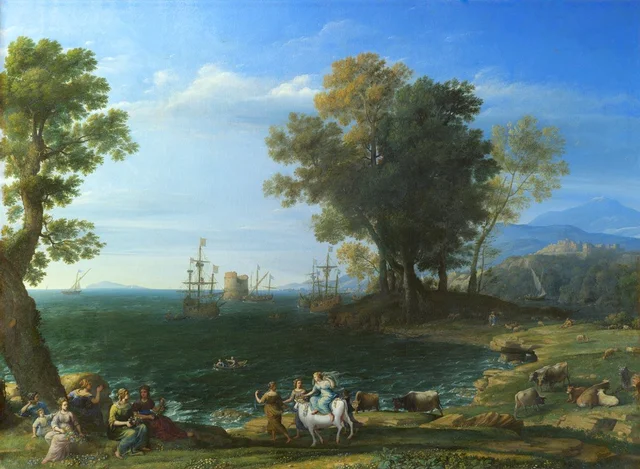 El rapto de EuropaClaudio de Lorena, 1655
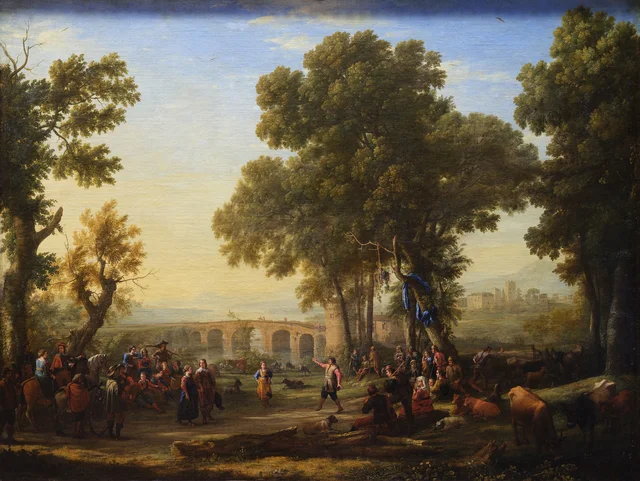 Fiesta en la aldeaClaudio de Lorena, 1639
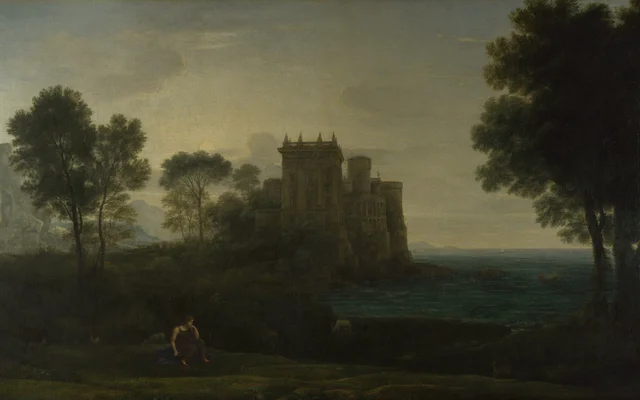 Paisaje con Psique ante el palacio de CupidoClaudio de Lorena, 1664
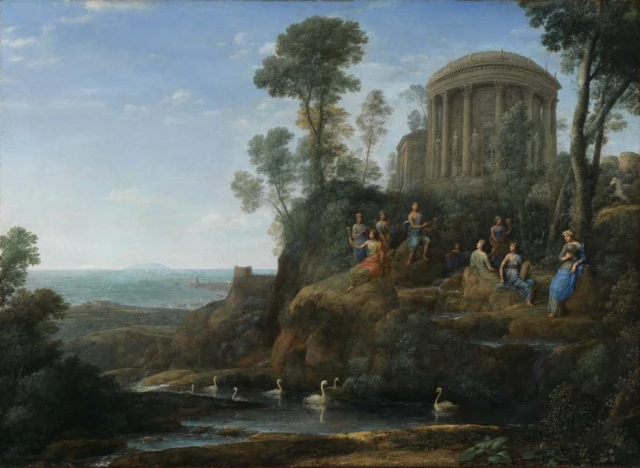 Apolo y las musas en el monte HelicónClaudio de Lorena, 1680
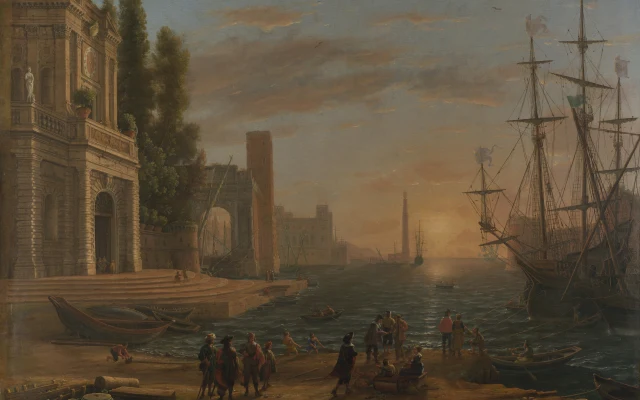 Un puerto de marClaudio de Lorena, 1644
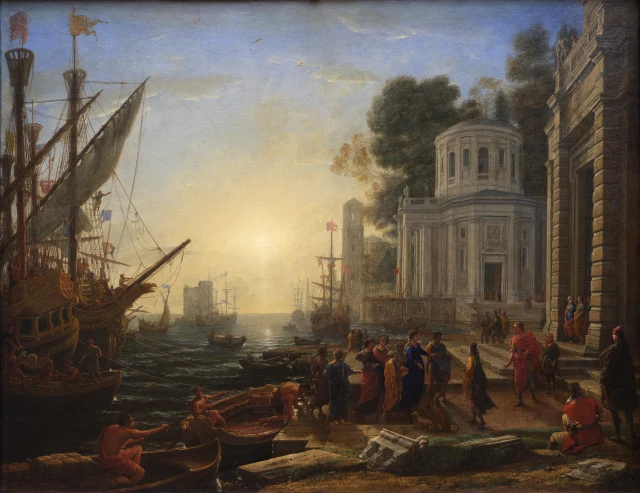 Desembarco de Cleopatra en TarsoClaudio de Lorena, 1642
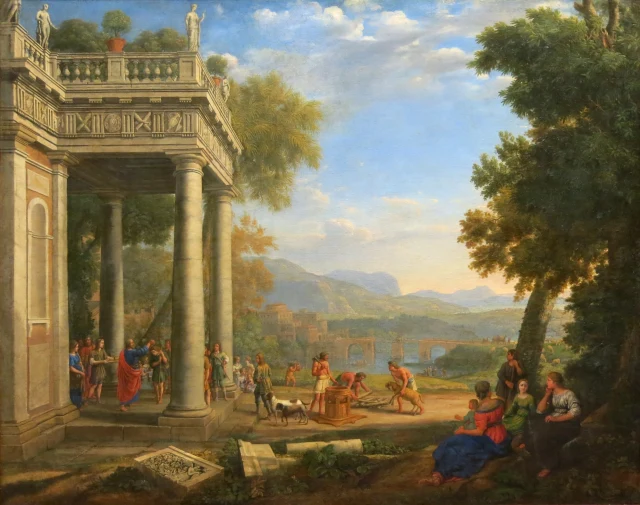 David ungido rey por SamuelClaudio de Lorena, 1647
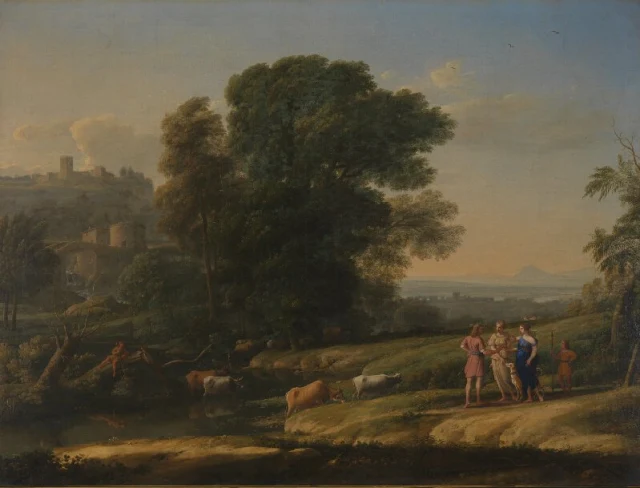 Paisaje con Céfalo y Procris reunidos por DianaClaudio de Lorena, 1645
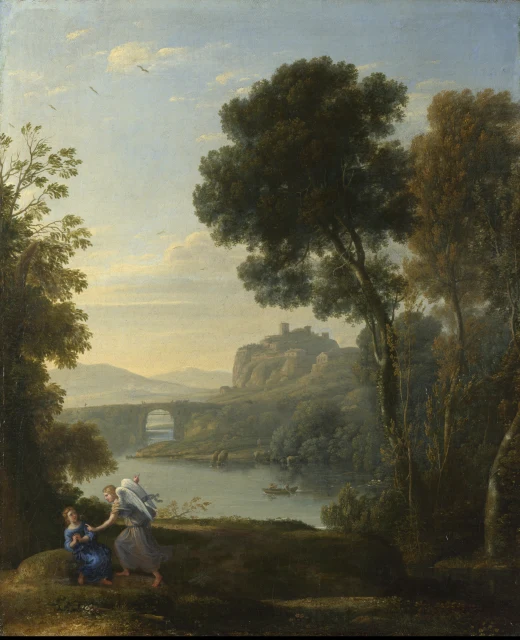 Paisaje con Agar y el ángelClaudio de Lorena, 1646
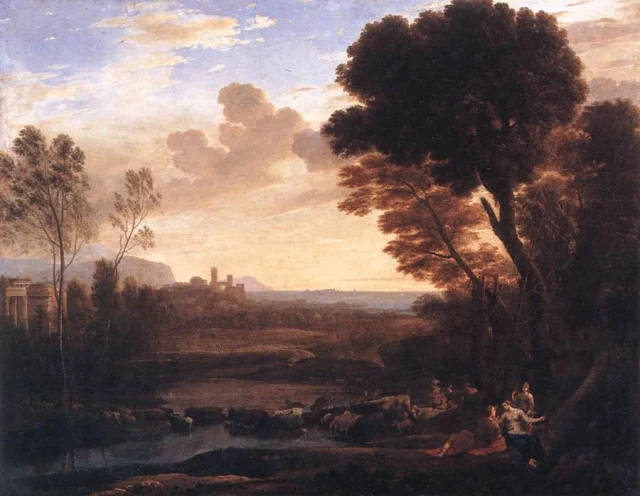 Paisaje con Paris y Enone («El vado»)Claudio de Lorena, 1648
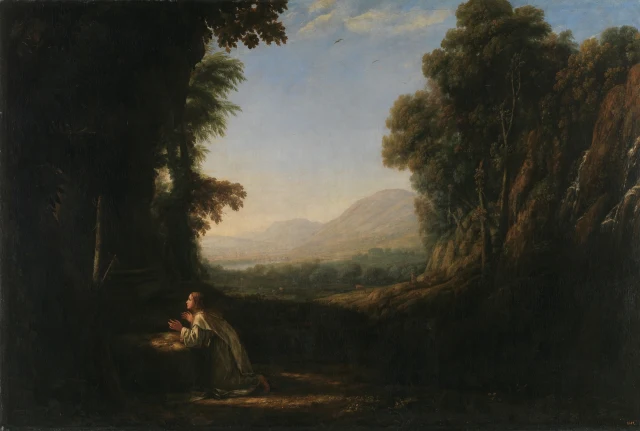 Paisaje con santa María de CervellóClaudio de Lorena, 1637
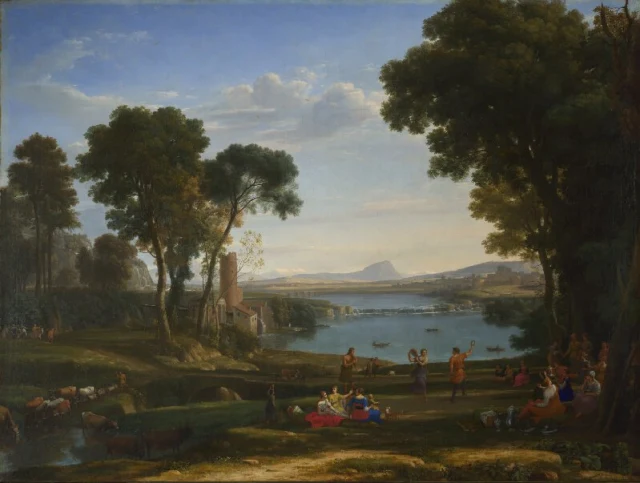 Paisaje con las bodas de Isaac y Rebeca («El molino»)Claudio de Lorena, 1648
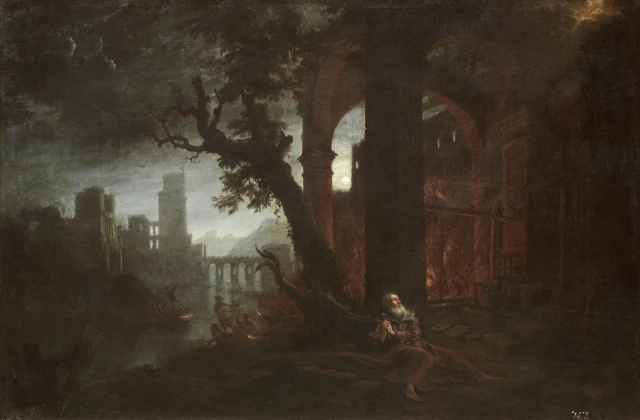 Paisaje con las tentaciones de san AntonioClaudio de Lorena, 1638
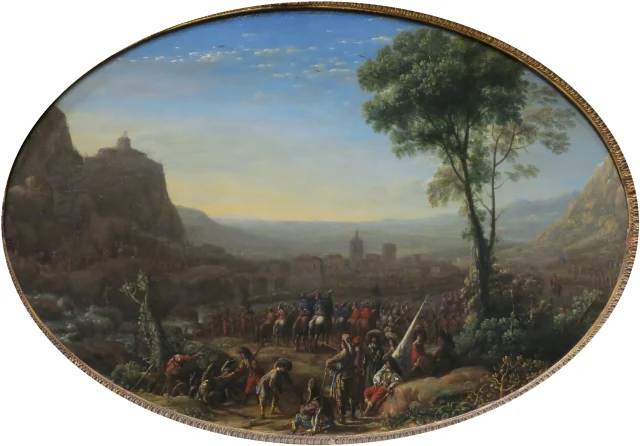 Luis XIII forzando el paso de SusaClaudio de Lorena, 1632