Diego Velázquez · PD
Cristo crucificado
Ficha
La historia
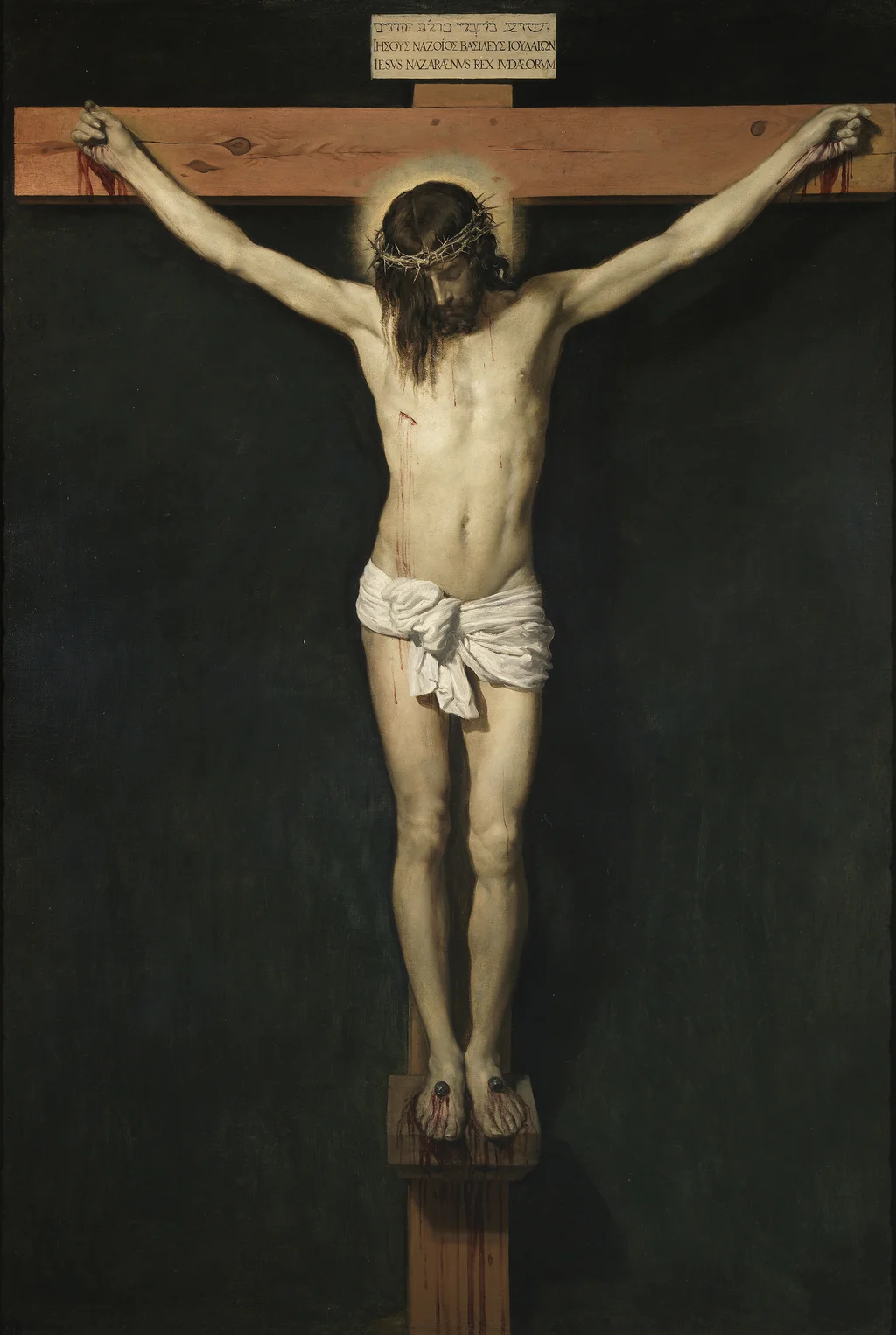
Hacia 1632 Velázquez ya era pintor del rey en Madrid, y aquí dejó a un lado los retratos de corte para pintar un Cristo muerto en la cruz, solo, sobre un fondo negro y sin nada alrededor. Frente a las versiones más dramáticas de la época, lo mostró sereno y bien proporcionado, casi como una escultura antigua, clavado con cuatro clavos y con los pies apoyados en un pequeño soporte. La cabeza cae hacia el pecho y un mechón de pelo cubre la mitad del rostro, un detalle tomado de una vieja idea sobre cómo debía representarse la figura. Durante siglos el cuadro estuvo en un convento de monjas benedictinas de Madrid antes de llegar al Prado.