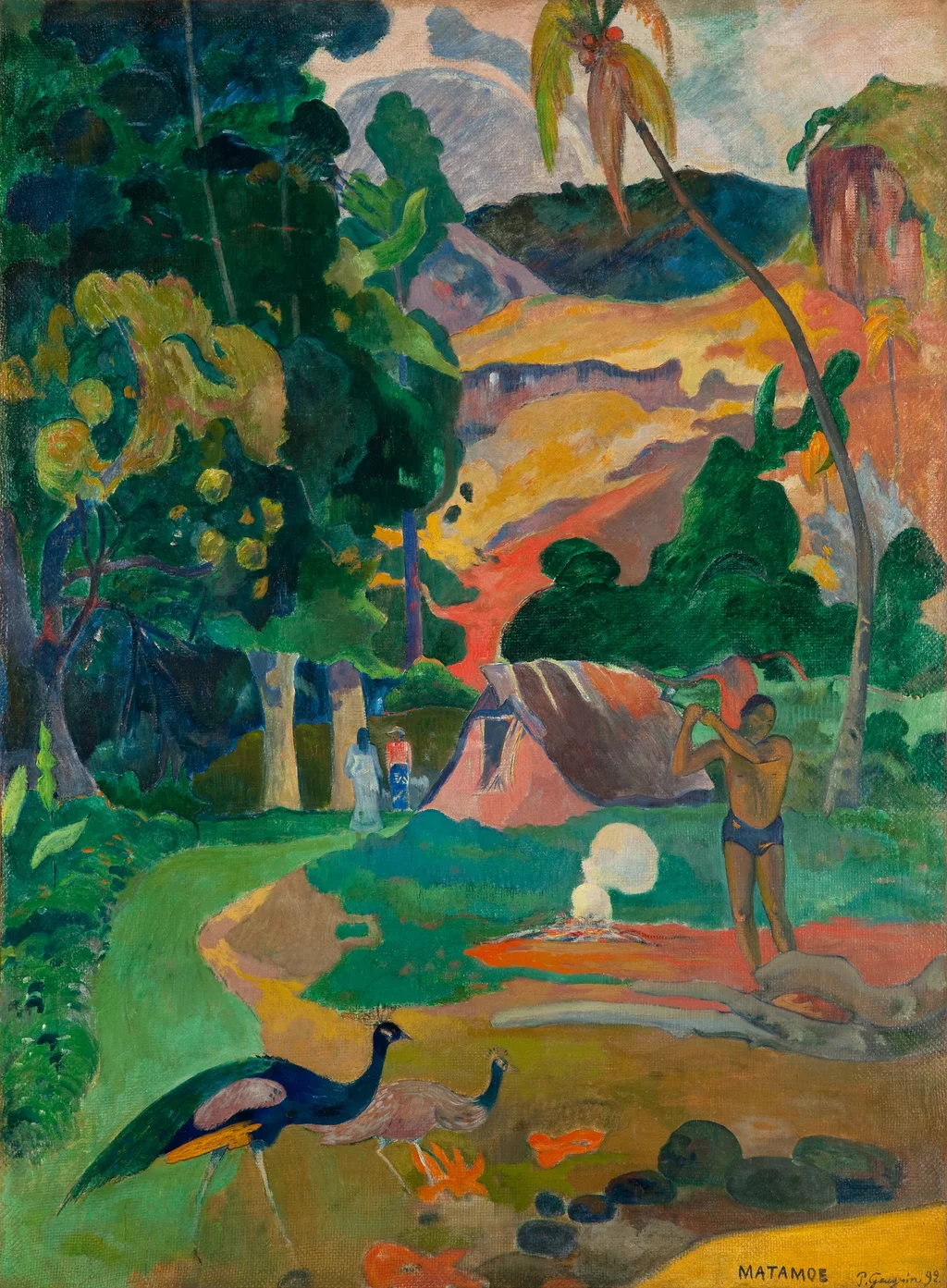
Paul Gauguin, Matamoe (Death), Landscape with Peacocks, 1892. Wikimedia Commons. · PD
Matamoe (la Muerte), paisaje con pavos reales
Ficha
La historia
Hacia 1892 Gauguin había dejado la ciudad colonial de Papeete y se había mudado a Mataiea, un pueblo en la costa sur de Tahití, buscando un Tahití que sentía que Europa ya había estropeado. Poco después de llegar contó que vio a un joven alzar un hacha sobre la cabeza para talar una palmera de coco enferma, y esa figura ocupa el centro del cuadro, en pleno golpe sobre un tronco caído. Detrás hay una choza, un pequeño fuego y dos pavos reales que cruzan el claro, aunque los pavos reales no son propios de la isla y pertenecen más al paraíso imaginado por Gauguin que a lo que realmente vio. Pintó sobre la tela la palabra tahitiana Matamoe, discutida desde entonces: unos la leen como muerte y otros como sueño o los tiempos de antaño. El propio Gauguin la traducía como muerte.