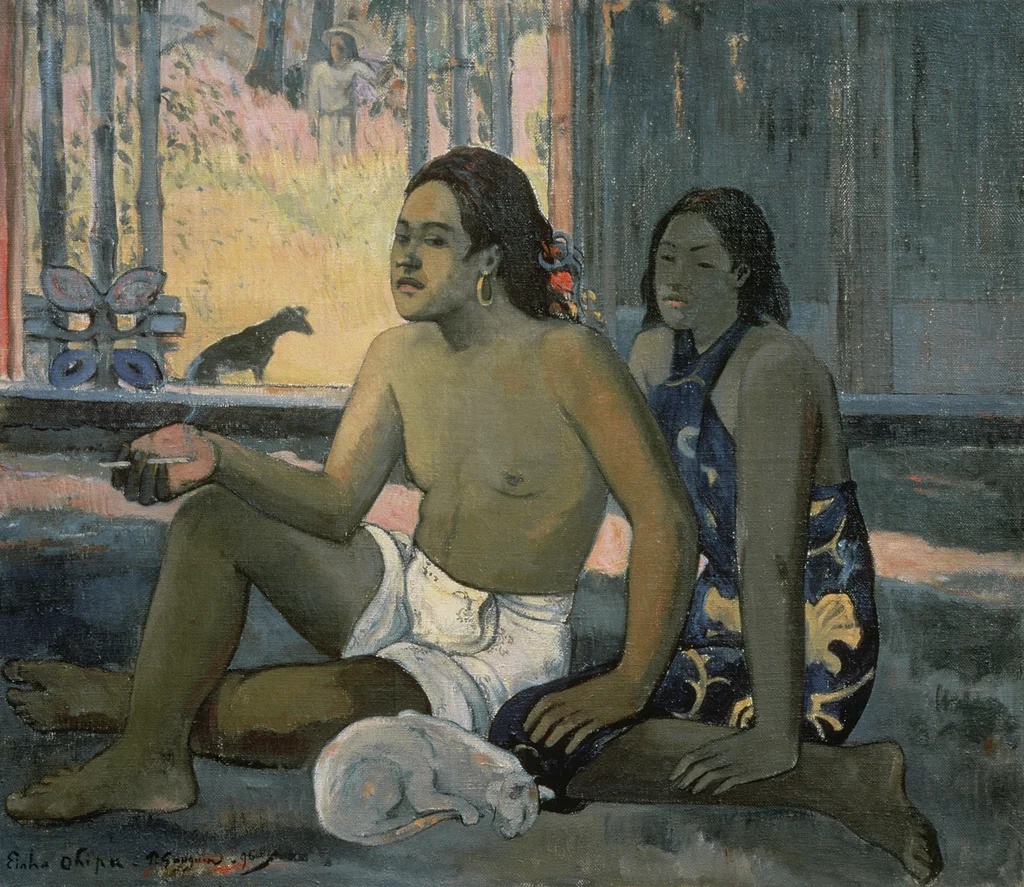
Paul Gauguin, Not to work, 1896. Wikimedia Commons. · PD
No trabajar (Eiaha ohipa)
Ficha
La historia
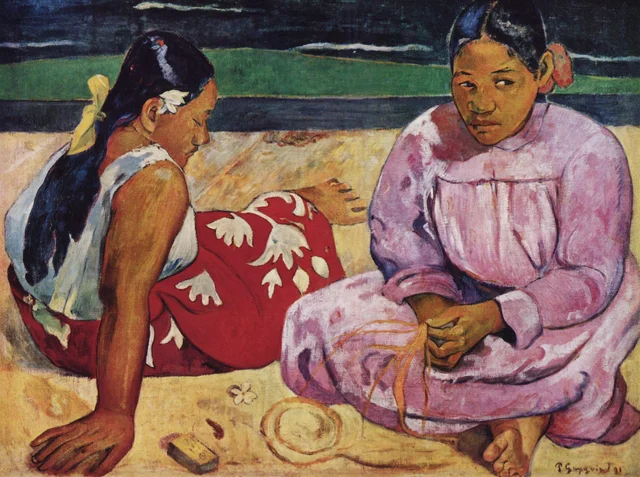
En 1896 Gauguin llevaba ya un año de su segunda estancia en Tahití, endeudado y enfermo, decidido a no volver a Europa. En ese ánimo pintó a dos tahitianas sentadas a la sombra de una choza, sin hacer nada en particular, y tituló el cuadro con dos palabras en lengua local: eiaha ohipa, no trabajar. Para un europeo de fin de siglo, acostumbrado a medir la vida por la jornada laboral, aquel ocio no era pereza sino una forma de estar en el mundo que el pintor quería para sí. Al fondo, tras el vano, se distingue una pequeña figura que pinta, como un eco del propio artista. El lienzo cuelga hoy en el Museo Pushkin de Moscú, adonde llegó con las grandes colecciones rusas de arte francés.