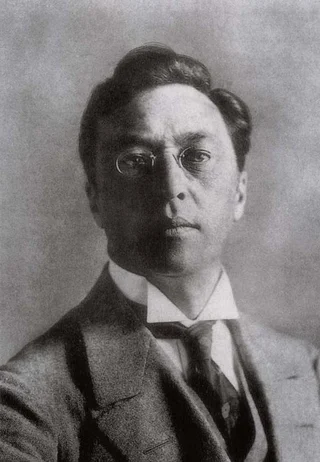
Vassily Kandinsky
1866–1944 · Empire russe · Expressionnisme
L'histoire
Vassily Kandinsky est venu tard à la peinture, et par choix. Né à Moscou en 1866, il fait des études de droit, réussit assez bien pour se voir offrir une chaire universitaire de droit romain, puis, à 30 ans, renonce à tout cela pour s'installer à Munich et apprendre à peindre. Il évoquera plus tard deux chocs qui l'y poussèrent : une meule de foin de Monet qu'il parvenait à peine à reconnaître comme telle, et un opéra de Wagner qui lui emplit la tête de couleurs pendant qu'il écoutait.
Ce dernier point n'était pas une simple image. Kandinsky semble avoir réellement perçu le son comme couleur et la couleur comme son, et il en vint à croire qu'un tableau pouvait agir sur le spectateur comme la musique, sans avoir besoin de montrer le moindre objet reconnaissable. Vers 1910, il réalise quelques-unes des premières peintures purement abstraites de l'art européen, des toiles de taches et de lignes flottantes portant des titres empruntés à la musique, comme Composition ou Improvisation.
En 1911, avec le peintre Franz Marc, il fonde à Munich un cercle appelé le Cavalier bleu, réuni autour de l'idée que l'art devait tendre vers le spirituel. La Première Guerre mondiale disperse le groupe et renvoie Kandinsky en Russie. Il revient en Allemagne dans les années 1920 pour enseigner au Bauhaus, la célèbre école de design, où ses formes se font plus resserrées et plus géométriques, tout en cercles et en angles durs. Quand les nazis ferment le Bauhaus et qualifient son œuvre de dégénérée, il part pour Paris. Il meurt juste à côté, à Neuilly, en 1944.
Autres articles
Œuvres
312 œuvres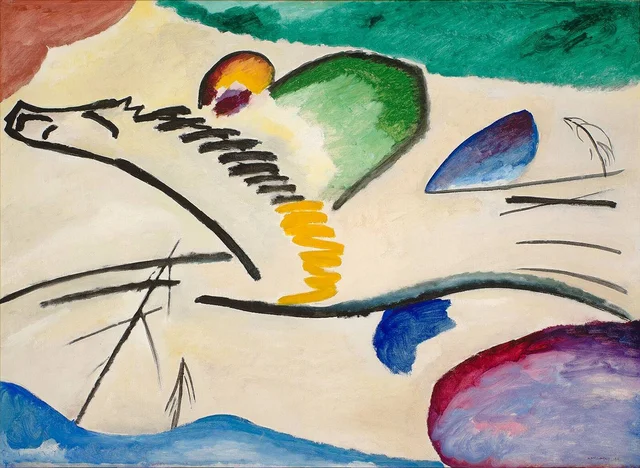 LyriqueVassily Kandinsky, 1911
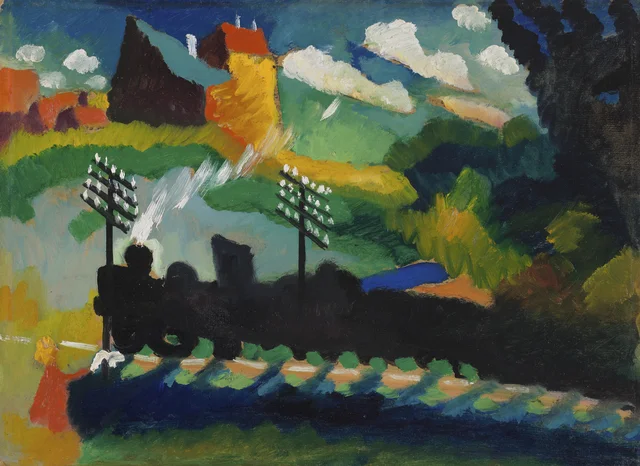 Vue de Murnau avec chemin de fer et châteauVassily Kandinsky, 1909
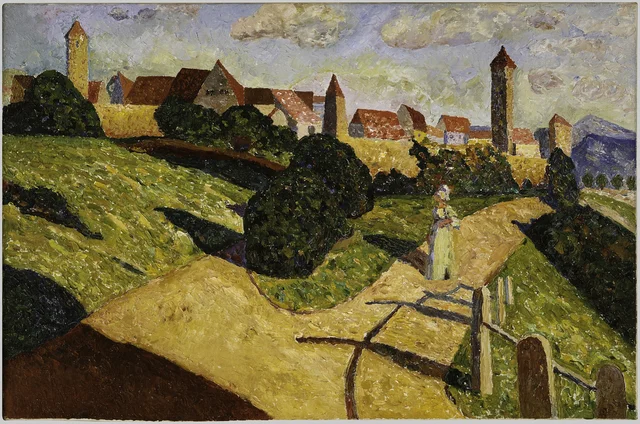 Vieille ville IIVassily Kandinsky, 1902
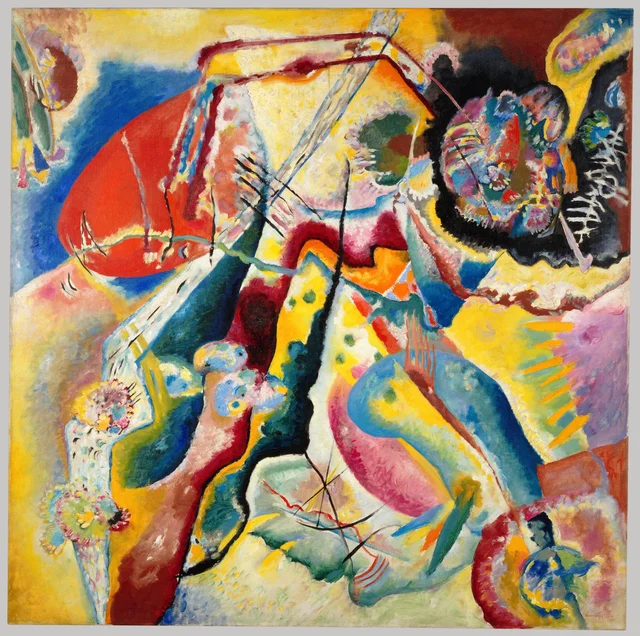 Tableau avec tache rougeVassily Kandinsky, 1914
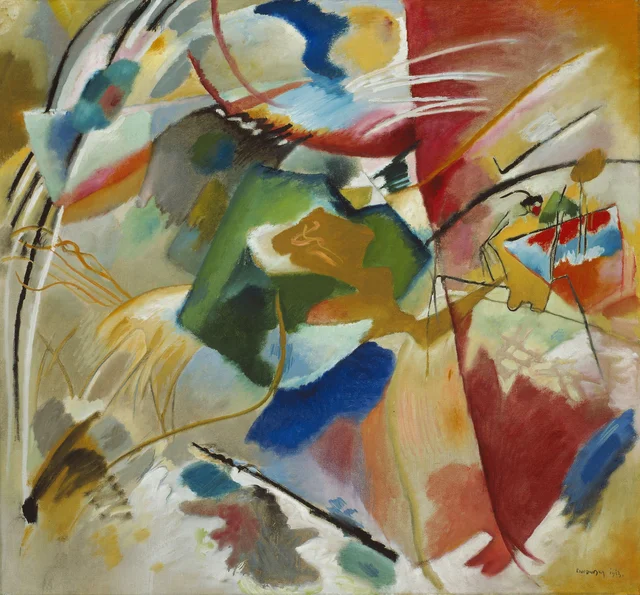 Peinture au centre vertVassily Kandinsky, 1913
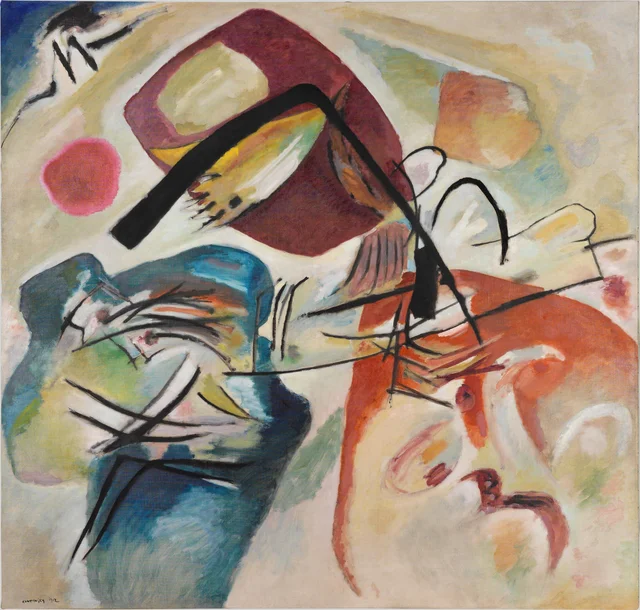 Avec l'arc noirVassily Kandinsky, 1912
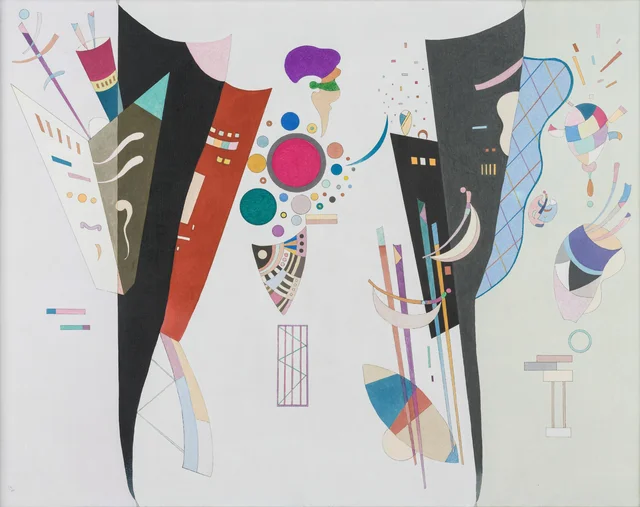 Accord réciproqueVassily Kandinsky, 1942
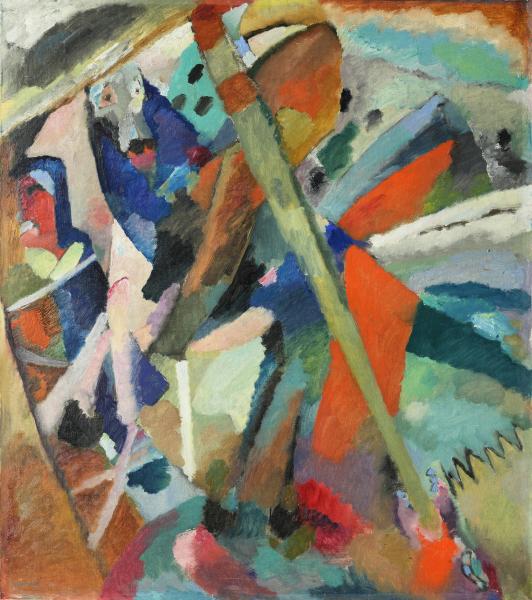 Saint Georges (II)Vassily Kandinsky, 1911
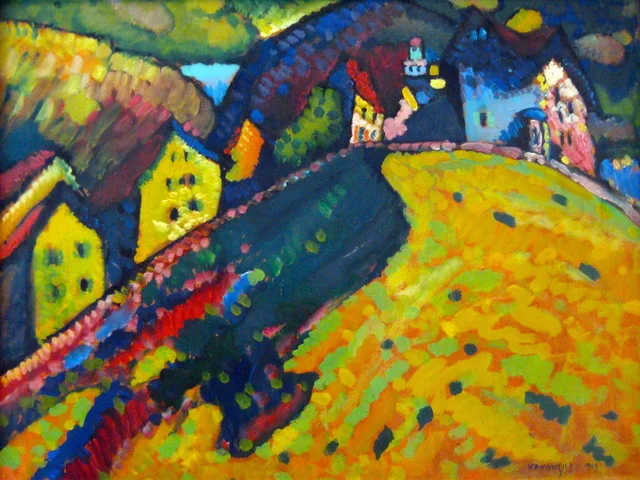 Paysage d'étéVassily Kandinsky, 1909
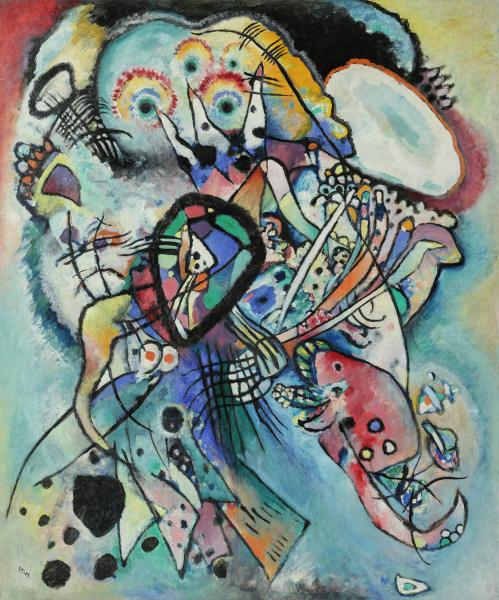 Deux ovalesVassily Kandinsky, 1919
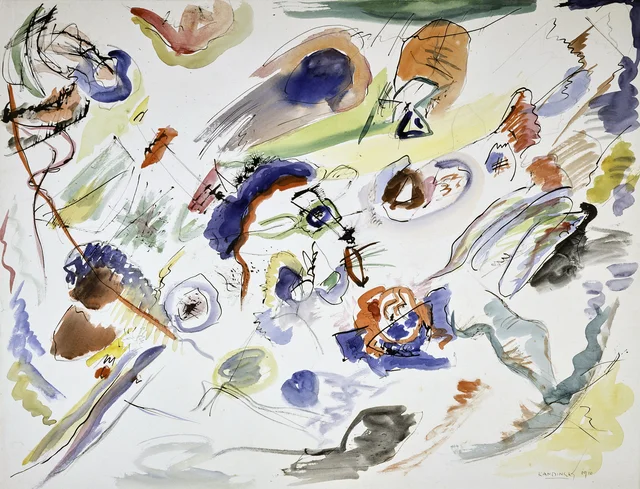 Sans titreVassily Kandinsky, 1910
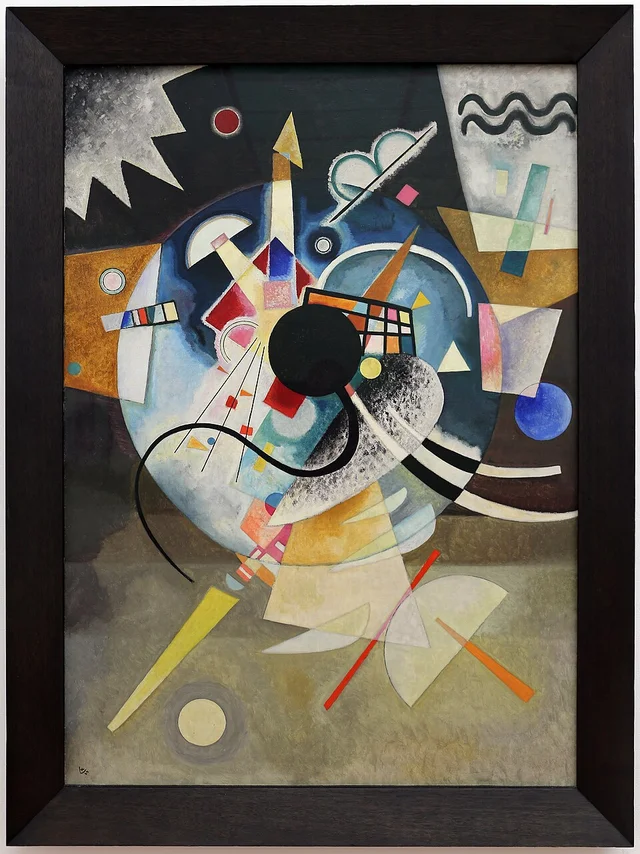 Un centreVassily Kandinsky, 1922
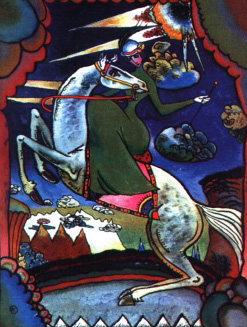 Amazone dans les montagnesVassily Kandinsky, 1917
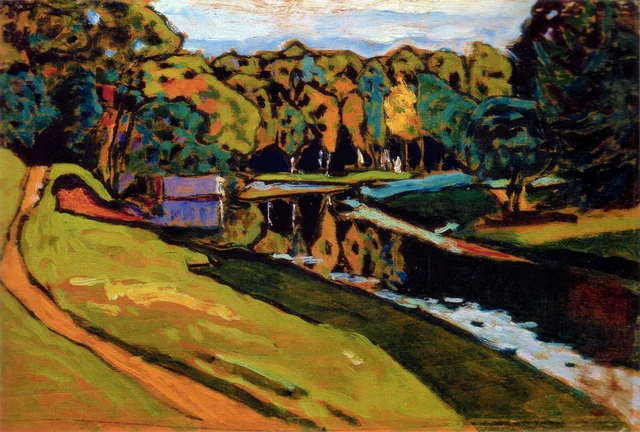 AutomneVassily Kandinsky, 1902
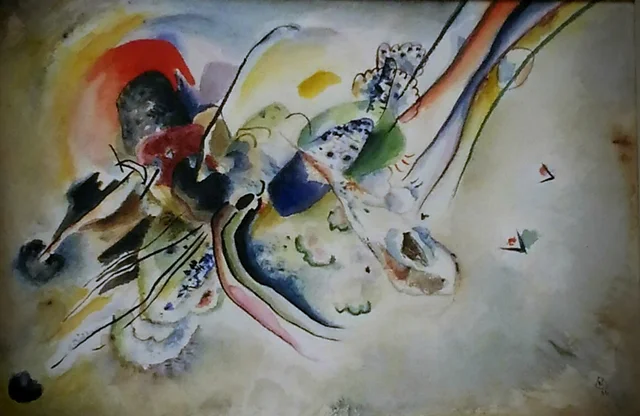 Composition (1916)Vassily Kandinsky, 1916
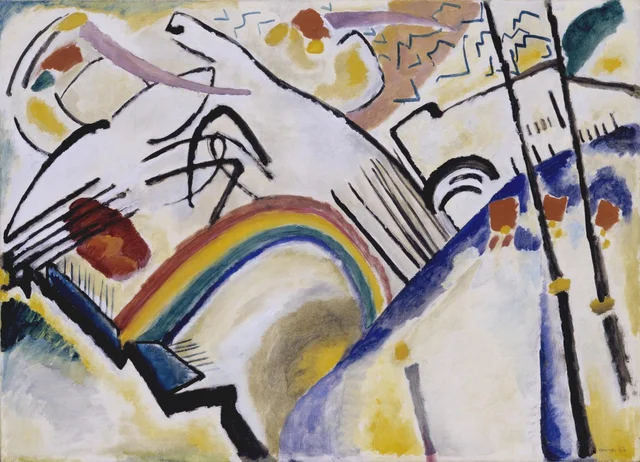 CosaquesVassily Kandinsky, 1910
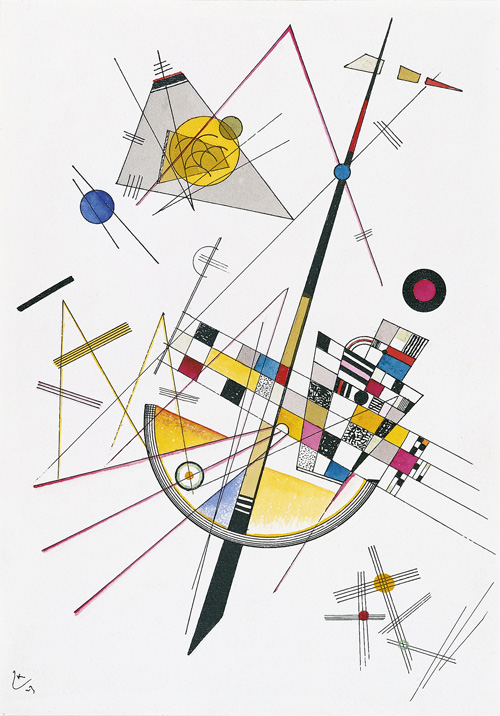 Tension délicateVassily Kandinsky, 1923
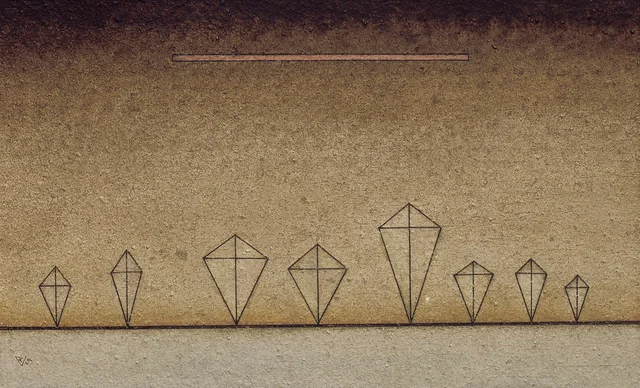 Huit foisVassily Kandinsky, 1929
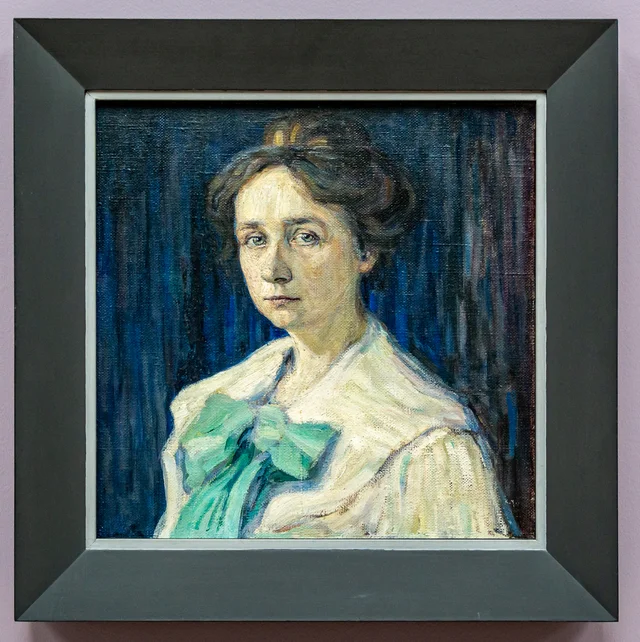 Gabriele MünterVassily Kandinsky, 1905
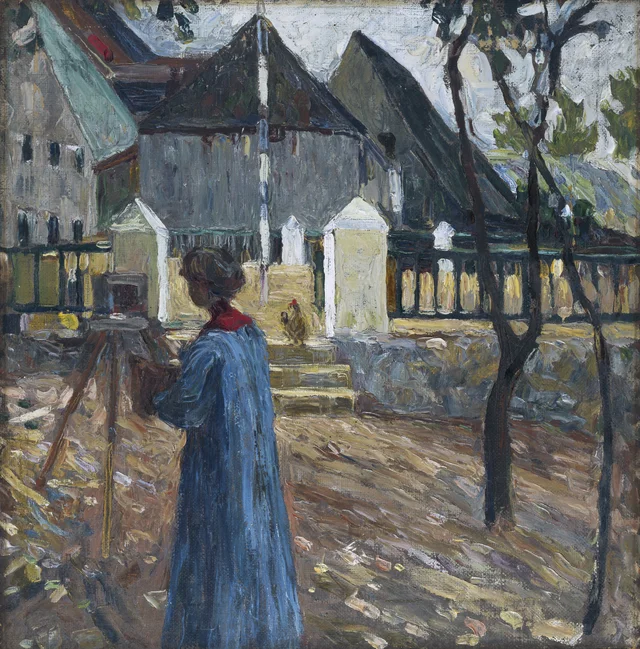 Gabriele Münter peignantVassily Kandinsky, 1903
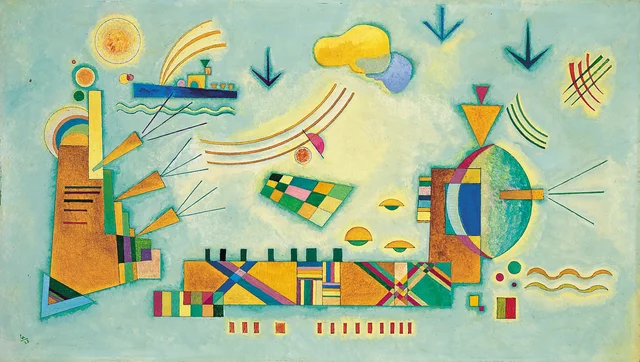 Événement douxVassily Kandinsky, 1928
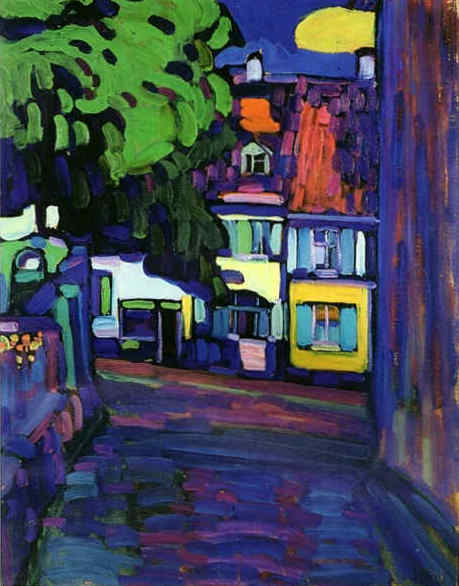 Maisons à Murnau sur l'ObermarktVassily Kandinsky, 1908
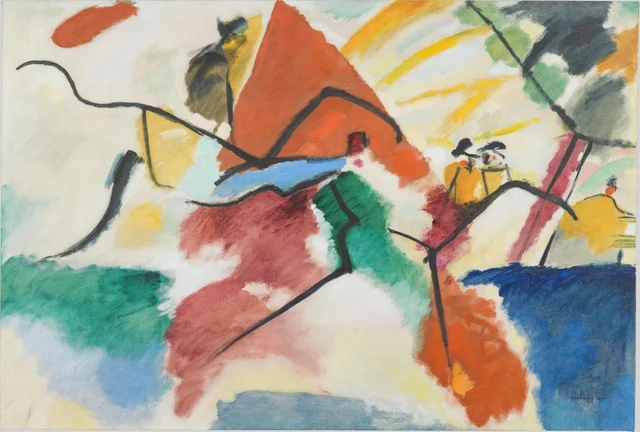 Impression VVassily Kandinsky, 1911
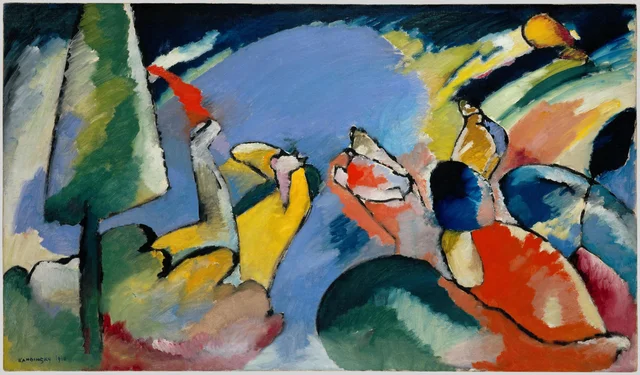 Improvisation 14Vassily Kandinsky, 1910
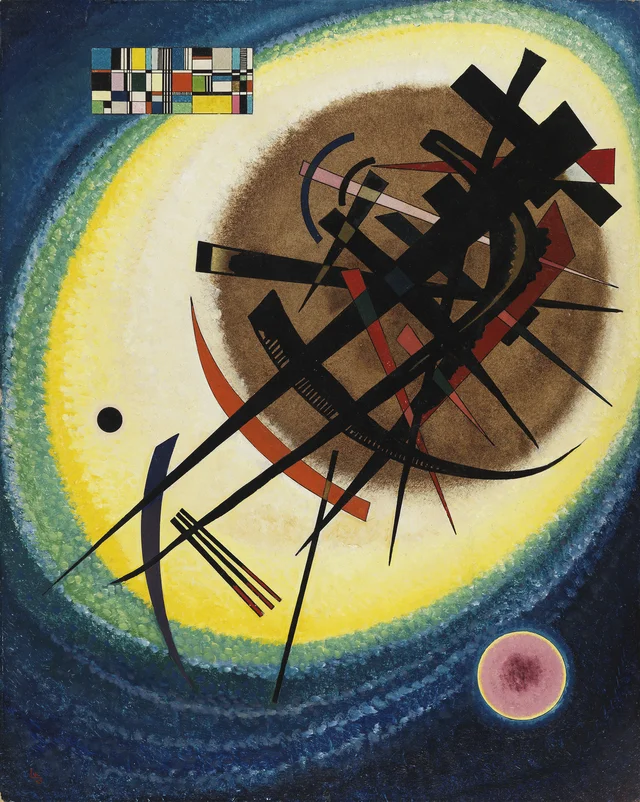 Dans l'ovale clairVassily Kandinsky, 1925