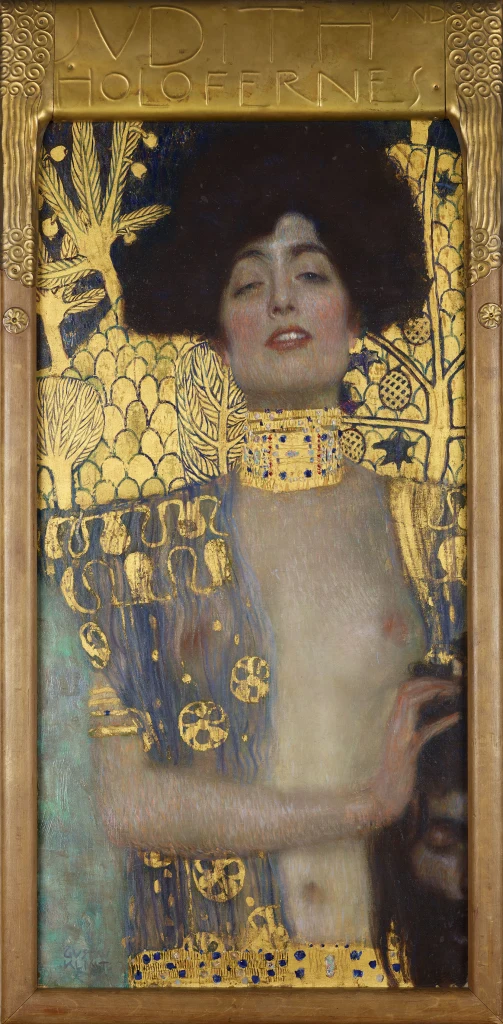
Gustav Klimt, Judith I, 1901. Wikimedia Commons. · PD
Judith et la tête d'Holopherne
Détails
L'histoire
Vienne, 1901. Klimt vient de rompre avec l'art officiel et cherche une manière à lui, faite d'or et d'ornement. Il reprend un vieux sujet biblique : Judith, la veuve juive qui séduit puis décapite le général assyrien Holopherne pour sauver sa ville. Mais il n'en fait pas une héroïne guerrière. C'est une Viennoise de son temps, gorge nue, paupières mi-closes, un collier d'or serré au cou, la tête tranchée reléguée dans le coin inférieur droit. Le fond doré s'inspire des mosaïques byzantines de Ravenne, que Klimt admirait. Le tableau fut d'ailleurs si mal identifié qu'on l'appela longtemps Salomé, du nom d'une tout autre figure biblique.