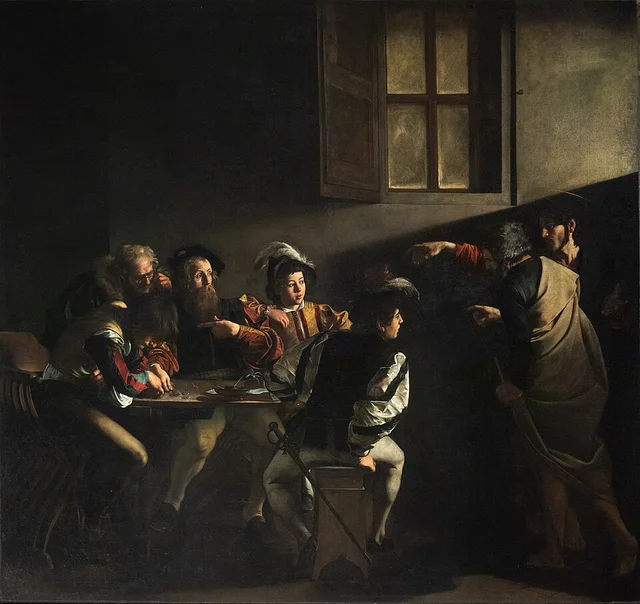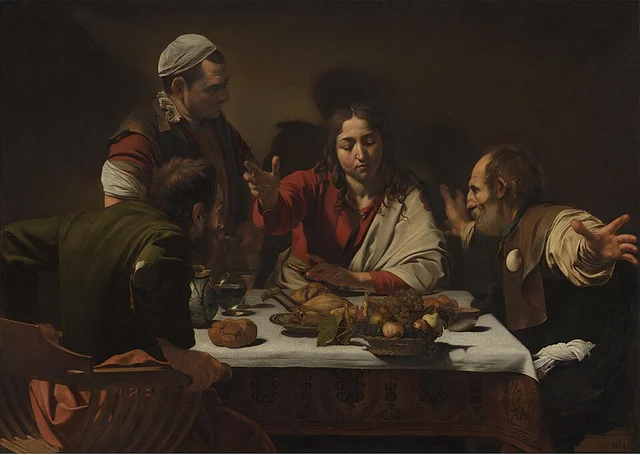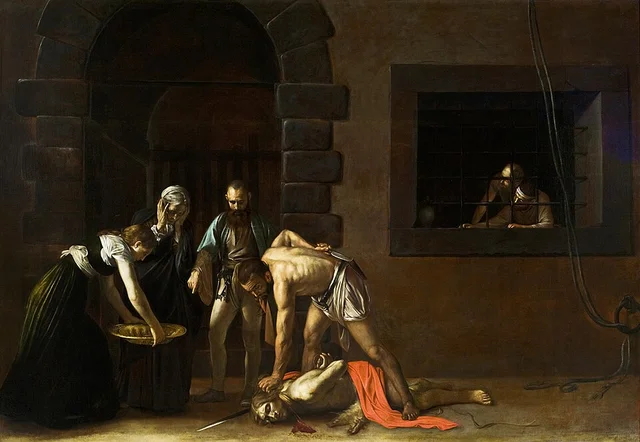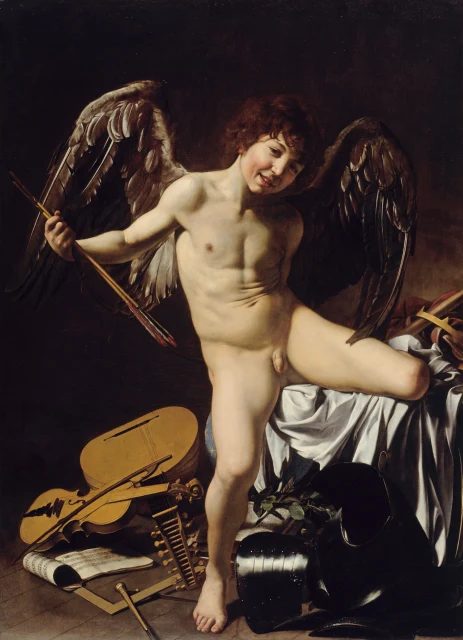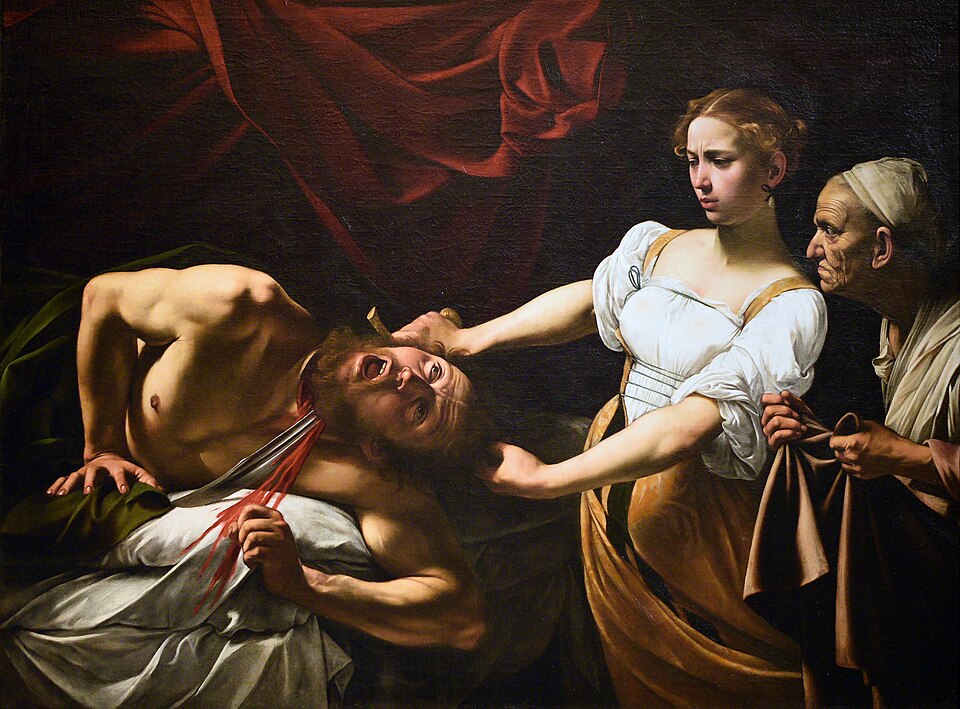
Caravaggio, Judith Beheading Holofernes, 1598. Wikimedia Commons. · PD
Judith décapitant Holopherne
Détails
L'histoire
Judith décapitant Holopherne — Caravage la peint à Rome vers 1599, l'année même où la ville assiste à l'exécution publique de Béatrice Cenci, jeune femme décapitée pour le meurtre de son père. Le sujet de la décollation était dans l'air. Caravage illustre le récit biblique où Judith, une veuve juive, tranche la tête du général assyrien Holopherne pour sauver sa ville assiégée. Il choisit l'instant le plus atroce, la lame déjà entrée dans le cou, le sang jaillissant en arc. Judith exécute son geste en se reculant, les sourcils froncés, mi-résolue mi-dégoûtée, tandis qu'à côté d'elle une vieille servante au visage ridé tend un linge pour recevoir la tête. Le drap rouge tendu au-dessus de la scène et le fond noir concentrent toute la lumière sur les corps. Le tableau appartint au banquier Ottavio Costa et ne fut redécouvert qu'en 1950.