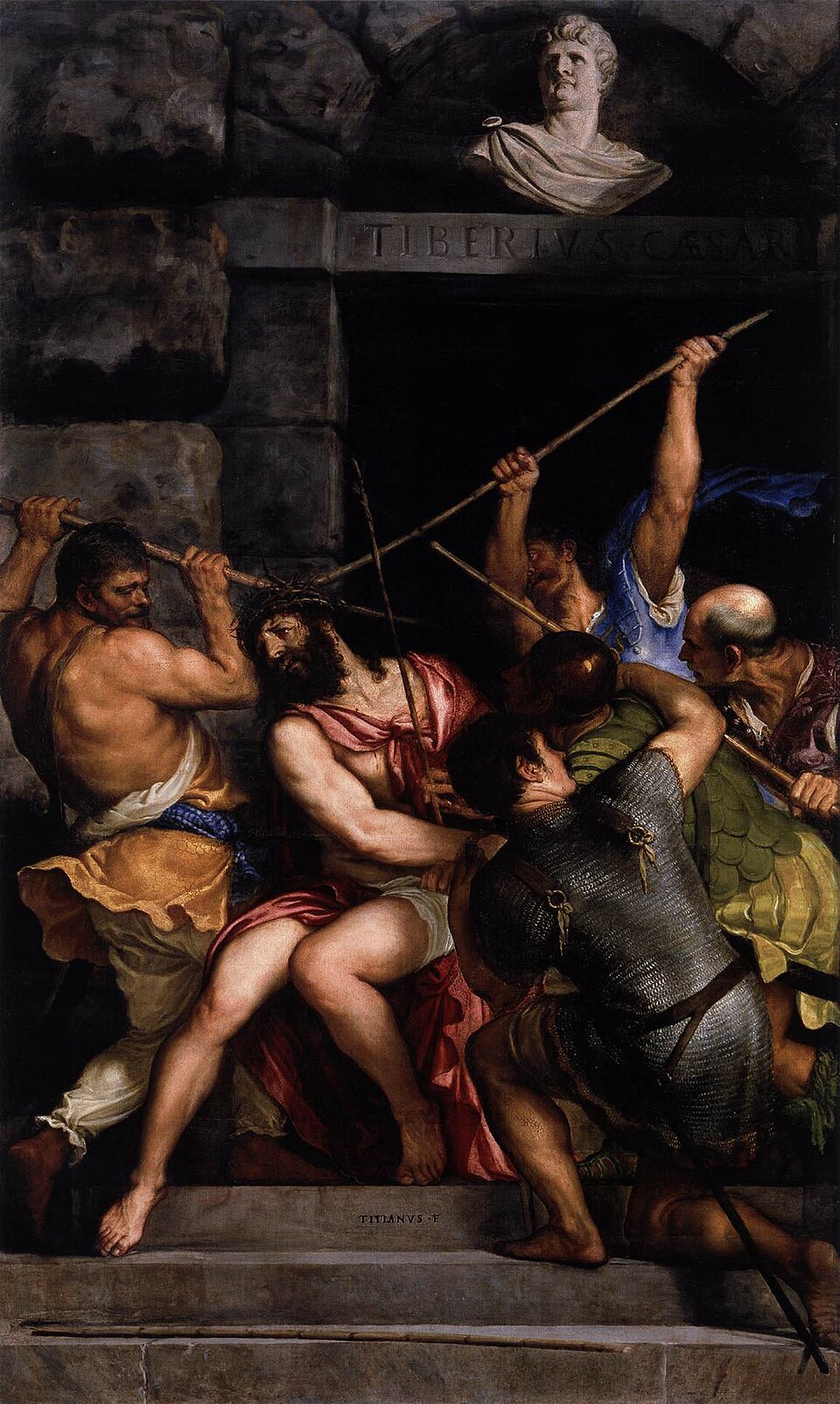
Titian, The Crowning with Thorns, 1542. Wikimedia Commons. · PD
Le Couronnement d'épines
Détails
L'histoire
Vers 1542, Titien peint ce Couronnement d'épines pour une église de Milan, Santa Maria delle Grazie. Le maître vénitien, célèbre pour sa couleur, se mesure ici à la puissance des corps qu'il a admirée chez les peintres de l'Italie centrale. Les bourreaux, musculeux, s'acharnent sur le Christ à coups de bâton, dans une architecture sombre et écrasante. Au-dessus, un buste de l'empereur Tibère rappelle le pouvoir de Rome qui condamne. La scène est brutale, presque étouffante. Bien plus tard, âgé, Titien reprendra le même sujet dans une toile aujourd'hui à Munich, toute en lumière tremblante. Celui-ci, lui, gagna Paris parmi les œuvres saisies en Italie à la fin du 18e siècle.