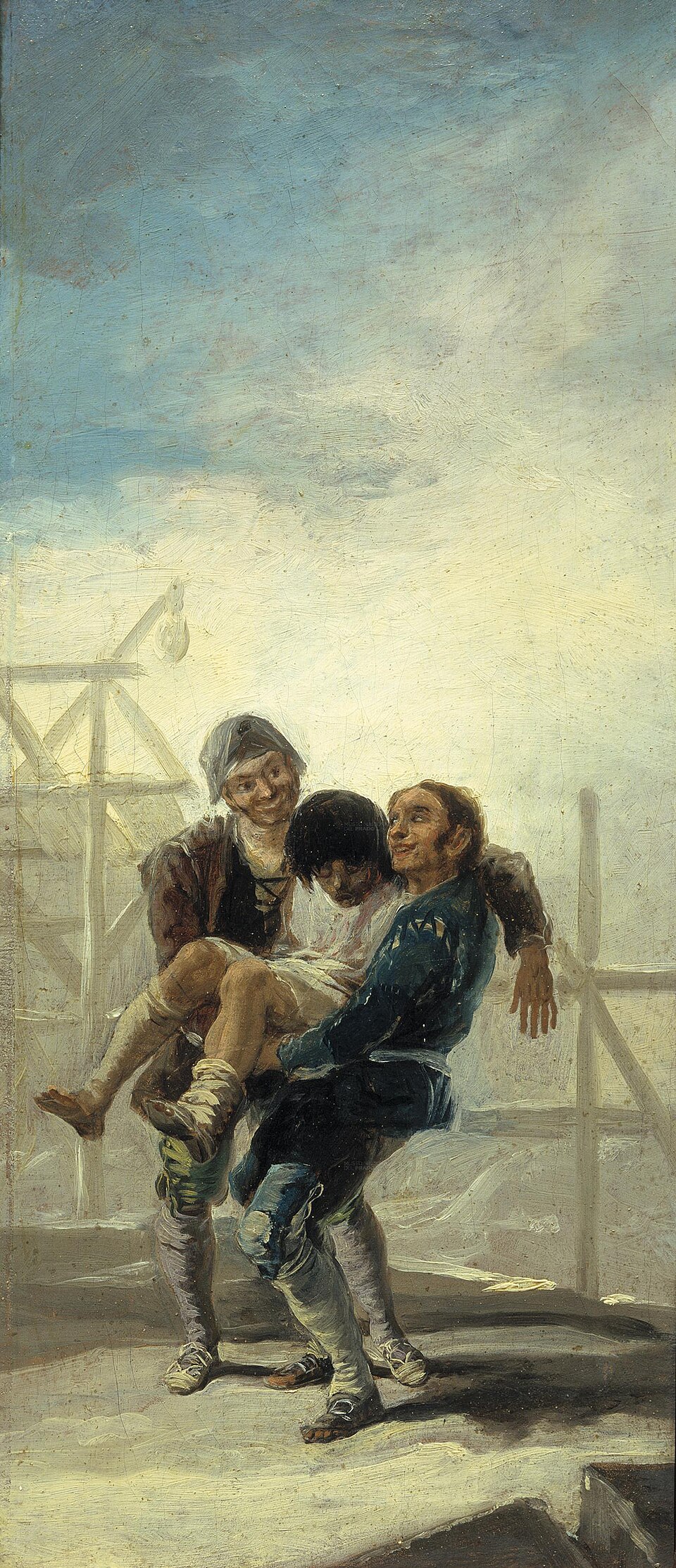
Francisco Goya, El albañil borracho (boceto), 1786. Wikimedia Commons. · PD
Le Maçon ivre (esquisse)
Détails
L'histoire
Il existe deux versions de cette scène, et le titre a changé entre les deux. Dans cette esquisse de 1786, large de 15 centimètres seulement, deux ouvriers descendent d'un échafaudage un camarade ivre, culotte perdue, un soulier en moins, et ils ont tous les deux le sourire aux lèvres. Goya la présentait à la cour avant de s'engager dans le carton définitif, haut de plus de deux mètres et demi, destiné à la salle à manger du prince des Asturies au Pardo. Dans cette version finale, il a refait les visages. Le sourire est devenu de l'inquiétude, et le maçon ivre un maçon blessé. La cour préparait à ce moment ses premières dispositions sur la sécurité des échafaudages et sur le secours dû aux ouvriers accidentés.