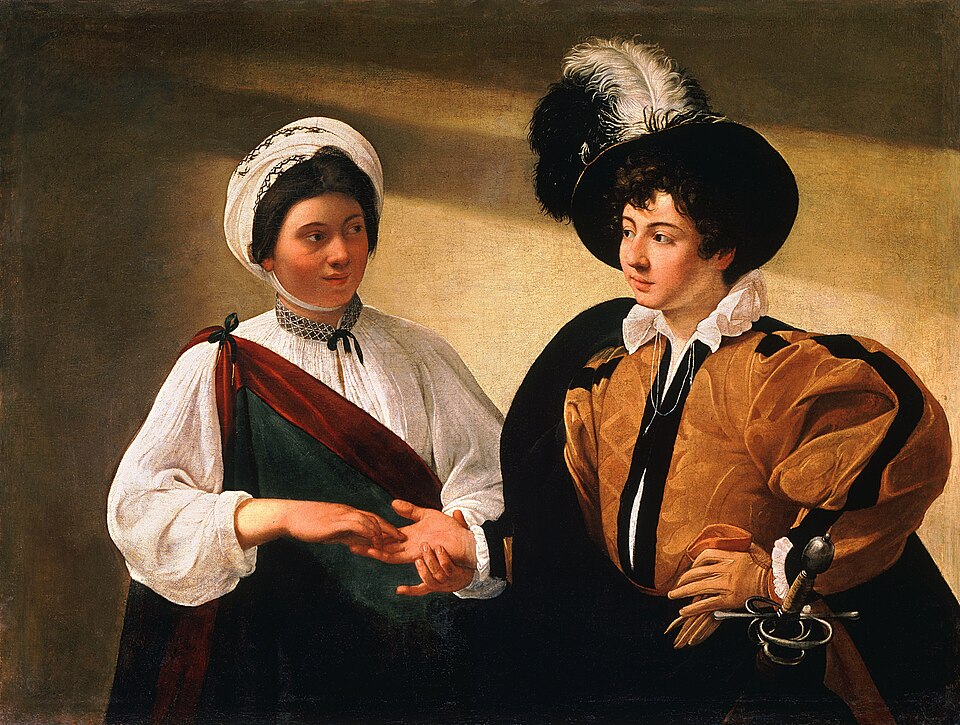
Caravaggio, The Fortune Teller, 1594. Wikimedia Commons. · PD
La Bonne Aventure
Détails
L'histoire
Vers 1594, à Rome, un jeune Caravage encore pauvre peint des scènes prises dans la rue plutôt que dans les livres saints. Ici, une bohémienne lit la main d'un jeune gentilhomme élégant, coiffé d'un chapeau à plume, l'épée au côté. Elle sourit, il sourit, tout paraît galant. Mais en tenant sa paume, elle fait doucement glisser une bague de son doigt, et lui ne s'aperçoit de rien, occupé à croiser son regard. Caravage travaillait sans dessins préparatoires, directement d'après le modèle, ce qui frappait ses contemporains habitués à des compositions plus savantes. On raconte qu'il aurait pris pour la diseuse une jeune femme croisée dans la rue, pour montrer qu'il n'avait besoin ni des statues antiques ni des maîtres pour peindre d'après nature. La scène tient de la comédie de mœurs et met en garde, sans leçon appuyée, contre les pièges de la ville. Les deux visages se tiennent tout près l'un de l'autre, éclairés d'une même lumière douce, tandis que la bague quitte la main.