Sandro Botticelli · PD
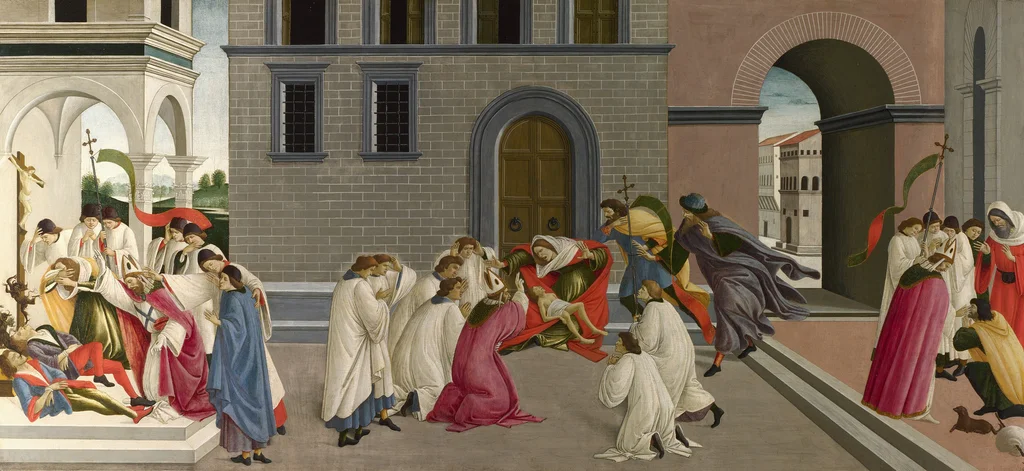
Trois miracles de saint Zénobe
Détails
L'histoire
By 1500 Botticelli had fallen out of fashion. The graceful pagan goddesses that made his name had given way, in an older and more austere Florence, to sterner religious work. This panel belongs to a set of four he painted late in life about Saint Zenobius, a fifth-century bishop who was the city's patron. They were spalliera panels, meant to be set into the wood panelling of a room at shoulder height, probably a bedroom, so the story ran along the wall at eye level. Botticelli stages three of the bishop's miracles right in the streets of Florence, among the arches and squares his first owners walked every day: Zenobius driving demons from two boys, bringing a dead child back to life, and giving sight to a blind man. The four panels are now divided between London, New York and Dresden.