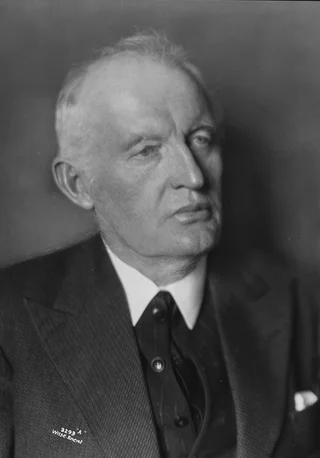
Edvard Munch
1863–1944 · Norvegia · Simbolismo, Espressionismo
La storia
Una sera dei primi anni Novanta dell'Ottocento Munch camminava lungo una strada sopra il fiordo di Kristiania, il vecchio nome di Oslo, con due amici, quando il cielo sopra l'acqua si tinse di rosso sangue. Scrisse nel diario di essersi fermato, tremante, e di aver sentito un grido infinito attraversare la natura. Da quella passeggiata nacque L'urlo, dipinto nel 1893. Gli astronomi hanno poi discusso se quel cielo rosso fosse reale, un bagliore residuo dell'eruzione del vulcano Krakatoa del 1883, che tinse i tramonti in tutto il mondo per mesi.
Aveva ragioni per vedere angoscia in un tramonto qualunque. Sua madre e la sorella maggiore Sophie morirono entrambe di tubercolosi quando lui era ancora bambino, e la malattia e il crollo nervoso lo accompagnarono per decenni. Nel 1908 si fece ricoverare in una clinica di Copenaghen dopo un collasso. Trasformò tutto questo in quadri di gelosia, malattia e angoscia, riuniti sotto il titolo Il fregio della vita.
Negli anni Trenta la sua fama era ormai tale che il governo nazista ritirò 82 sue opere dai musei tedeschi come arte degenerata. Trascorse gli ultimi anni fuori dalla capitale norvegese occupata, nella tenuta di Ekely, custodendo le migliaia di dipinti e stampe che aveva tenuto per sé. Morì lì nel gennaio 1944, a 80 anni, lasciando quasi tutta la sua collezione privata alla città di Oslo.
Opere
316 opere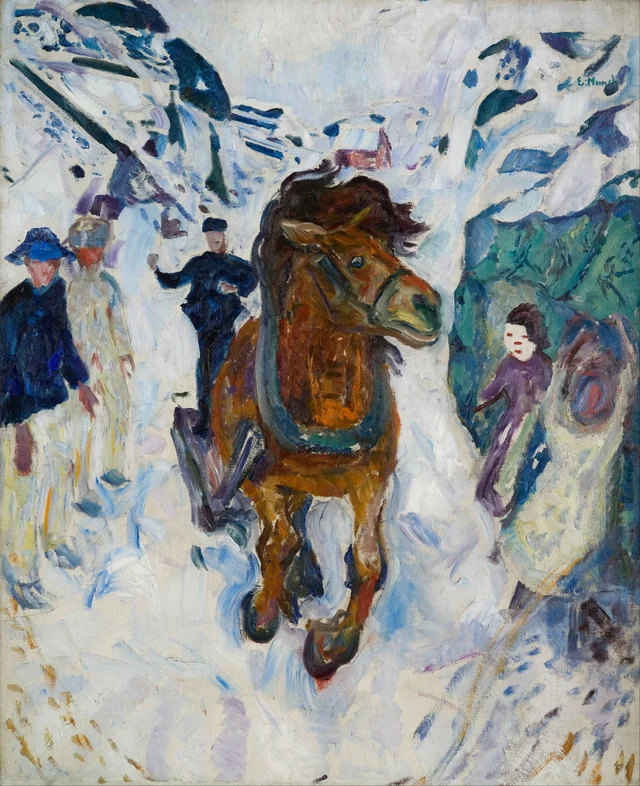 Cavallo al galoppoEdvard Munch, 1912
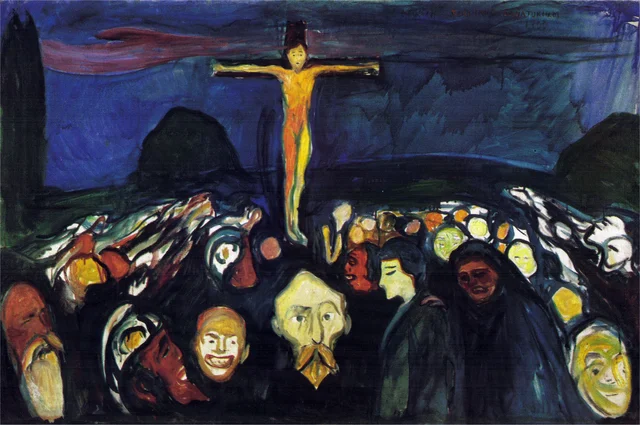 GolgotaEdvard Munch, 1900
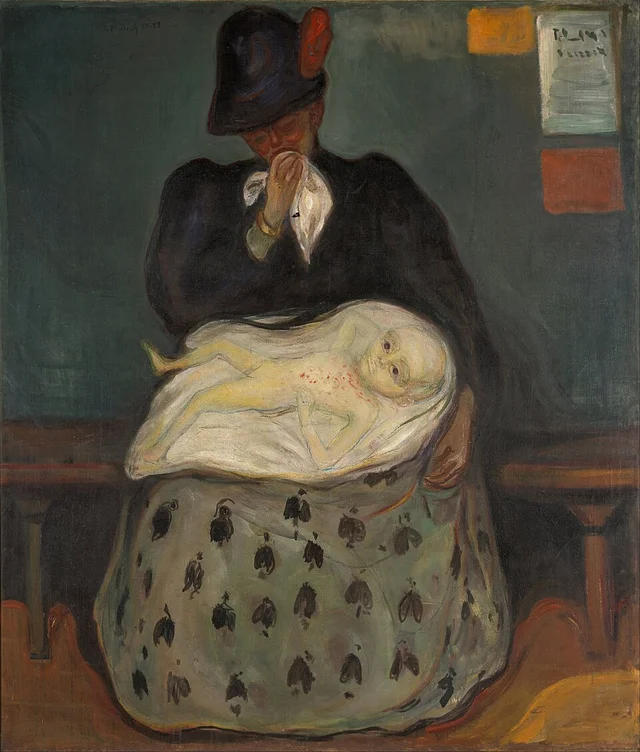 EreditàEdvard Munch, 1897
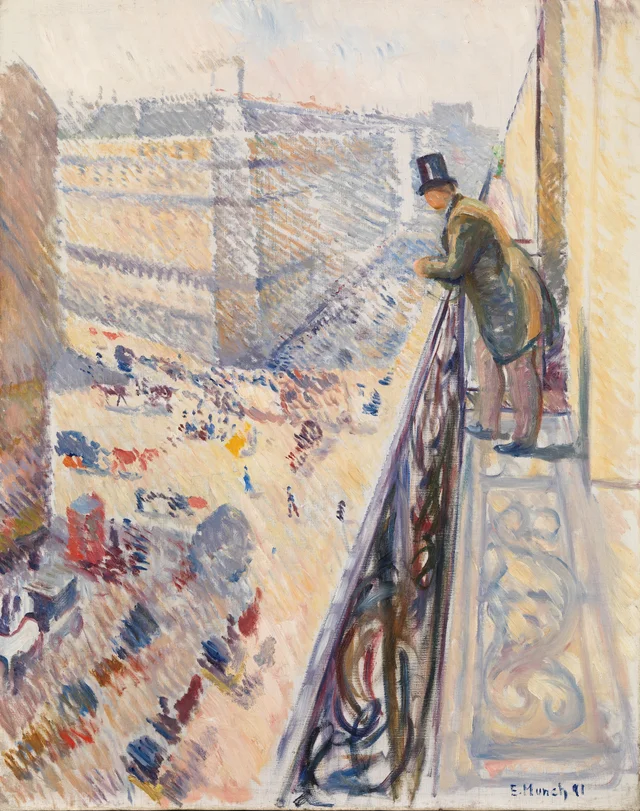 Rue LafayetteEdvard Munch, 1891
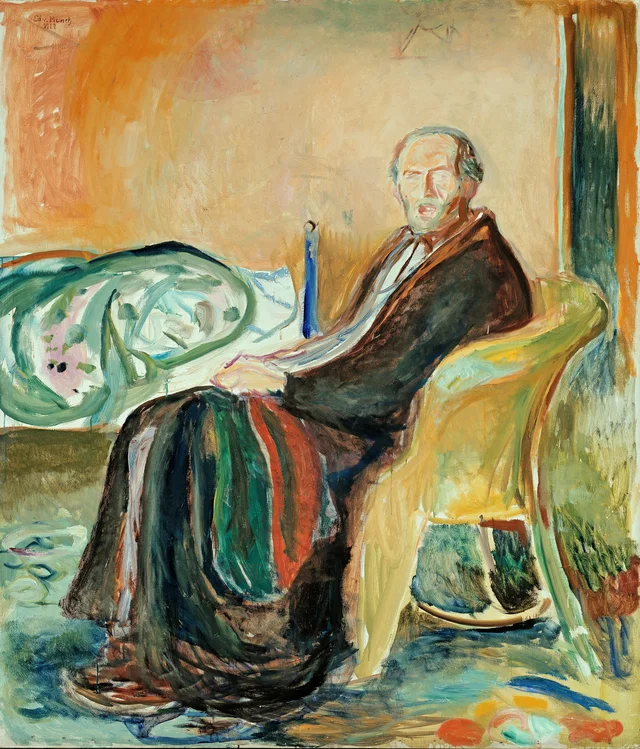 Autoritratto con l'influenza spagnolaEdvard Munch, 1919
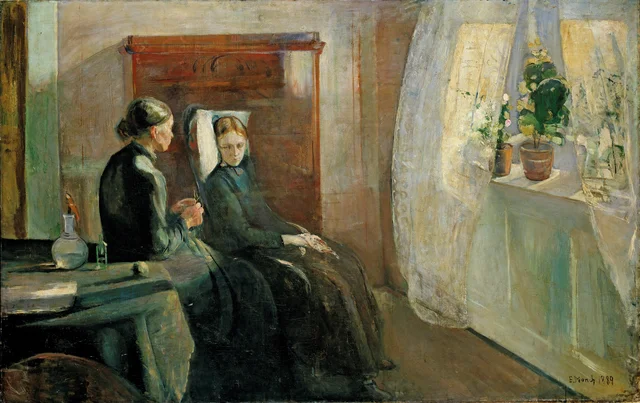 PrimaveraEdvard Munch, 1889
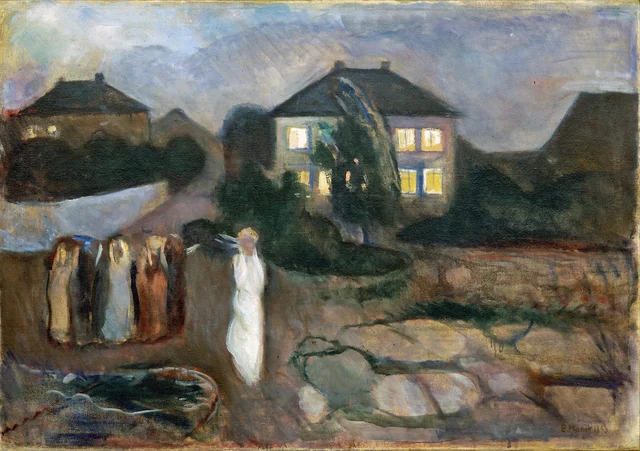 La tempestaEdvard Munch, 1893
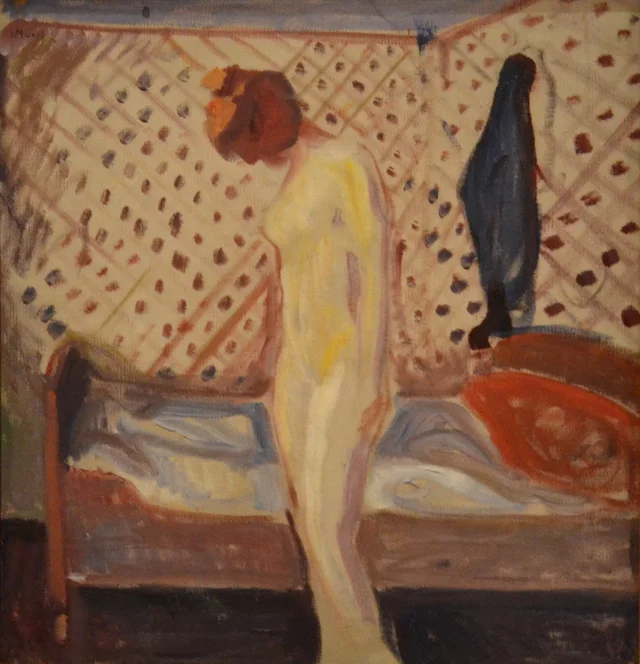 Donna che piangeEdvard Munch, 1907
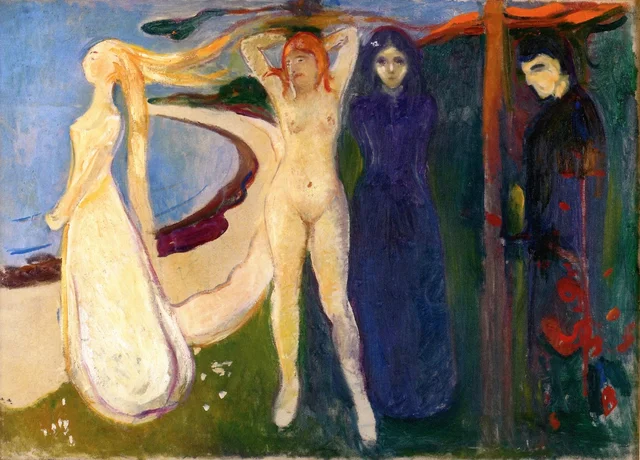 Donna. SfingeEdvard Munch, 1894
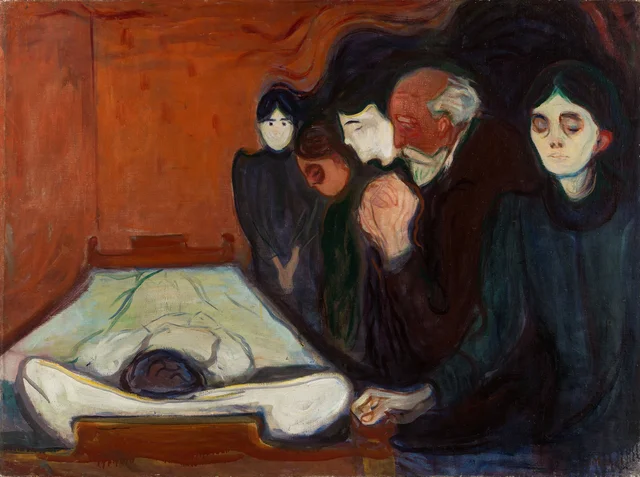 Al capezzale della morteEdvard Munch, 1895
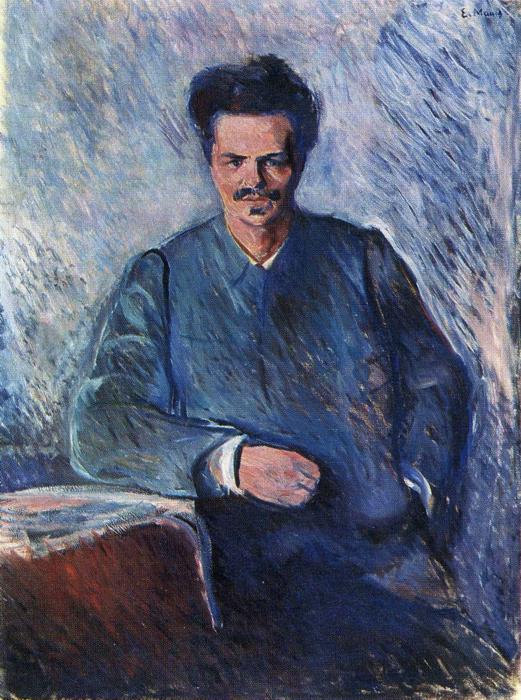 August StrindbergEdvard Munch, 1892
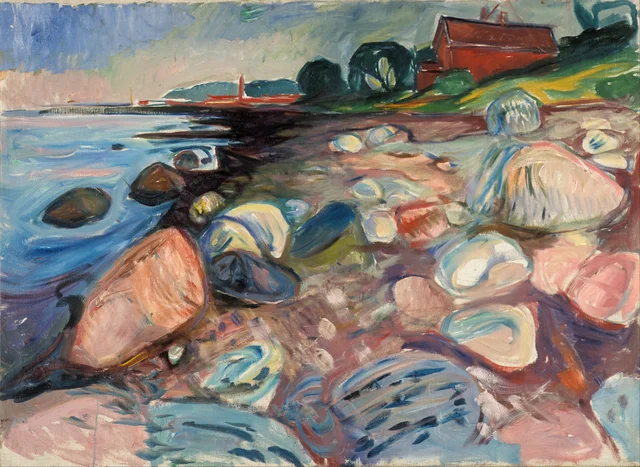 SpiaggiaEdvard Munch, 1904
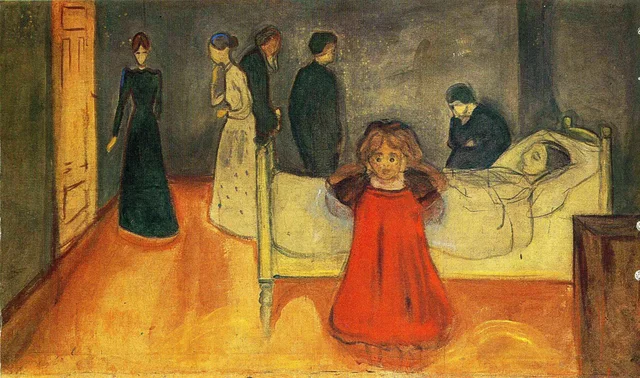 La morte e il bambinoEdvard Munch, 1899
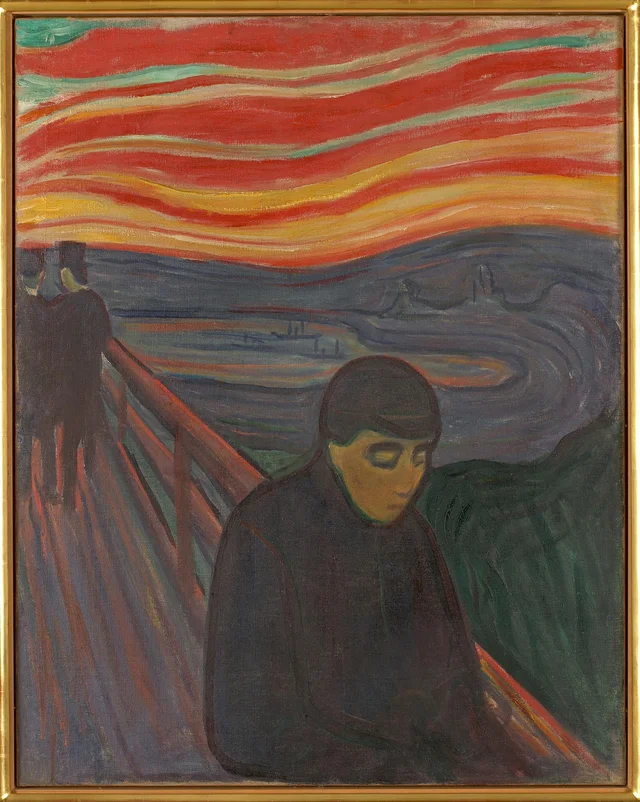 DisperazioneEdvard Munch, 1894
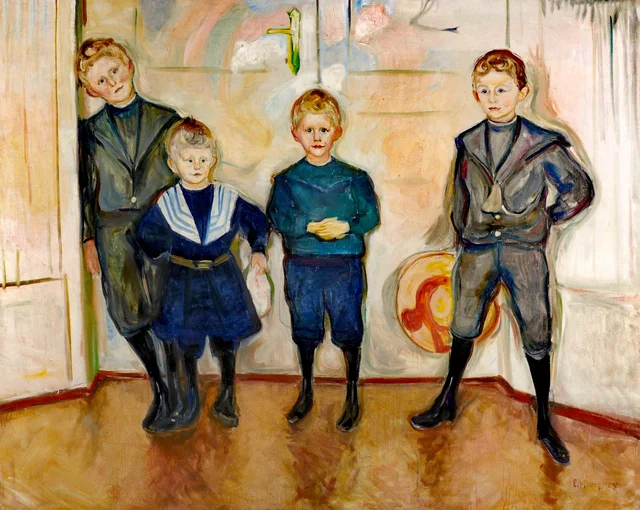 I figli del dottor LindeEdvard Munch, 1903
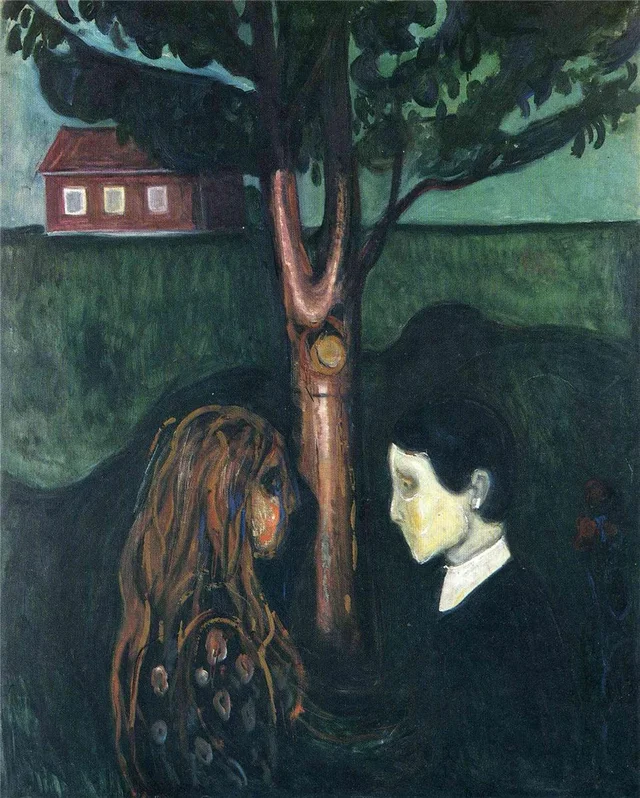 Occhio negli occhiEdvard Munch, 1899
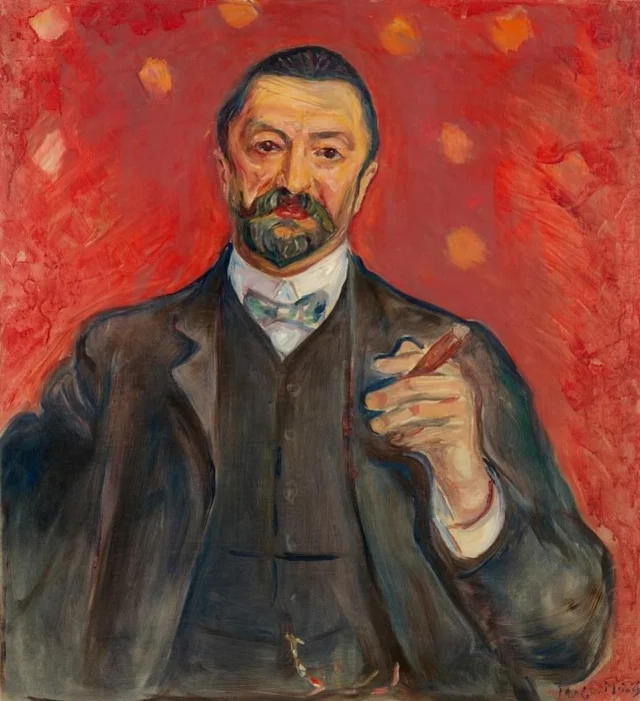 Felix AuerbachEdvard Munch, 1906
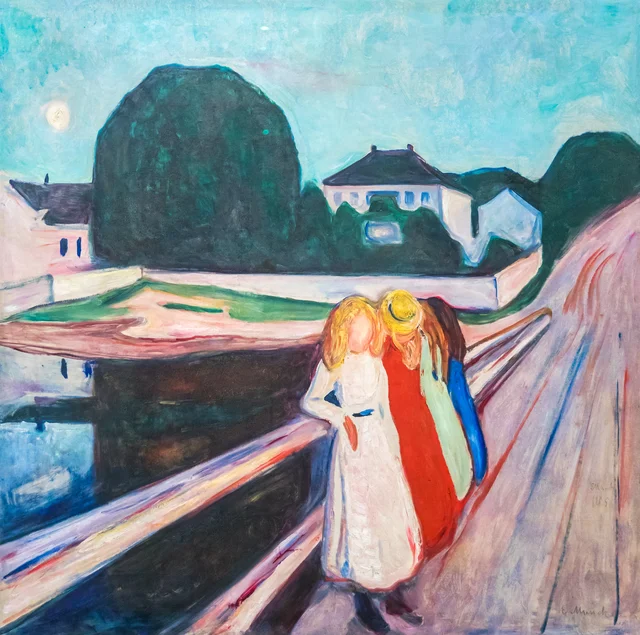 Quattro ragazze sul ponteEdvard Munch, 1905
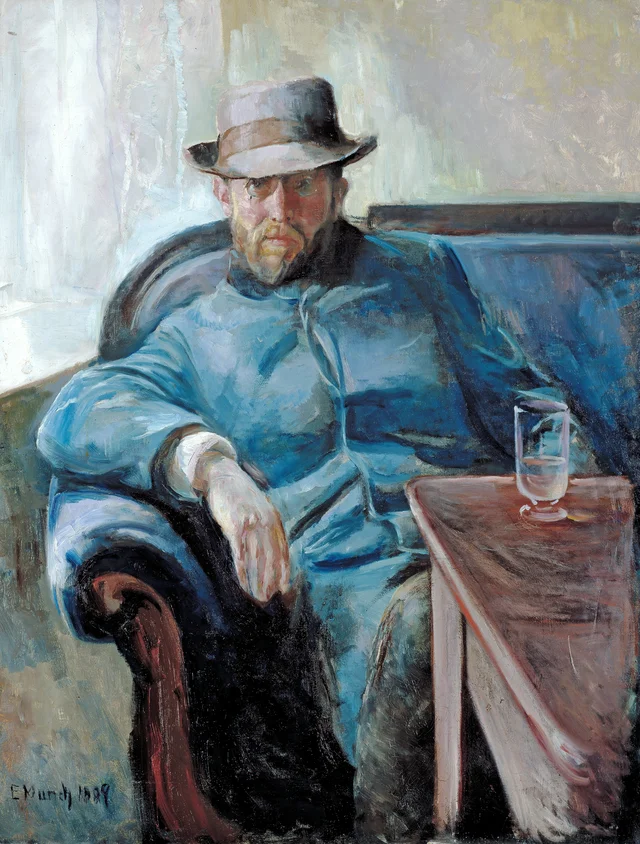 Hans JægerEdvard Munch, 1889
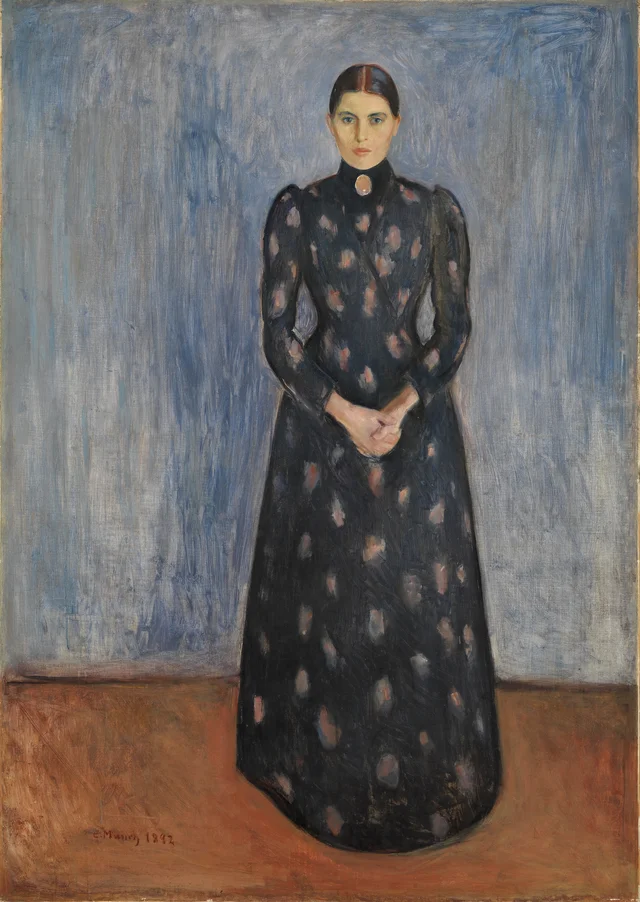 Inger in nero e violaEdvard Munch, 1892
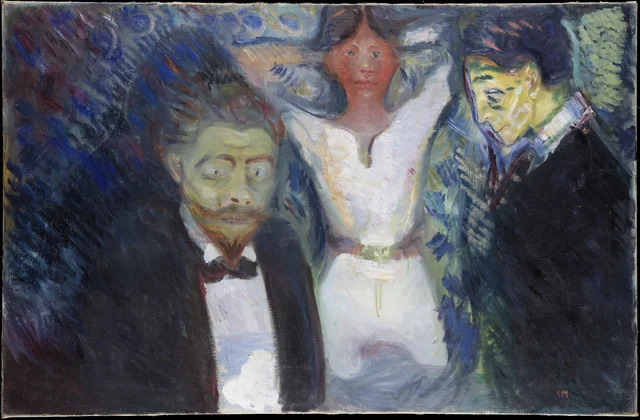 GelosiaEdvard Munch, 1913
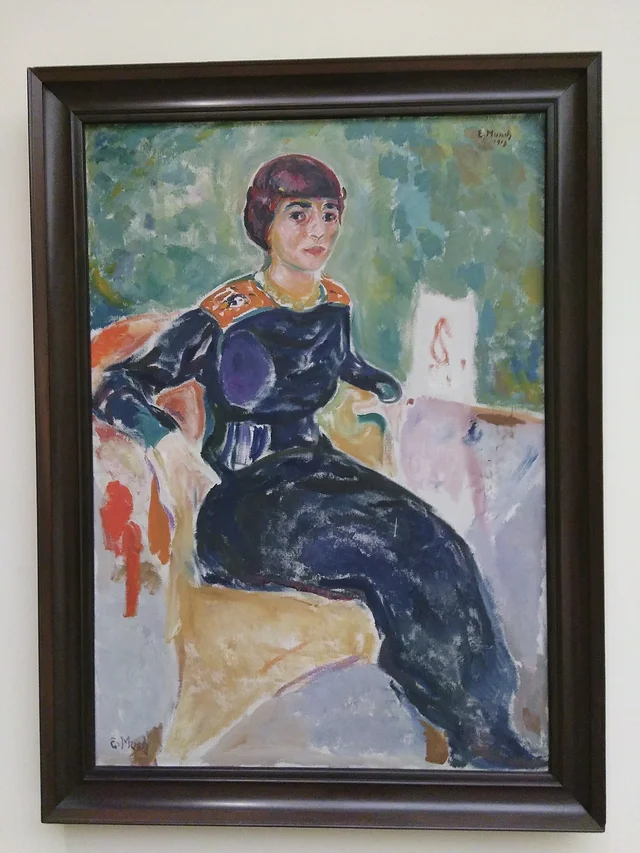 Ritratto di Elsa GlaserEdvard Munch, 1913
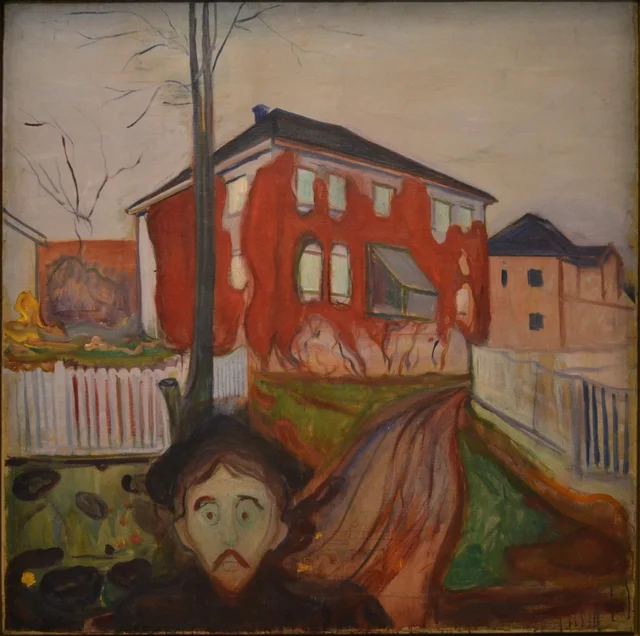 Vite vergine rossaEdvard Munch, 1898
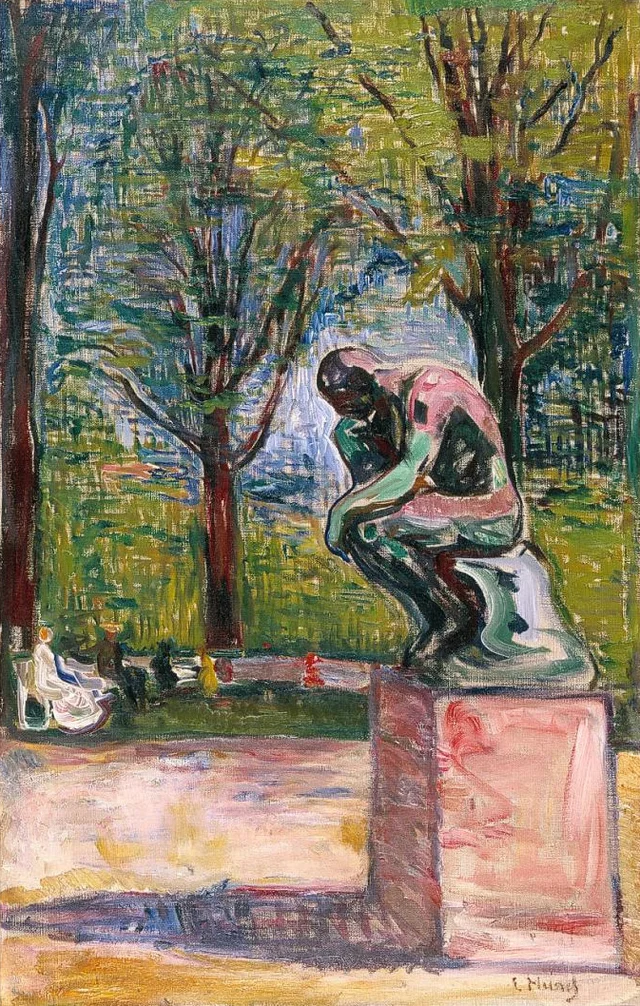 Il "Pensatore" di Rodin nel giardino del dott. LindeEdvard Munch, 1907
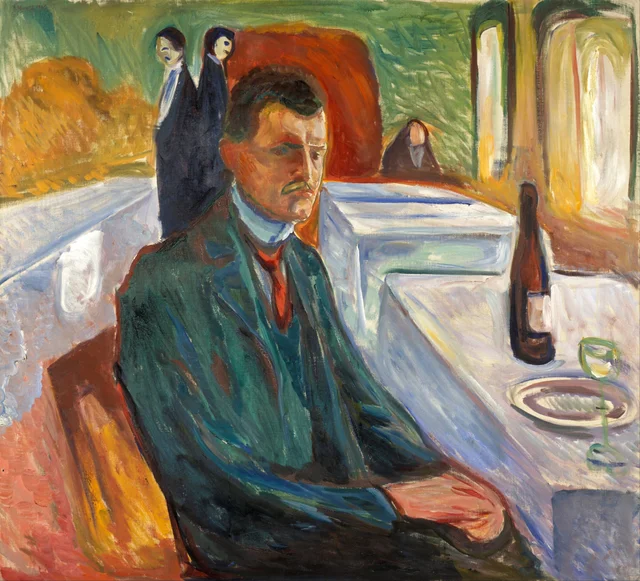 Autoritratto con una bottiglia di vinoEdvard Munch, 1906