テ・タマリ・ノ・アトゥア

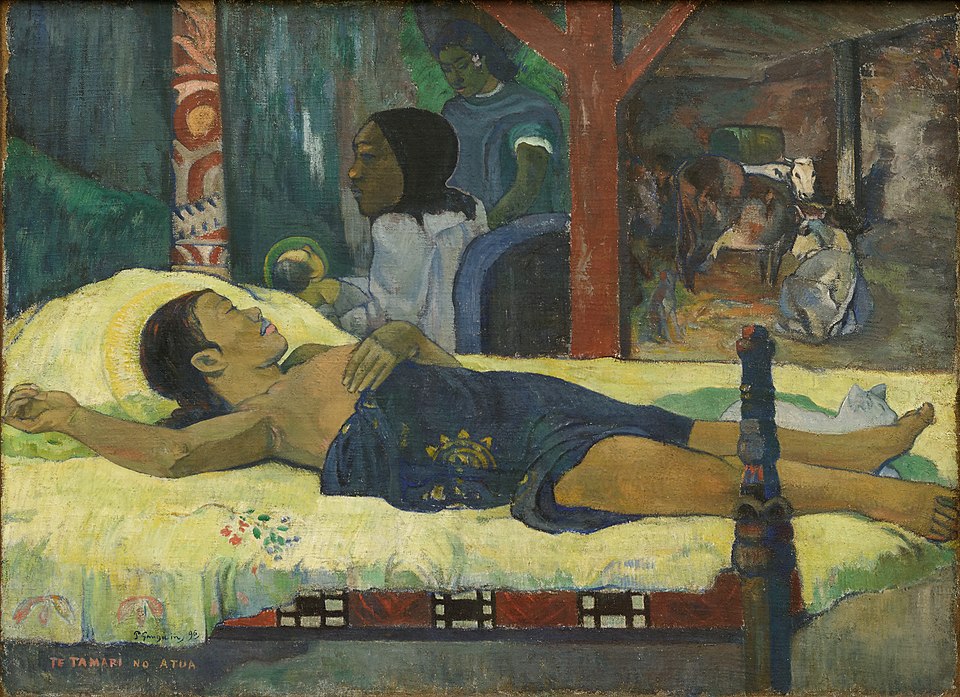
Paul Gauguin, Te tamari no atua, 1896. Wikimedia Commons. · PD

テ・タマリ・ノ・アトゥア


作品情報

アーティスト
ポール・ゴーギャン
制作年
1896
技法
油彩
種類
絵画
寸法
96 × 131.1 cm

ストーリー

Gauguin painted this Nativity in Tahiti in 1896, during his second stay on the island, and the holy scene is really his own. He was living in a cabin near Papeete with a young Tahitian woman, Pahura, who was pregnant that year. In the painting she lies exhausted in the foreground on a bed, while behind her another woman holds the newborn, both mother and child ringed by faint gold halos. A green-winged figure stands by like an angel, and cattle rest in the shadows at the back, turning the room into a Tahitian version of the stable at Bethlehem. The real birth ended in grief, the baby girl dying not long after she came. Gauguin gave the canvas a Tahitian title that means the child of God.

テ・タマリ・ノ・アトゥア — ポール・ゴーギャン — MuseScope