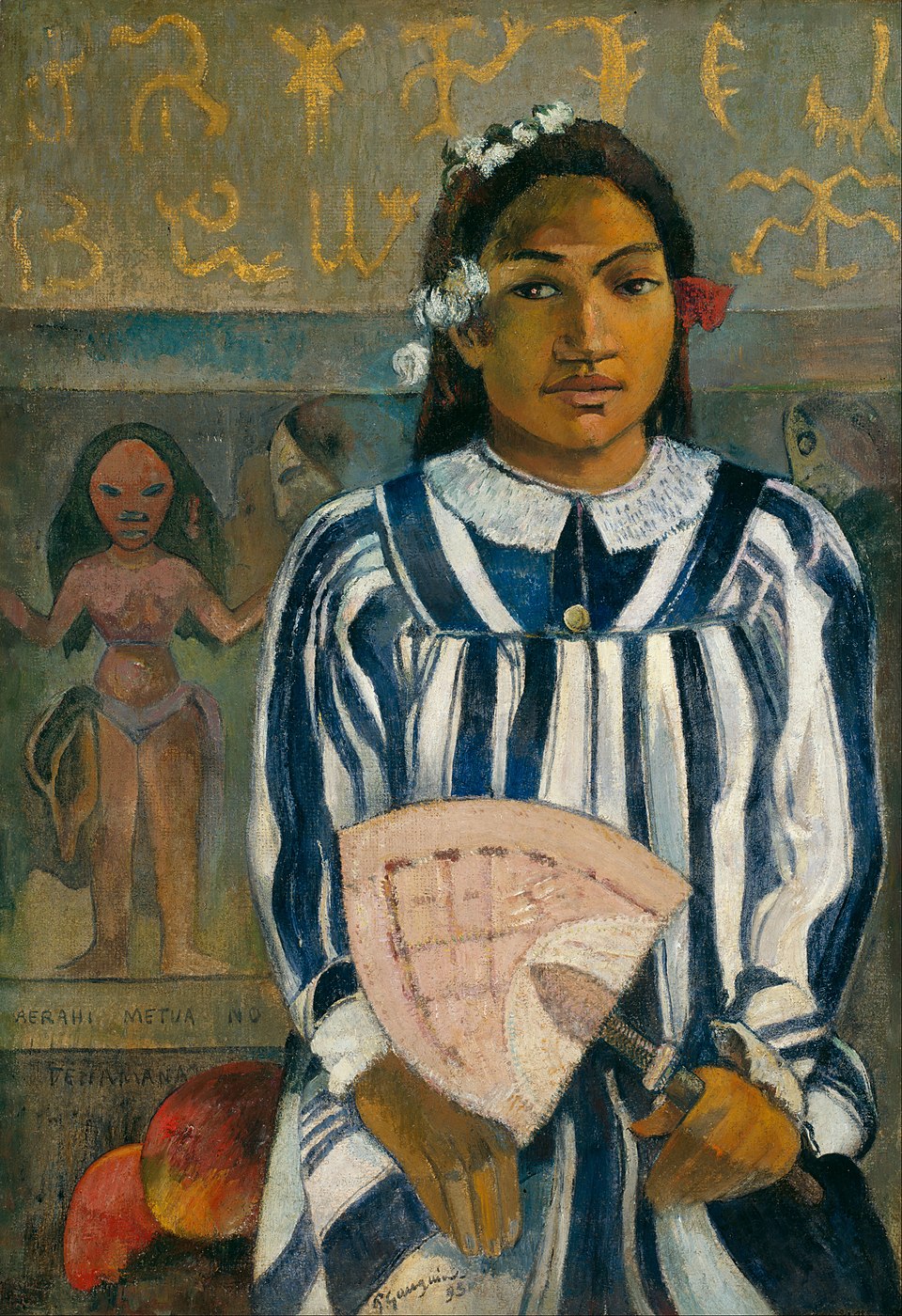
Paul Gauguin, Merahi metua no Tehamana, 1893. Wikimedia Commons. · PD
메라히 메투아 노 테하마나 (테하마나의 조상들)
상세 정보
이야기
고갱이 이 초상을 그린 것은 1893년, 첫 타히티 체류가 끝나 파리로 돌아가기 얼마 전이었다. 그림 속 인물은 그와 함께 살던 젊은 타히티 여인 테하아마나다. 고갱 자신의 말에 따르면 그녀는 열세 살이었다고 하며, 이 관계는 지금도 논란거리다. 그녀는 서양식 선교복을 입고 부채를 쥐고 있다. 뒤편의 배경은 대부분 고갱이 지어낸 것이다. 어스름 속에 신상이 떠오르고, 가장자리에는 오래된 문자를 흉내 낸 기호들이 줄지어 있지만, 그런 문자는 실제로 존재하지 않았다. 제목은 친부모와 길러 준 부모를 여럿 둔다는 그곳의 풍습을 가리킨다. 이것은 고갱이 보고 싶어 한 폴리네시아였고, 찾아낸 것이라기보다 꿈꾼 것에 가까웠다. 이 그림은 현재 시카고 미술관에 있다.