Titian · PD
시시포스
상세 정보
이야기
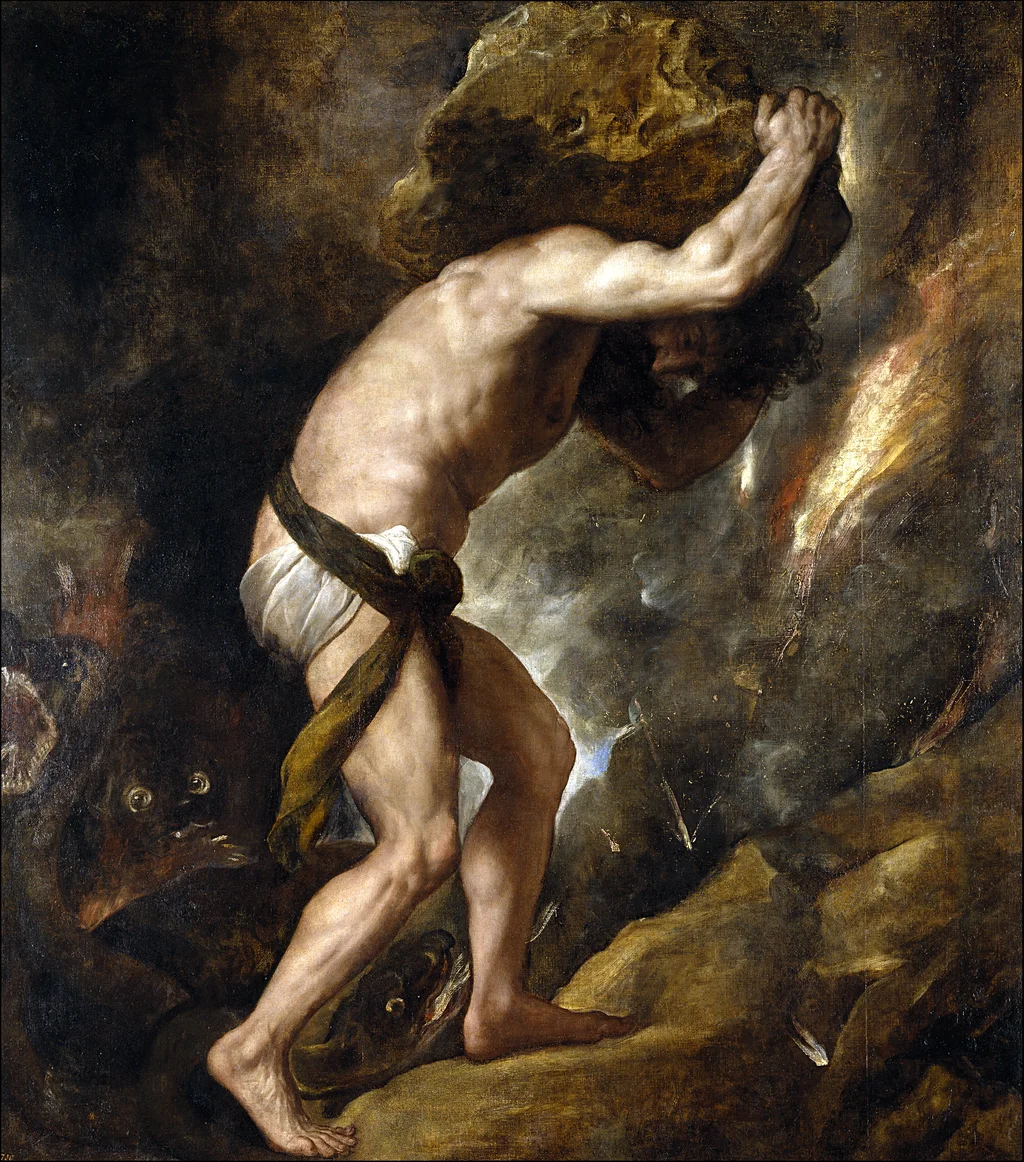
티치아노가 이 그림을 그린 것은 1548년 무렵, 아우크스부르크에서 황제 카를 5세를 섬기던 때로, 바로 한 해 전인 1547년에 카를 5세는 뮐베르크 전투에서 독일 신교 제후들의 반란을 무너뜨린 참이었다. 주문은 황제의 누이이자 그를 대신해 네덜란드를 다스리던 헝가리의 마리아에게서 나왔다. 그녀는 저승에서 영원히 벌받는 그리스 신화의 이름난 죄인들을 그린 커다란 화폭 넉 점을 원했고, 그것을 자기 궁전의 대연회장에 걸었다. 반란을 꿈꾸는 귀족에게 보내는 뜻은 조금도 에두르지 않았다. 화면 속 시시포스는 거대한 바위를 비탈 위로 끝없이 밀어 올리도록 벌받았고, 그 무게는 언제나 다시 굴러 내린다. 뒷날 이 연작은 펠리페 2세가 물려받았고, 그렇게 마드리드에 이르렀다.