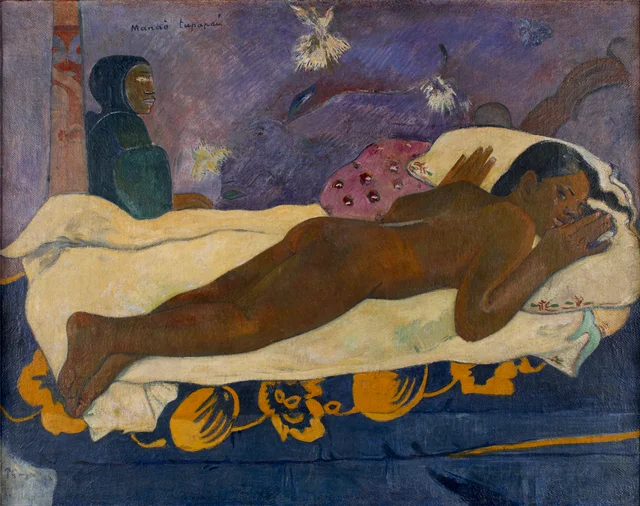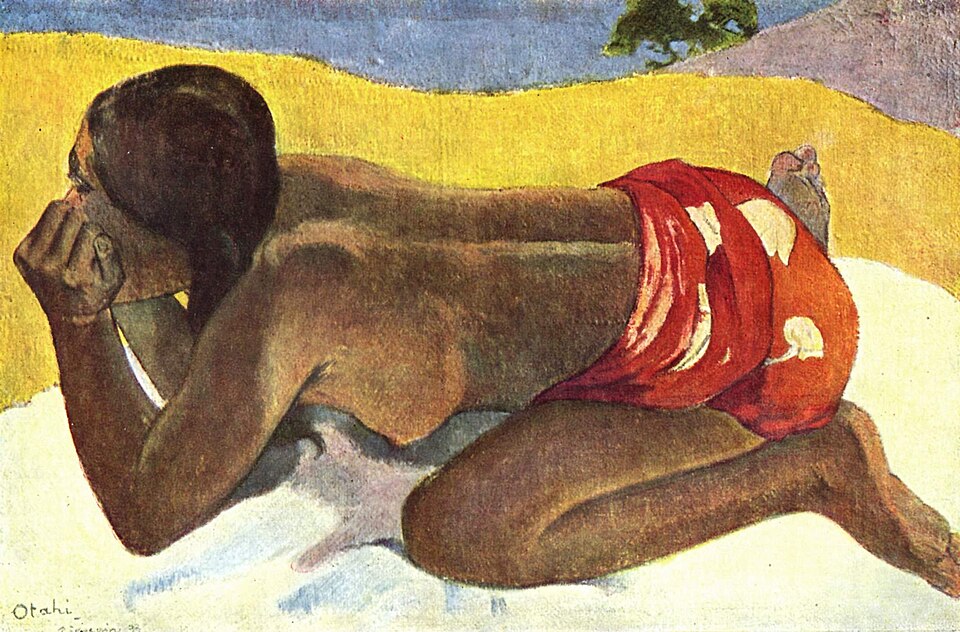
Paul Gauguin, Alone, 1893. Wikimedia Commons. · PD
Sozinha
Ficha técnica
A história
Gauguin sailed to Tahiti in 1891 chasing an idea: a place still untouched by Europe, where he could paint something older and simpler than Paris. What he found was a French colony, its old religion largely displaced by missionaries and much of the older way of life gone. He painted anyway, inventing some of the Tahiti he had come for. This is from 1893, near the end of that first stay, a single woman crouched against a dark ground, her head resting on her hand, a strip of cloth, the pareo, at her waist. He gave it a Tahitian title, Otahi, meaning alone, and set her flat against bands of deep colour rather than any real room. Later that year, out of money and often sick, he took a ship back to France, carrying a stack of these canvases he hoped Paris would finally buy.