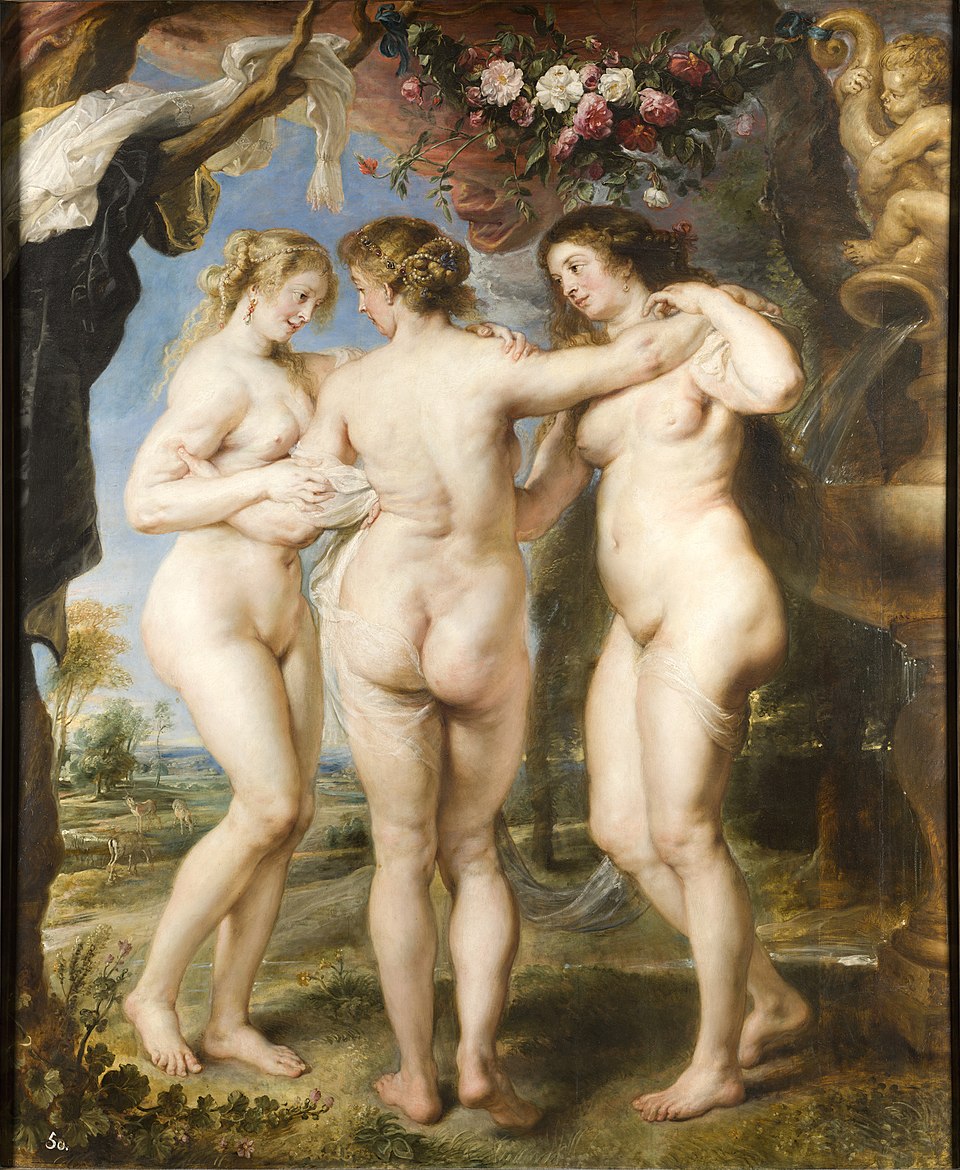
Peter Paul Rubens, The Three Graces, 1630. Wikimedia Commons. · PD
As Três Graças
Ficha técnica
A história
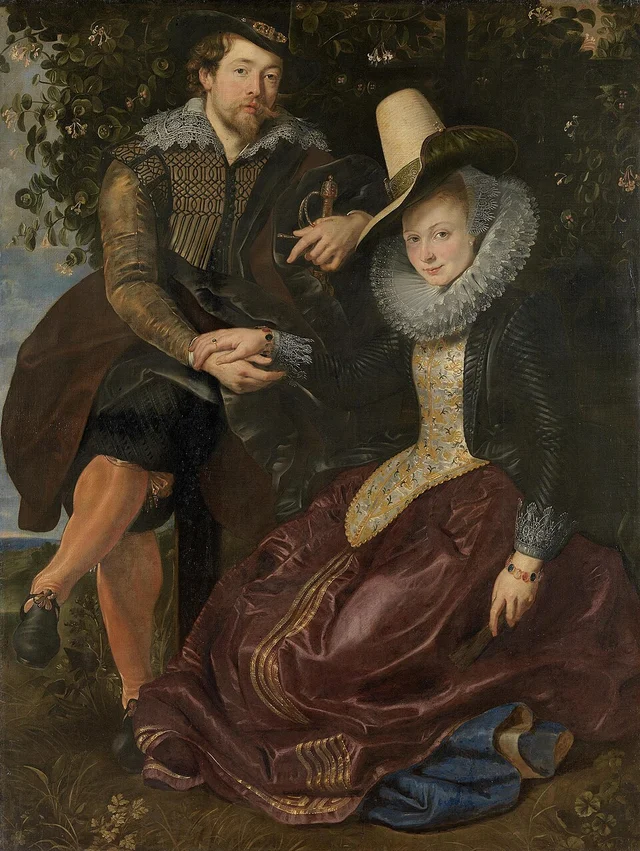
As três Graças da mitologia, filhas de Júpiter e companheiras de Vênus, aparecem aqui abraçadas num círculo, os corpos fartos e rosados que se tornaram a imagem clássica do ideal de beleza de Rubens. O pintor fez esta tela já maduro, por volta de 1630, e não por encomenda: ficou com ela em sua própria casa até morrer, o que diz muito sobre o quanto gostava do resultado. Acredita-se que a Graça da esquerda tenha os traços de Helena Fourment, a jovem segunda esposa com quem ele se casara pouco antes, apaixonado. A pele parece de fato macia, iluminada, com os reflexos rosados que ele obtinha em camadas finas de tinta. Uma guirlanda de flores pende sobre as três, e ao fundo se abre uma paisagem tranquila. A obra pertence ao Museu do Prado, em Madri.