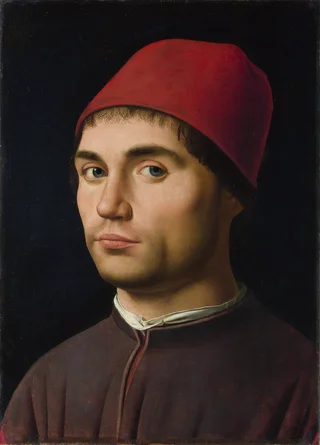
Antonello da Messina
1479 · Königreich Sizilien · Frührenaissance
Die Geschichte
Antonello da Messina verbrachte seine Laufbahn im Pendeln zwischen Welten, die einander im 15. Jahrhundert selten berührten, Sizilien, Neapel und schließlich Venedig, und trug dabei eine Maltechnik mit sich, über die die meisten italienischen Maler noch nicht verfügten. Er erlernte die reine Ölmalerei, wahrscheinlich durch niederländische Bilder, die Neapel erreicht hatten, jene Technik, die Jan van Eyck Jahrzehnte zuvor in Brügge vervollkommnet hatte, bei der dünne, durchscheinende Ölschichten einem Maler glänzende Lichter und weichen Schatten aufzubauen erlaubten, wie kein italienischer Eitempera-Maler sie erreichen konnte.
1475 reiste er nach Venedig und blieb etwa anderthalb Jahre. Es genügte. Venezianische Maler, darunter der junge Giovanni Bellini, nahmen seinen Umgang mit der Ölfarbe und seine Art auf, ein Gesicht mit weichen Lichtabstufungen zu modellieren, Veränderungen, die die venezianische Malerei der folgenden Generation prägten. Antonellos Bildnisse aus dieser Zeit, eng beschnittene Dreiviertelansichten vor schlichtem dunklem Grund, gehören zu den ersten der italienischen Kunst, die einem gewöhnlichen Modell diese Art stiller, eigener Gegenwart verleihen.
Er kehrte nach Messina auf Sizilien zurück und starb dort Anfang 1479, ein Name, außerhalb der Städte, in denen er tatsächlich gemalt hatte, noch immer weniger bekannt.
Weitere Artikel
Werke
21 Werke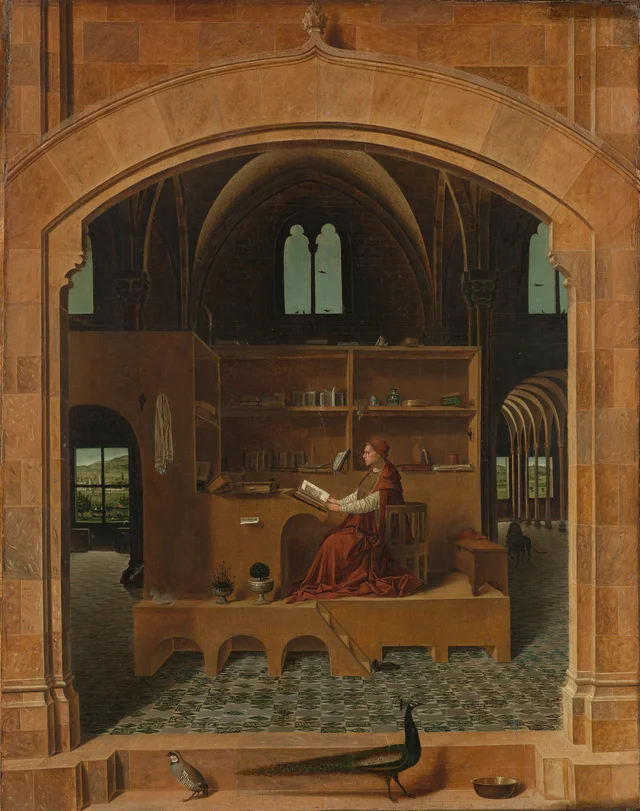 Der heilige Hieronymus in seinem StudierzimmerAntonello da Messina, 1474
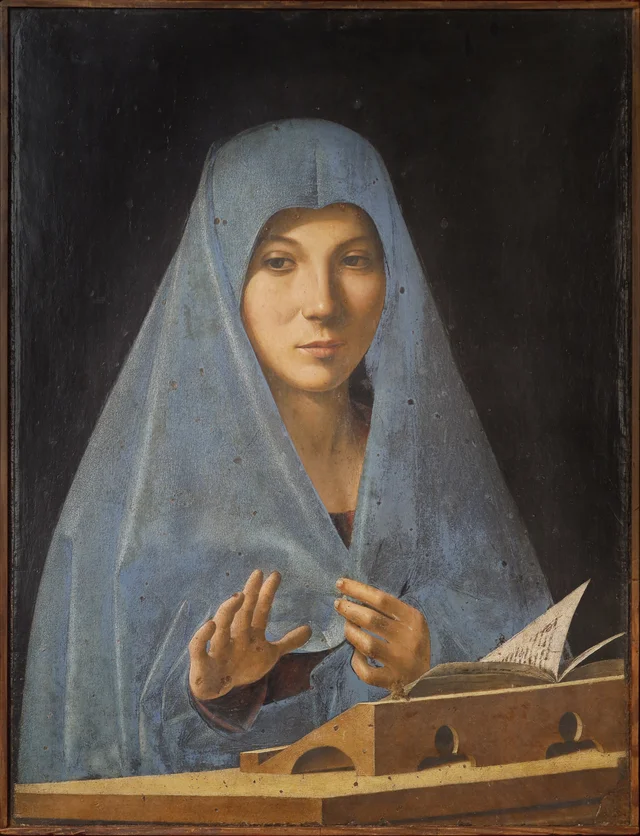 VerkündigungsmadonnaAntonello da Messina, 1476
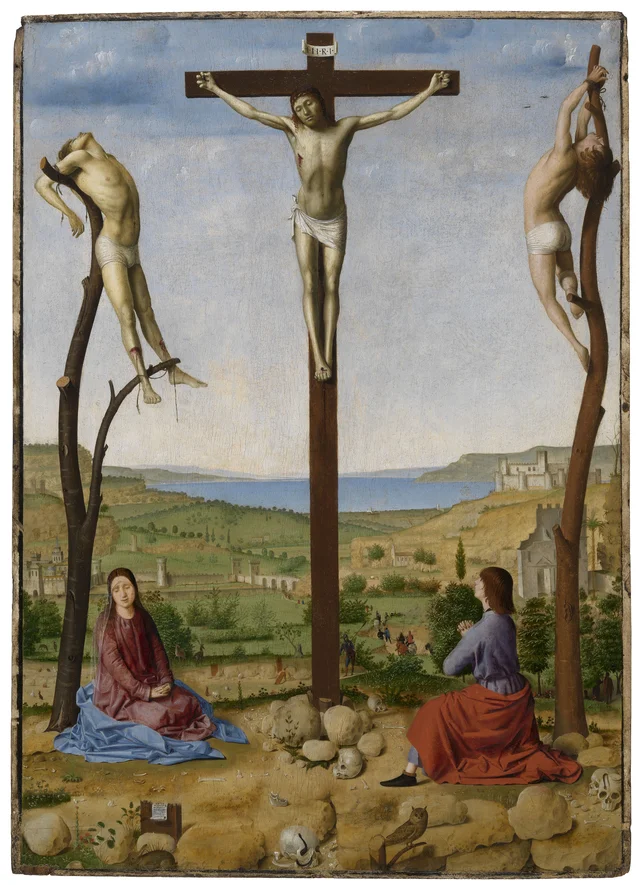 KalvarienbergAntonello da Messina, 1475
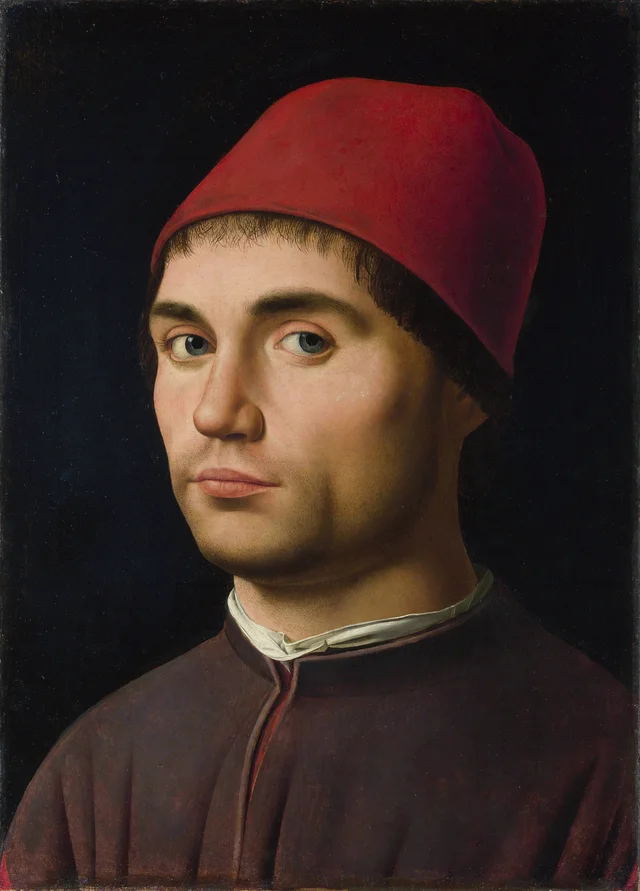 Bildnis eines MannesAntonello da Messina, 1475
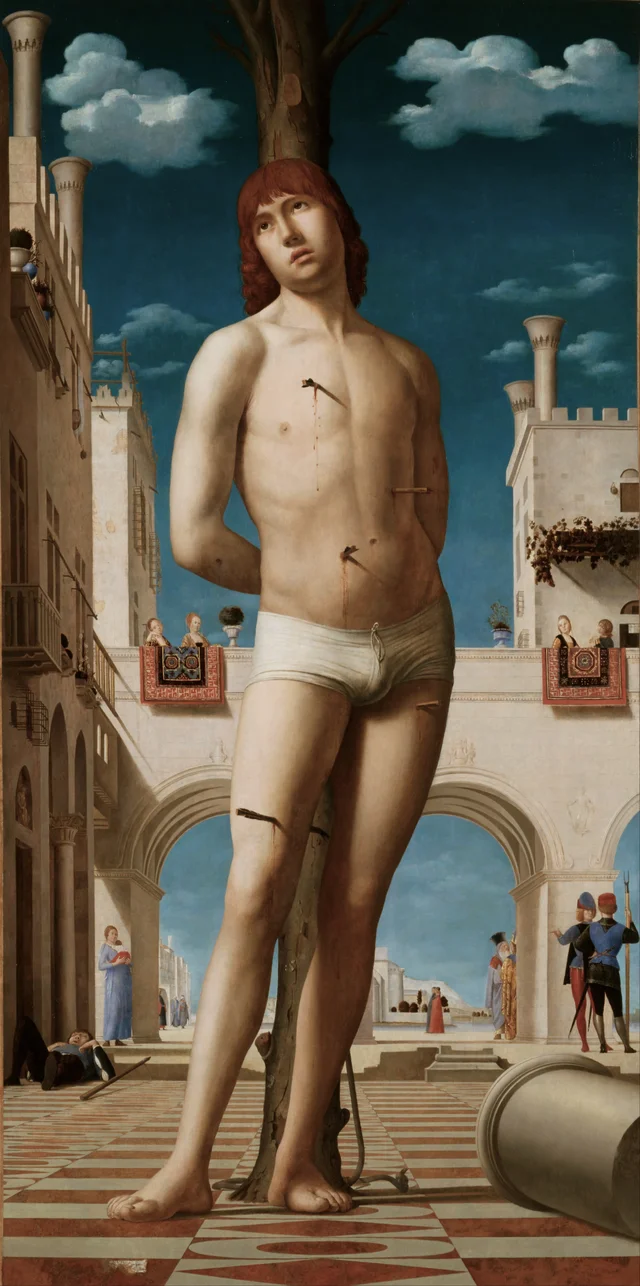 Der heilige SebastianAntonello da Messina, 1478
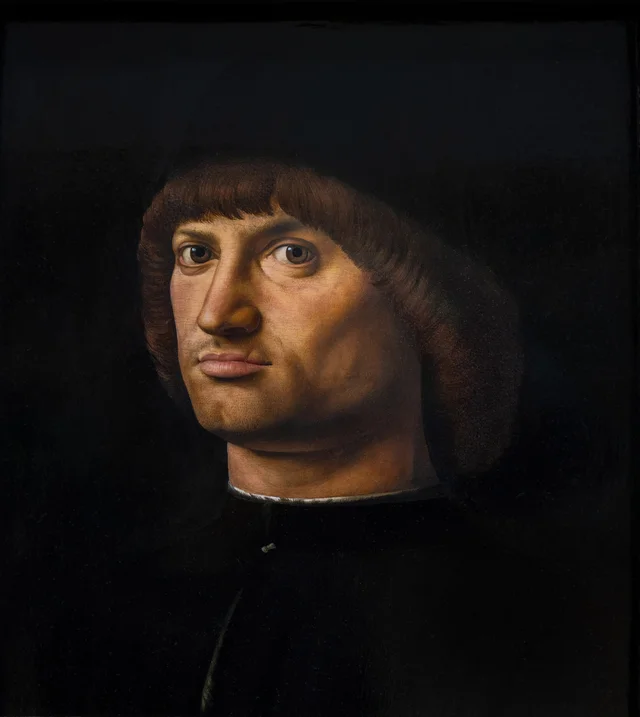 Bildnis eines Mannes, genannt Der CondottiereAntonello da Messina, 1475
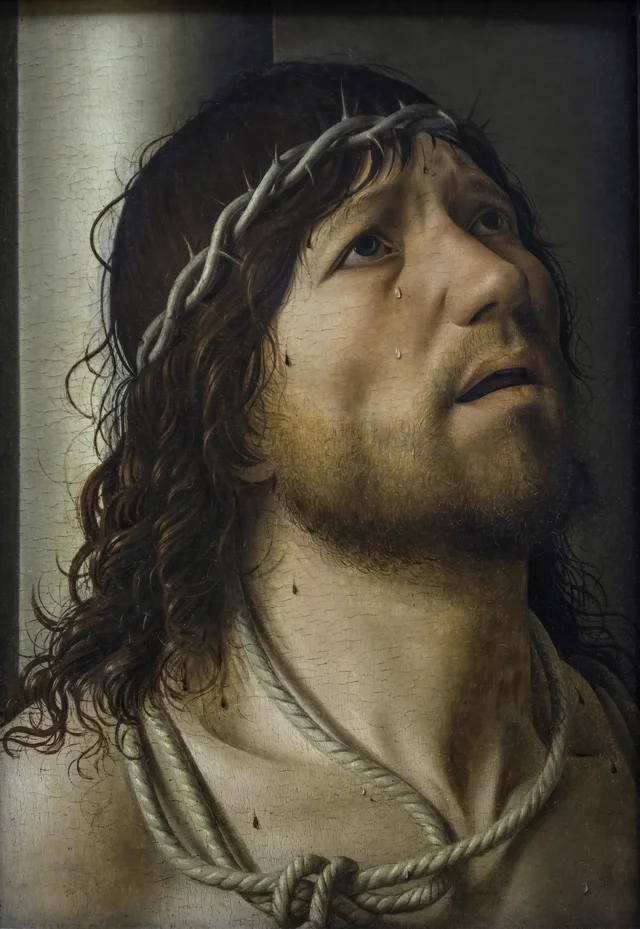 Christus an der GeißelsäuleAntonello da Messina, 1477
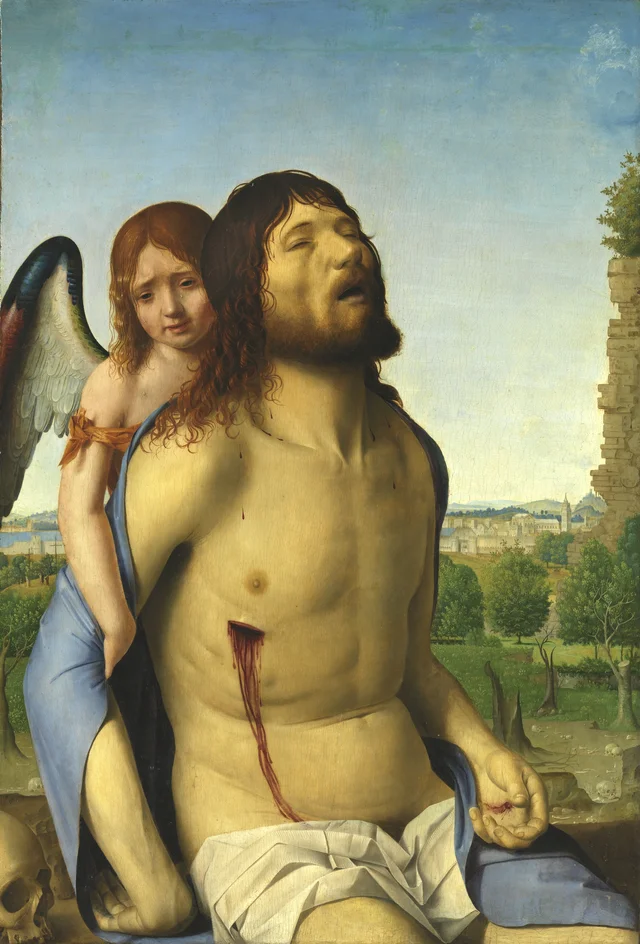 Der tote Christus, von einem Engel gestütztAntonello da Messina, 1475
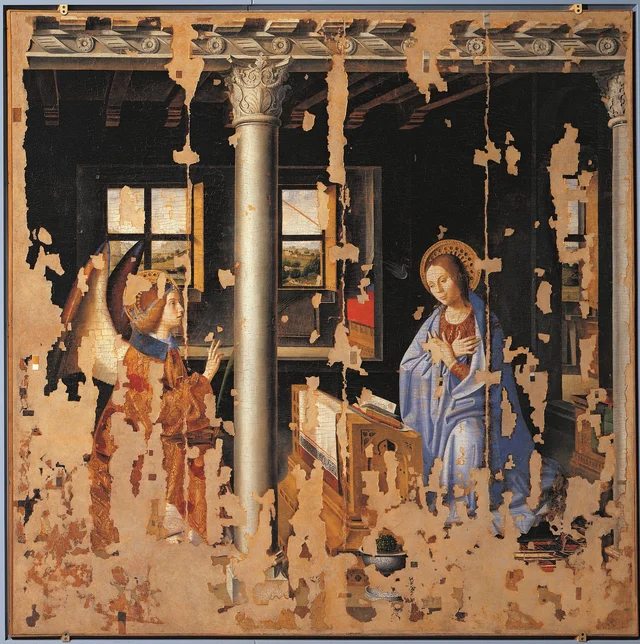 VerkündigungAntonello da Messina, 1474
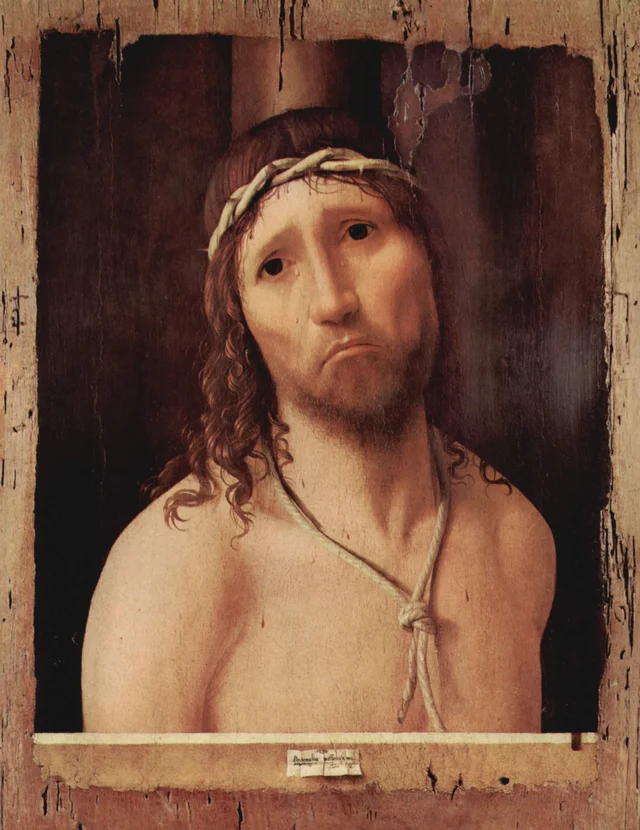 Ecce homoAntonello da Messina, 1473
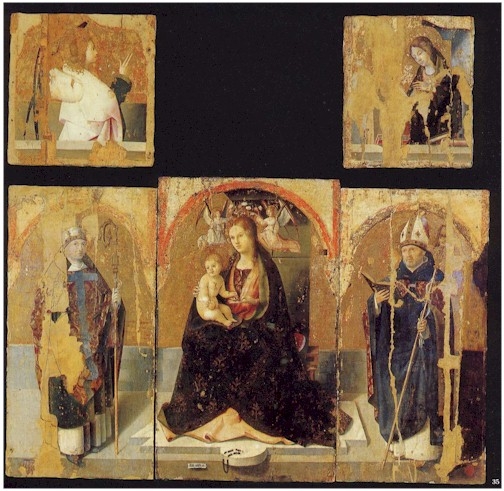 Polyptychon von San GregorioAntonello da Messina, 1473
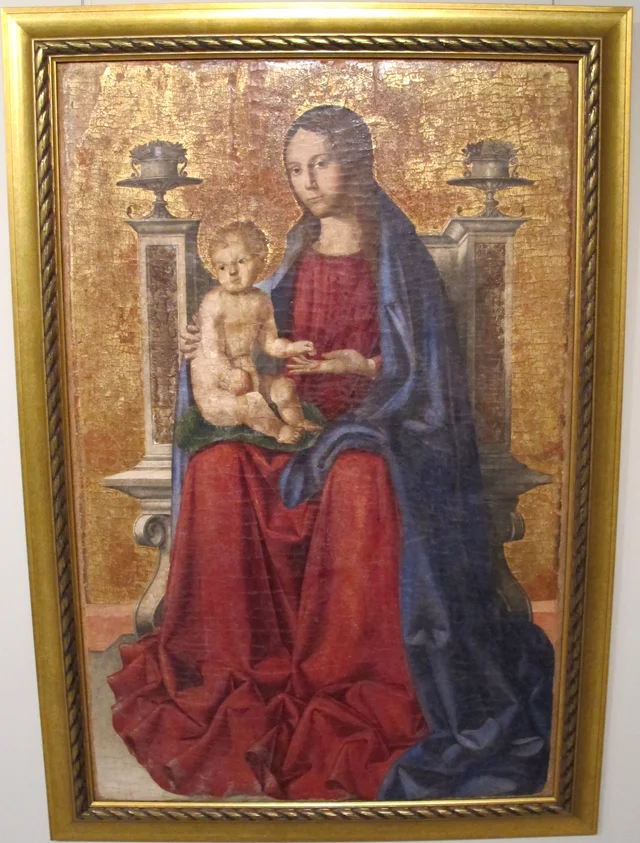 Madonna mit KindAntonello da Messina
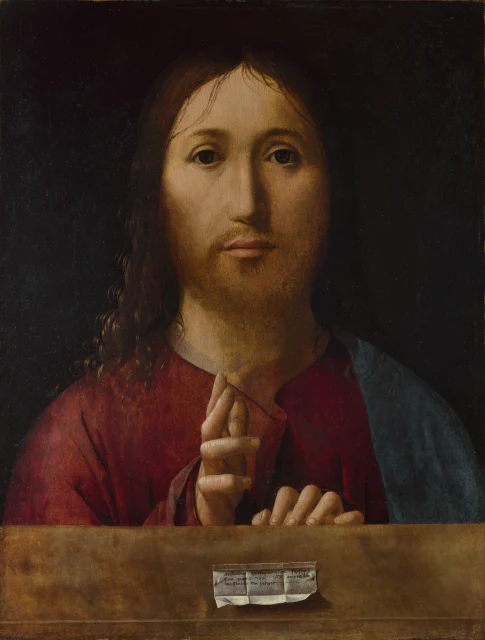 Segnender ChristusAntonello da Messina, 1465
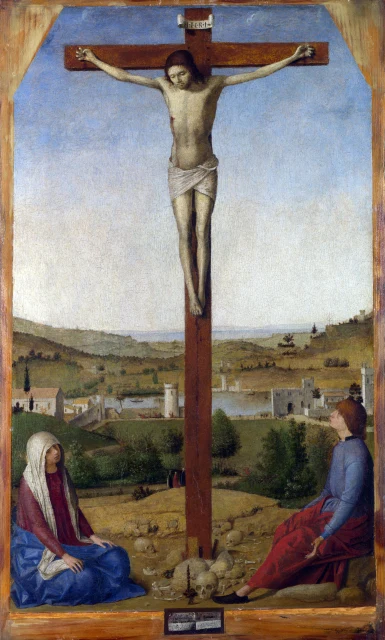 Christus am KreuzAntonello da Messina, 1475
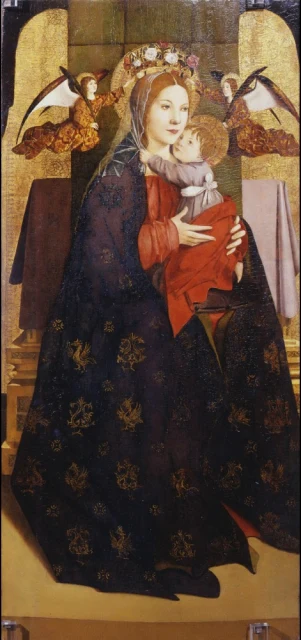 Uffizien-MadonnaAntonello da Messina, 1470
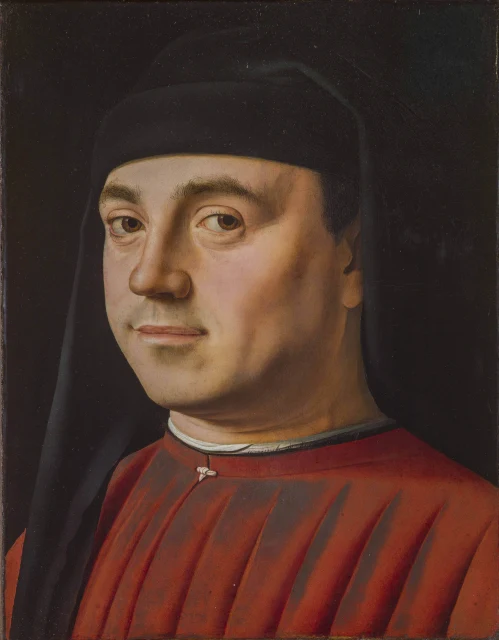 Porträt eines MannesAntonello da Messina, 1476
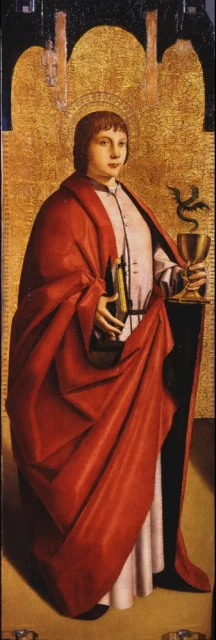 Der Evangelist JohannesAntonello da Messina, 1470
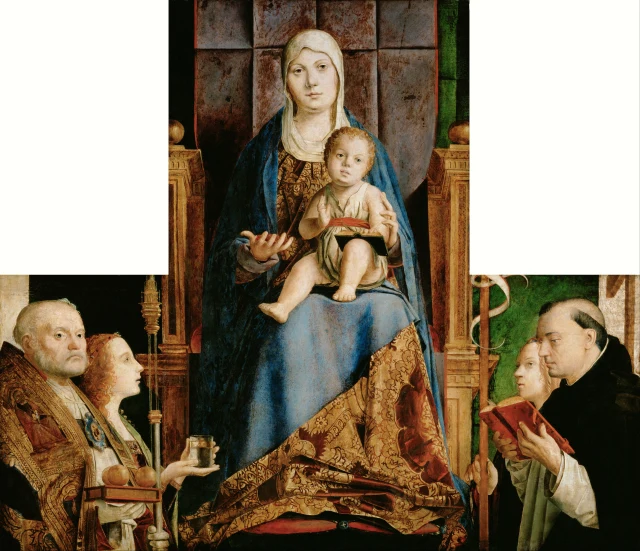 San-Cassiano-AltarAntonello da Messina, 1475
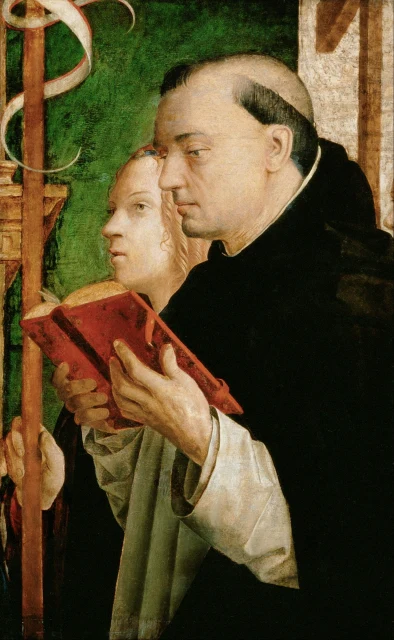 San-Cassiano-Altar: Hl. Dominikus (rechtes Fragment)Antonello da Messina, 1475
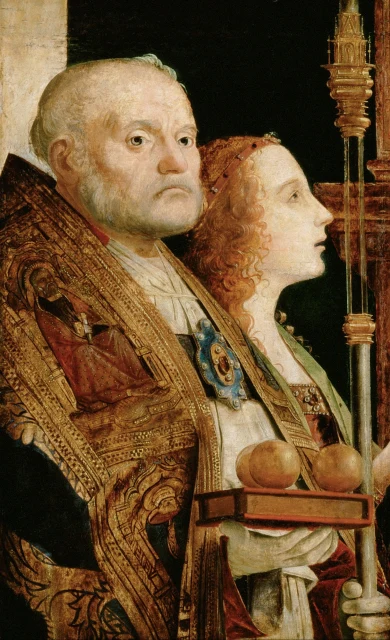 San-Cassiano-Altar: Hl. Nikolaus von Bari (linkes Fragment)Antonello da Messina, 1475
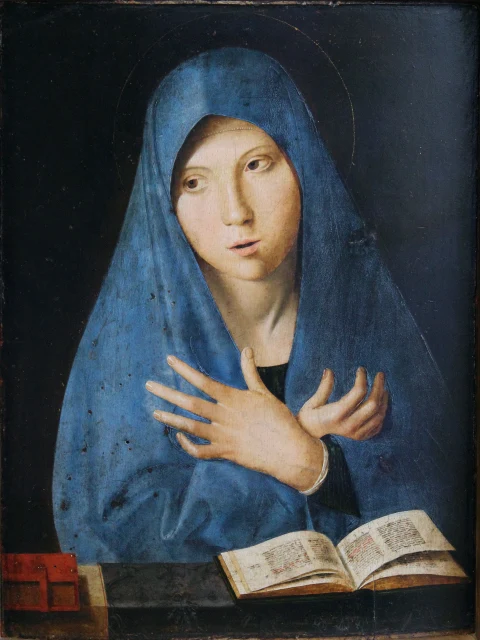 Maria der VerkündigungAntonello da Messina, 1473