Paul Gauguin, Merahi metua no Tehamana, 1893. Wikimedia Commons. · PD
Merahi metua no Tehamana (Die Ahnen der Tehamana)
Details
Die Geschichte
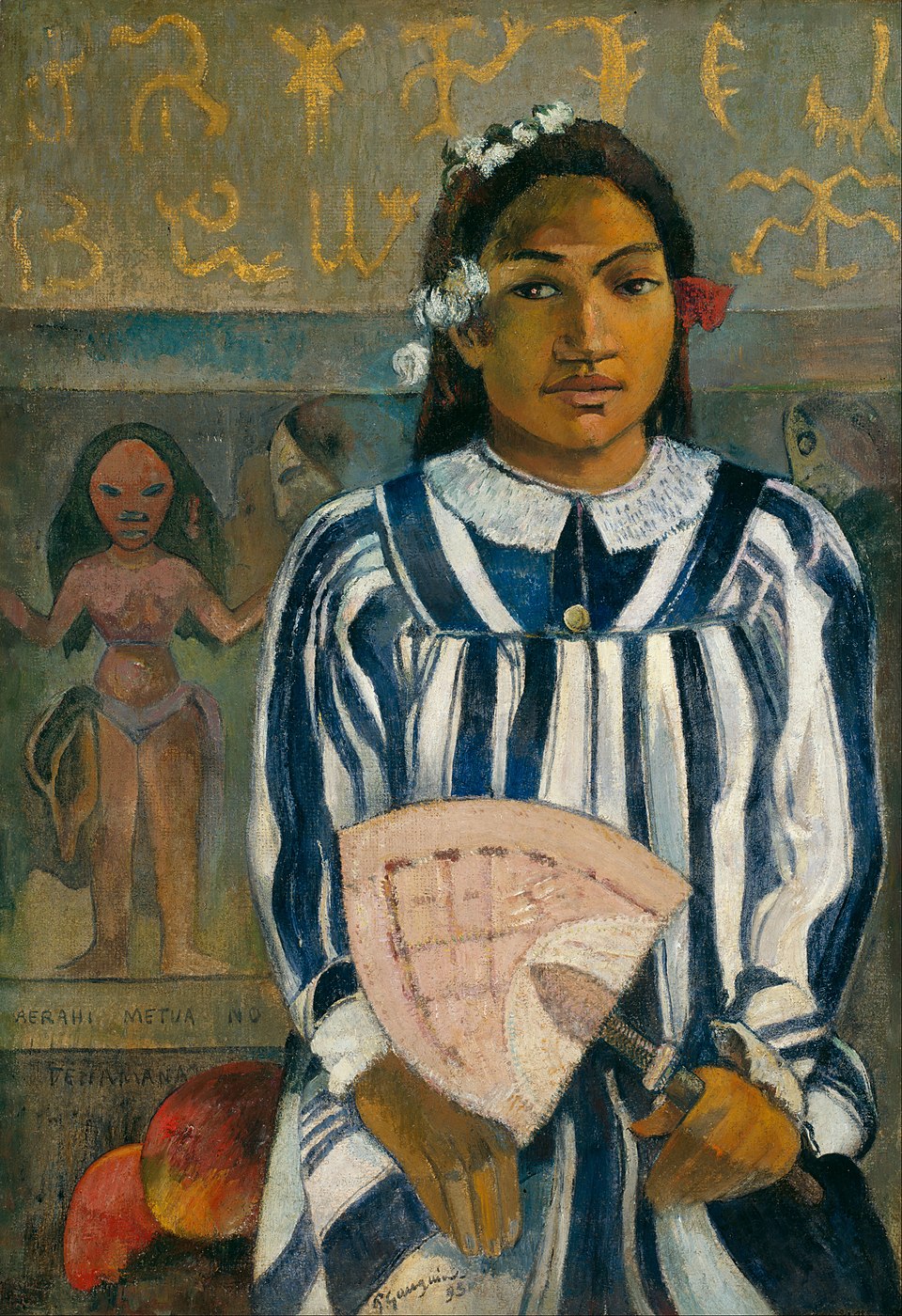
Gauguin malte dieses Bildnis 1893, am Ende seines ersten Tahiti-Aufenthalts, kurz vor der Ruckkehr nach Paris. Dargestellt ist Teha'amana, die junge Tahitianerin, mit der er zusammenlebte; er behauptete, sie sei dreizehn gewesen, und diese Beziehung wird bis heute kontrovers diskutiert. Sie tragt ein Missionskleid nach westlichem Schnitt und halt einen Facher. Den Hintergrund erfand Gauguin grosstenteils: eine Gottheit im Halbdunkel und ein Fries aus Zeichen, die eine uralte Schrift nachahmen, die es gar nicht gab. Der Titel spielt auf einen einheimischen Brauch an, mehrere Eltern zu haben, leibliche und angenommene. Es war das Polynesien, das Gauguin sehen wollte, eher ertraumt als vorgefunden. Heute hangt das Bild im Art Institute of Chicago.