Abraham Mignon
1640–1679 · Dutch Republic · Dutch Golden Age, Baroque, Still life painting
The story
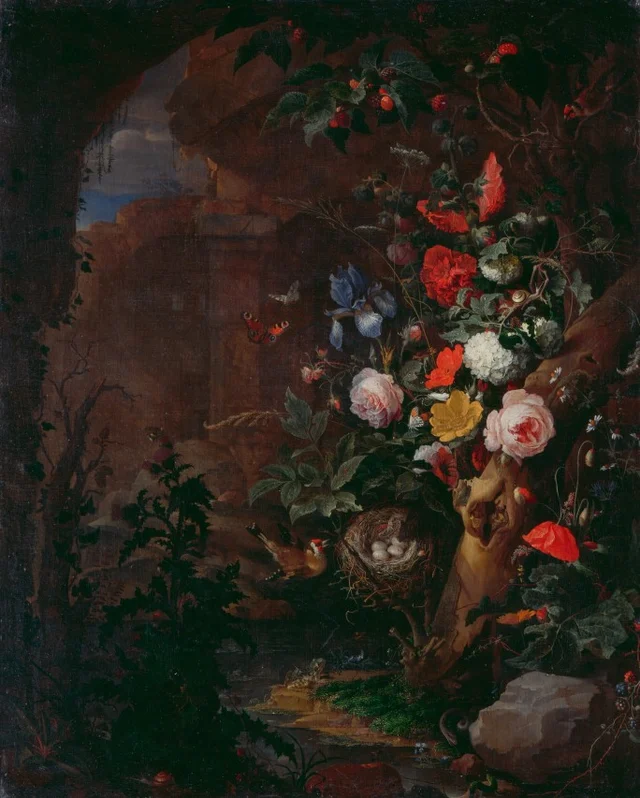
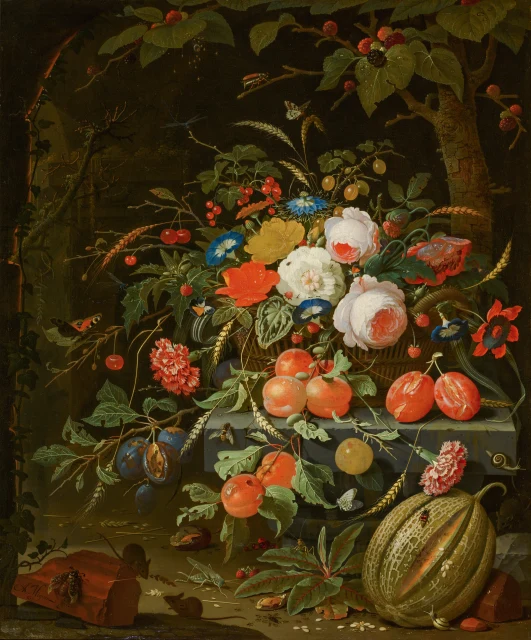
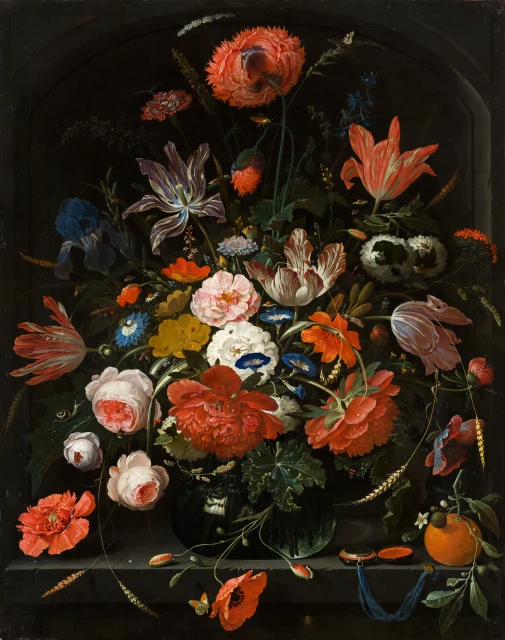
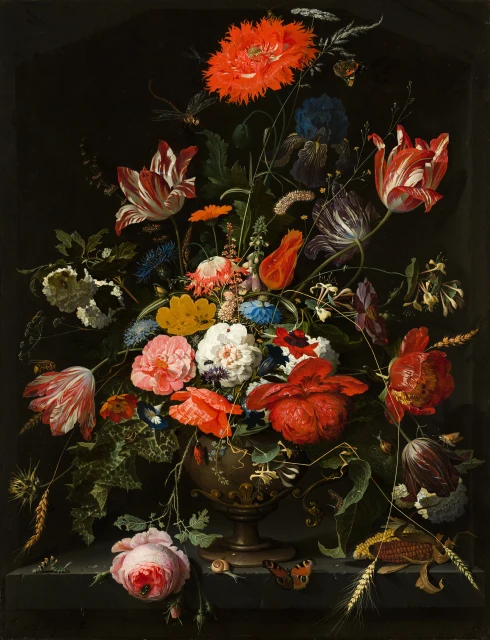
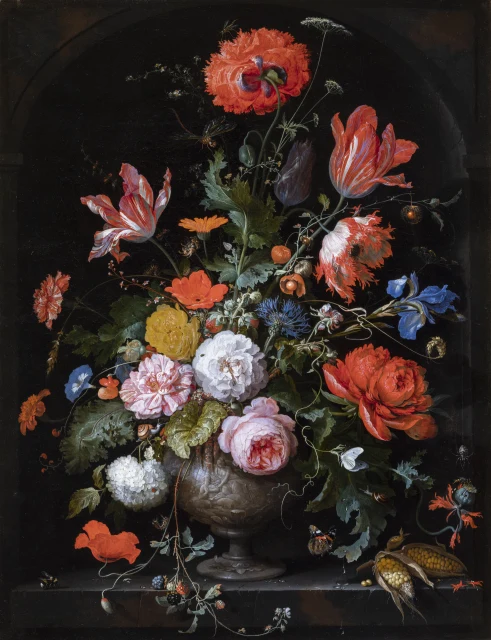
Abraham Mignon painted flowers and fruit so crowded with life that something is always creeping through them. Look closely at one of his bouquets and you find snails, caterpillars, butterflies and small lizards moving among the petals, a reminder, in the language of Dutch Golden Age still life, that everything ripe is already starting to rot.
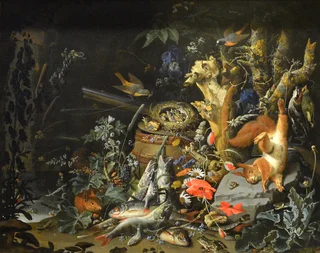
He was born in Frankfurt in 1640 to a shopkeeping family and learned his trade in Germany under the still-life painter Jacob Marrel. Marrel had ties to Utrecht in the Dutch Republic, and it was there that Mignon joined the workshop of Jan Davidsz de Heem, the leading still-life painter of the day, around the end of the 1660s. From de Heem he took the bright colour, the confident drawing and the increasingly elaborate arrangements that fill his mature work, flowers spilling from stone niches or tangled in the roots of a forest floor.
Mignon died young in Utrecht in 1679, not yet 40. His flower and fruit pieces hang today in major collections, among them the Louvre in Paris and the Rijksmuseum in Amsterdam.