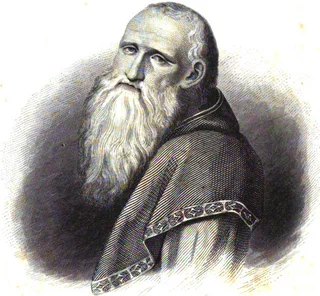
Bernardino Luini
1532 · Duchy of Milan · High Renaissance, Renaissance
The story
When Leonardo da Vinci left Milan in the early 1500s, he left behind a way of painting that half the city's younger artists spent their careers chasing. That smoky softness, where the edge of a cheek melts into shadow, was hard to imitate. Bernardino Luini came closer than almost anyone.
He seems never to have studied directly under Leonardo, but he absorbed the master's Milanese manner so completely that for roughly three centuries dealers and collectors sold Luini's sweet-faced Madonnas as genuine Leonardos, and were believed.
His real strength was fresco, painting straight onto wet plaster. In the convent church of San Maurizio in Milan he covered the walls with calm saints and gentle biblical scenes in soft pinks and pale blues, and in the town of Saronno to the north he did the same. Those Saronno frescoes, finished shortly before he died in 1532, still stand on the sanctuary walls, the paint sitting where he laid it nearly five centuries ago.
More articles
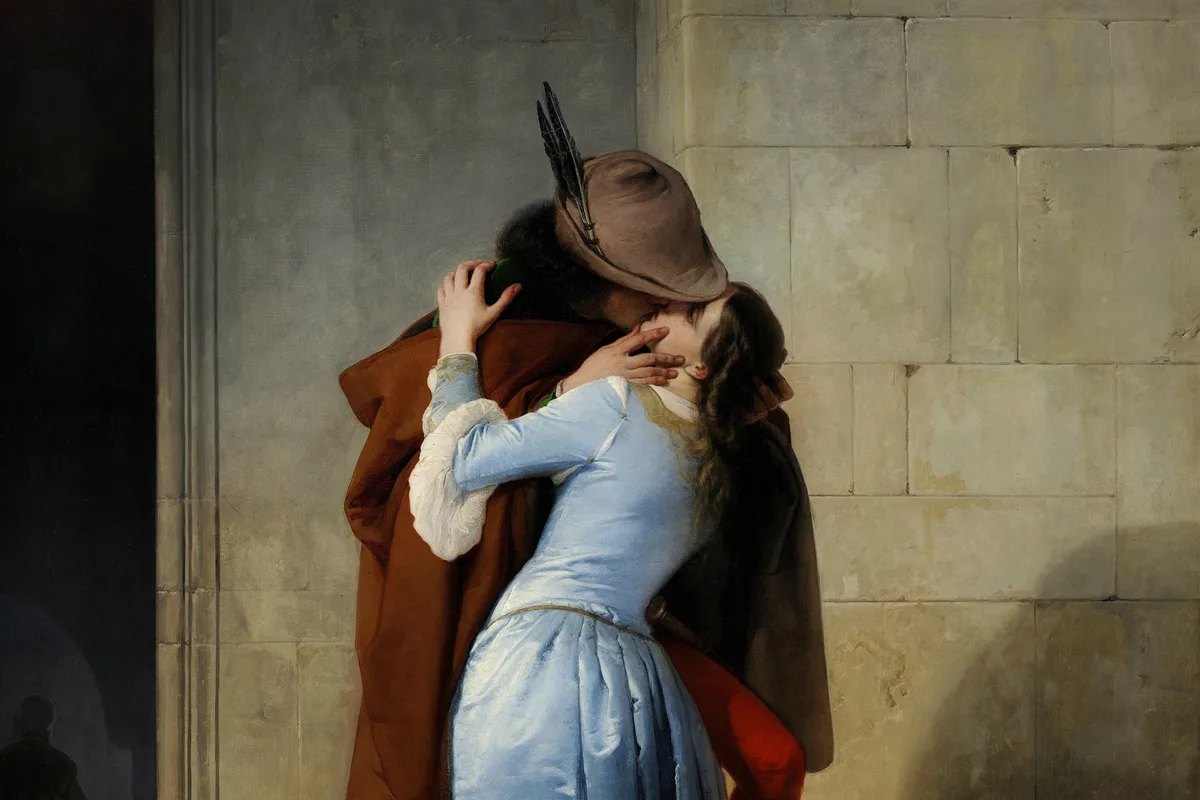
Works
13 works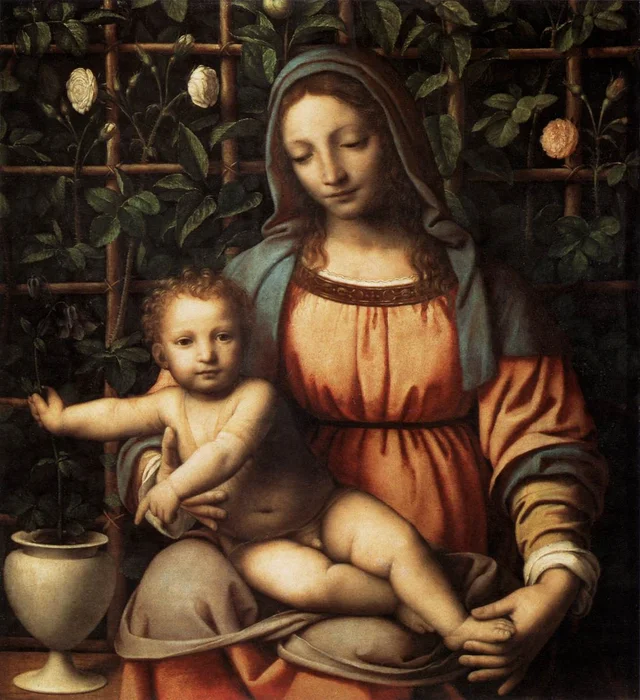 Madonna of the Rose GardenBernardino Luini, 1510
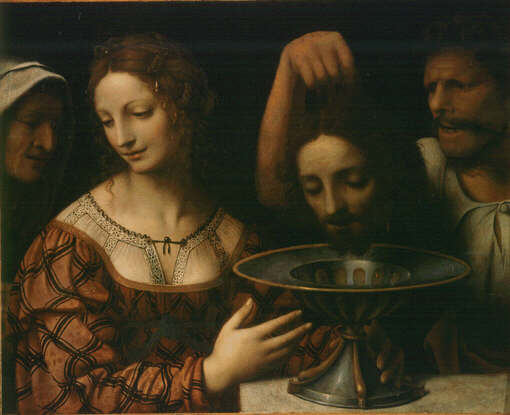 Salome with the head of John the BaptistBernardino Luini, 1527
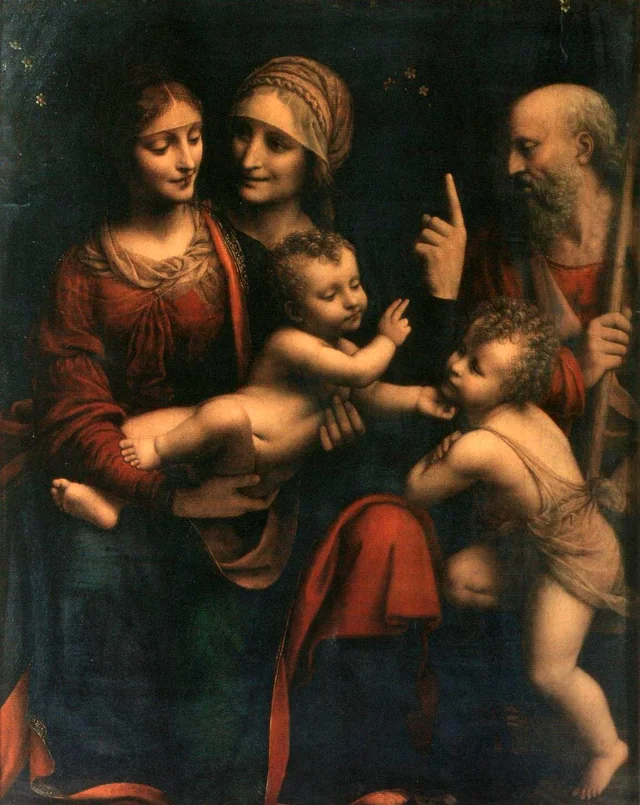 Holy Family with Saints Anne and John the BaptistBernardino Luini, 1520
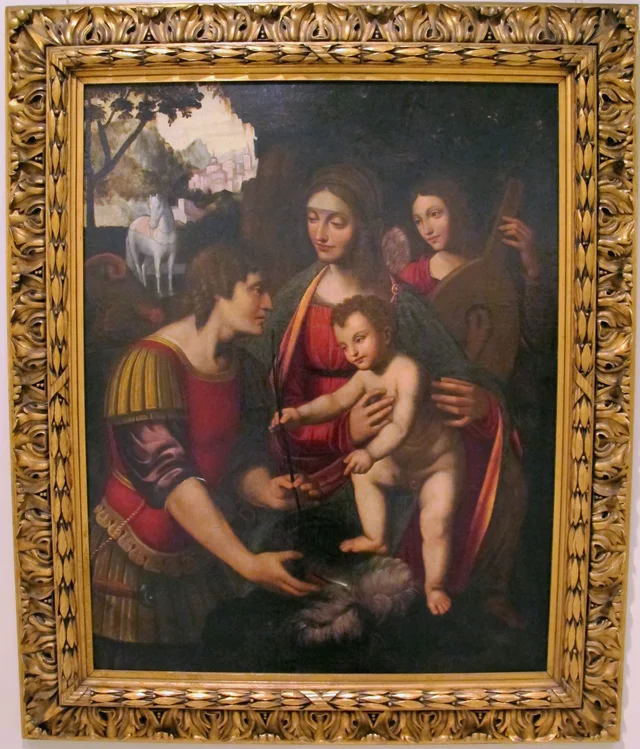 Return of Saint GeorgeBernardino Luini
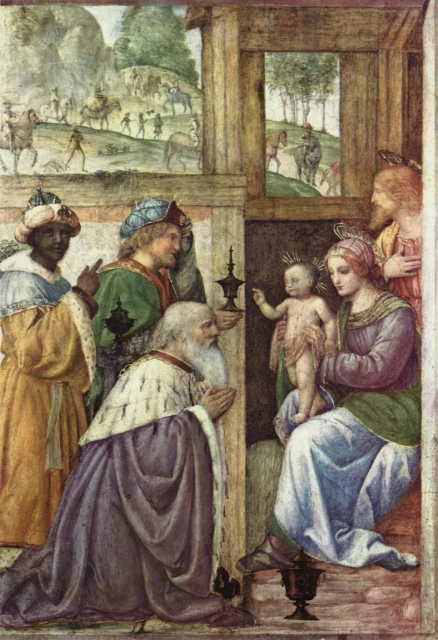 Adoration of the MagiBernardino Luini, 1522
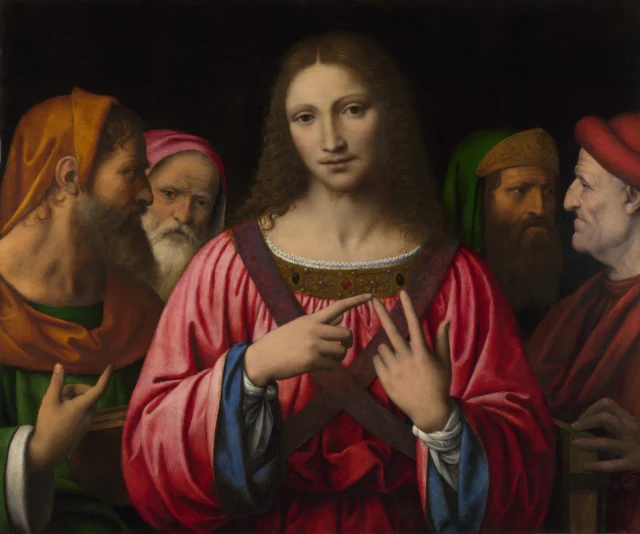 Christ among the DoctorsBernardino Luini, 1522
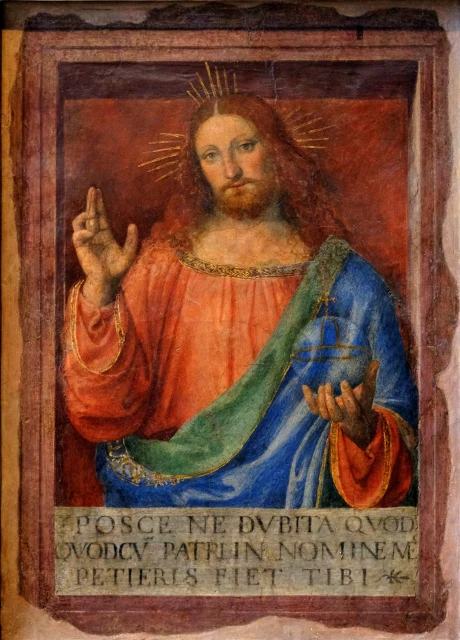 Christ Blessing, Saviour of the WorldBernardino Luini, 1522
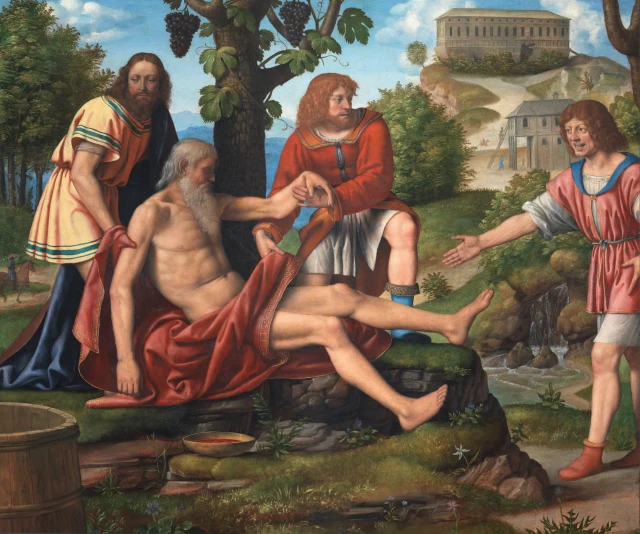 Ham Mocking NoahBernardino Luini, 1513
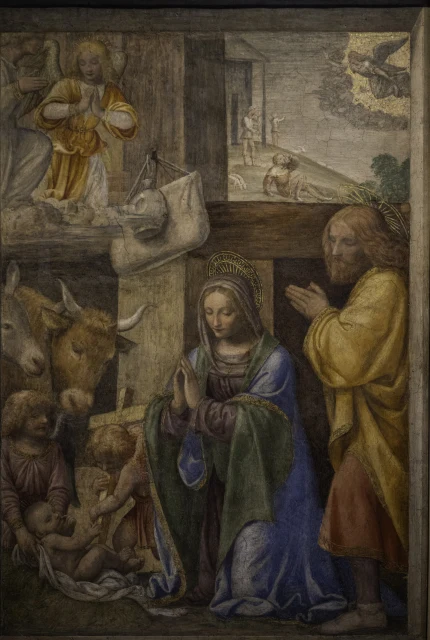 Nativity and Annunciation to the ShepherdsBernardino Luini, 1522
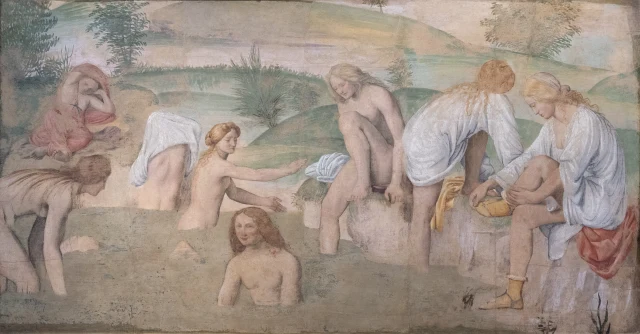 Nymphs BathingBernardino Luini, 1514
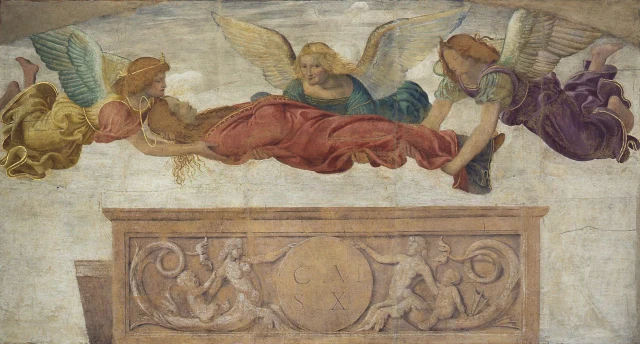 Saint Catherine's Body Carried by the AngelsBernardino Luini, 1514
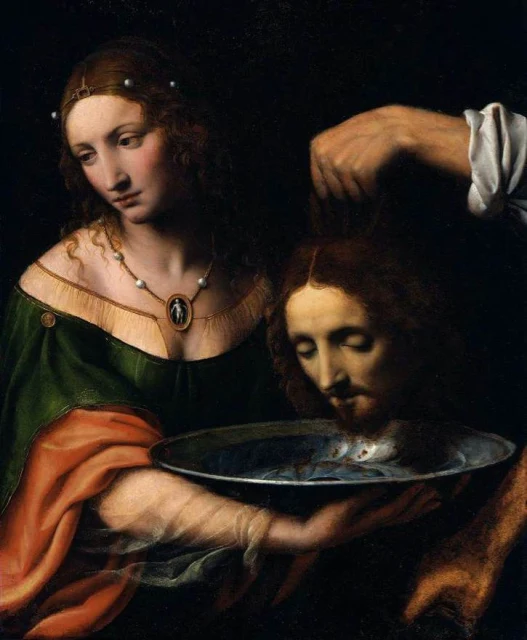 Salome with the Head of Saint John the BaptistBernardino Luini, 1520
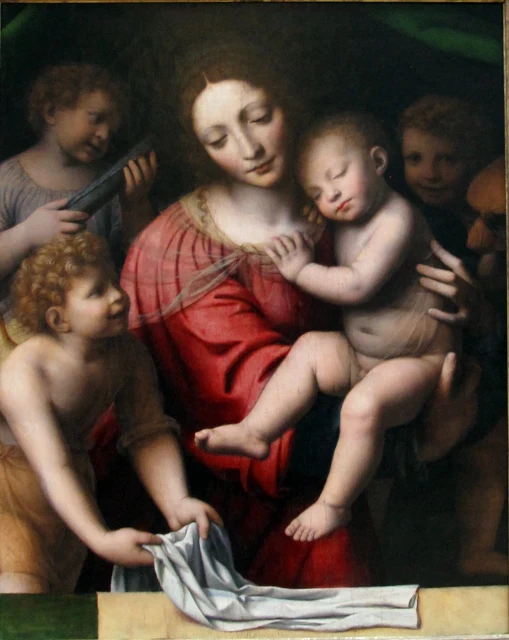 The Sleep of the Infant JesusBernardino Luini, 1527