George Stubbs
1724–1806 · United Kingdom of Great Britain and Ireland · Romanticism
The story
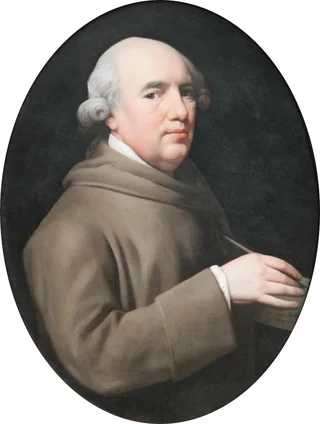
Sometime around 1756 a self-taught painter from Liverpool rented a lonely farmhouse in Lincolnshire, rigged up a system of hooks and iron bars, and spent roughly 18 months alone dissecting dead horses. George Stubbs wanted to understand the animal from the bone outward, layer by layer, and he did the anatomy and the etching himself, publishing the results in 1766 as The Anatomy of the Horse, a book surgeons and artists both used for a century.
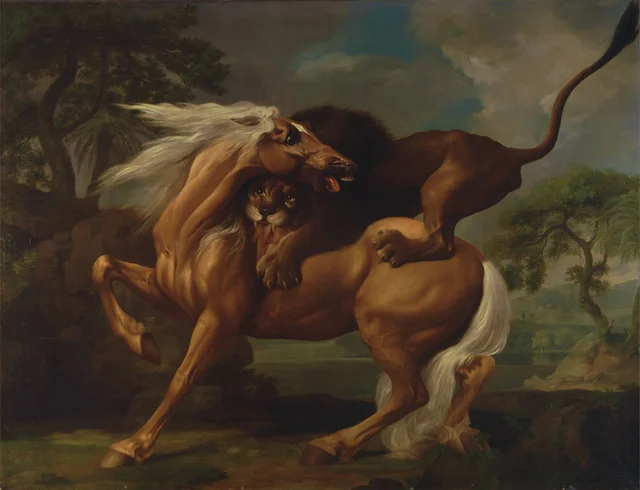
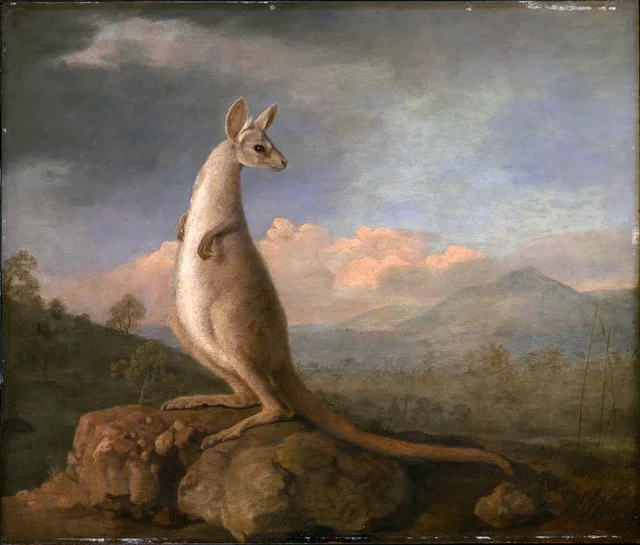
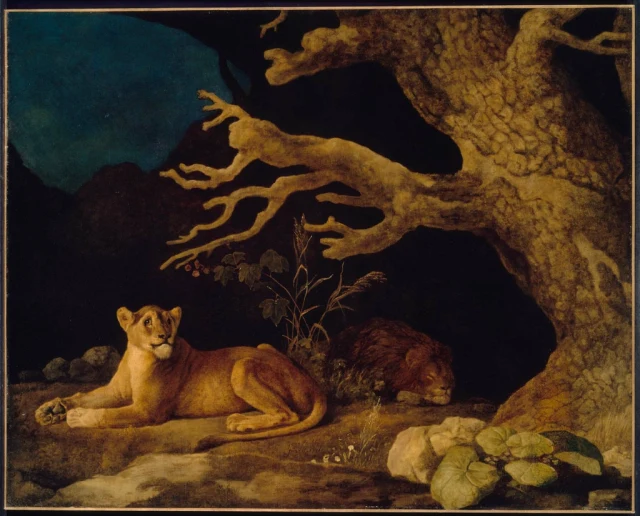
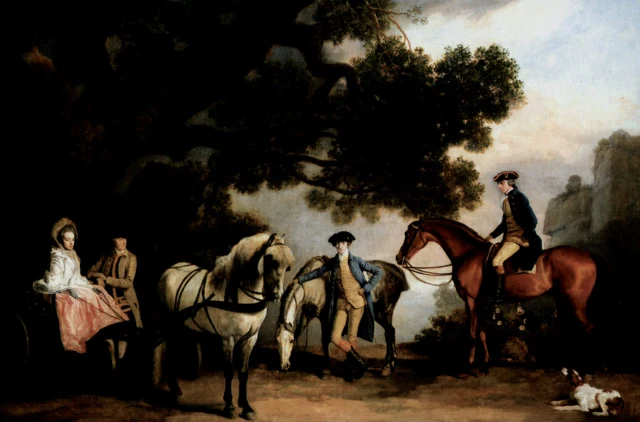
That obsessive knowledge is why his horses look alive from the inside. His patrons were the racing and hunting aristocracy of Georgian England, who wanted their thoroughbreds and hounds recorded with love, and Stubbs obliged, though he painted lions, zebras and a kangaroo too when the chance came.
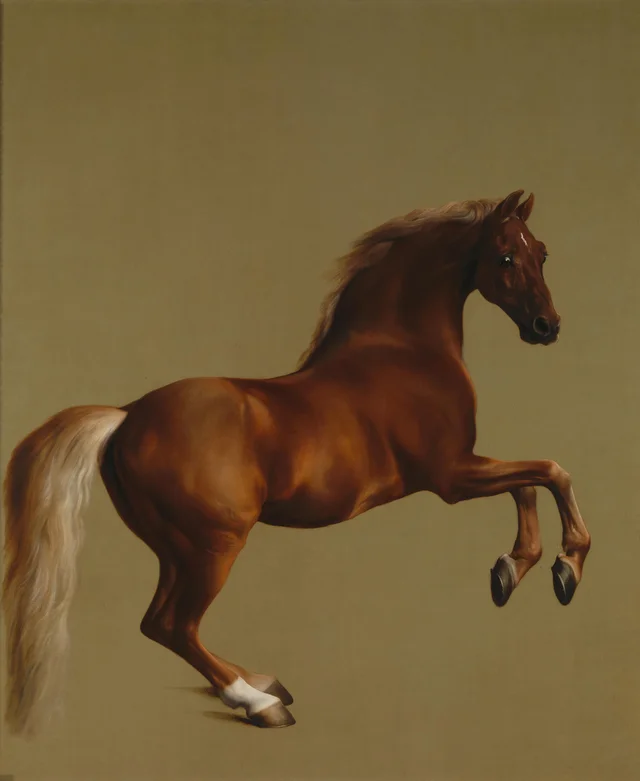
His boldest picture keeps almost everything else out. Whistlejacket, made around 1762, shows a chestnut racehorse rearing life-size against a bare golden background, no rider, no saddle, no landscape at all, just the animal. It hangs in London's National Gallery, and visitors still stop short at the sheer scale of a horse painted as if it were a history hero.