Giuseppe Gricci
1770 · Grand Duchy of Tuscany · Rococo
The story
In 2025 the Capodimonte museum in Naples acquired a small terracotta Pietà, the Virgin wiping away her tears, and brought it back to the city where it was made. It is a working model by Giuseppe Gricci, a Florentine sculptor, and it went on show beside his finished porcelain version from the Duca di Martina Museum, the city's ceramics collection.
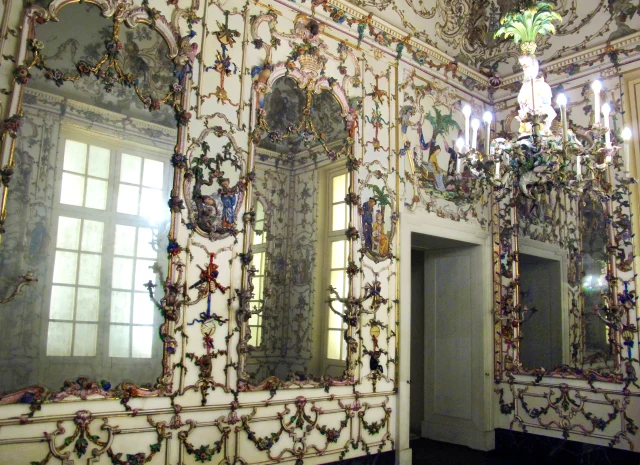
Gricci came to Naples in 1738 to work for the young King Charles of Bourbon. Charles had married Maria Amalia, a princess of the Saxon court that owned the Meissen porcelain works, and in 1743 the couple founded their own manufactory at Capodimonte. Gricci became its chief modeller, shaping the figures from which moulds were taken. His largest commission, made between 1757 and 1759, was a small sitting room for the queen at the palace of Portici, built from about 3,000 porcelain pieces covered in relief garlands and Chinese figures. In 1866 it was dismantled and rebuilt in the palace of Capodimonte, where it still stands.
In 1759 Charles inherited the Spanish throne, and the manufactory went with him. Gricci travelled to Madrid with about 50 fellow craftsmen, and the works reopened in the Buen Retiro gardens. In Spain he was known as José Gricci. There he led the making of a second porcelain room, for the royal palace of Aranjuez, finished in 1765. A baseboard carries his Latin signature, Joseph Gricci delineavit et sculpsit, designed and sculpted, with the date 1763.