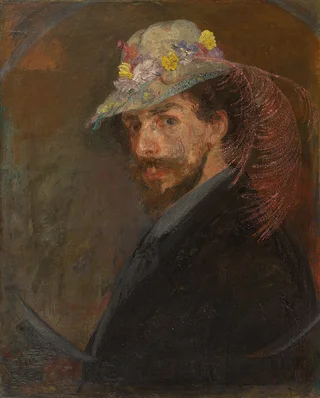
James Ensor
1860–1949 · Belgium · Expressionism
The story
James Ensor spent almost his whole life in the Belgian seaside town of Ostend, much of it above his family's souvenir shop, which sold seashells, chinoiserie and the carnival masks that would take over his art. Those grinning painted masks, and the skeletons he set among them, became his subject, a way of stripping the polite faces off the people around him.
His masterpiece was too much even for his allies. Christ's Entry into Brussels in 1889 is enormous, over four metres wide, and shows Christ almost lost in a jostling modern carnival of masked, leering faces under a red banner reading Long Live the Social Republic. Ensor painted it in 1888 for the avant-garde group Les XX, the Twenty, which he had helped to found, and they refused to hang it. He kept the huge canvas in his Ostend studio for decades, and it was barely shown in public until 1929.
His boldest work was done young, mostly in the 1880s. Recognition came slowly and then all at once. In 1929 King Albert made him a baron, and the once-scandalous painter of masks passed his last decades as a celebrated Belgian institution, improvising on the harmonium and receiving visitors in Ostend until his death in 1949.
Works
92 works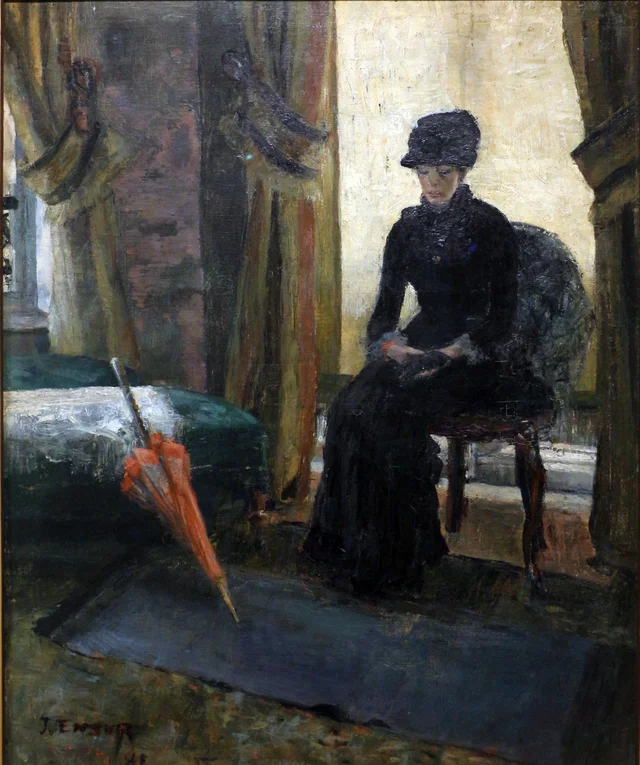 The Sombre LadyJames Ensor, 1881
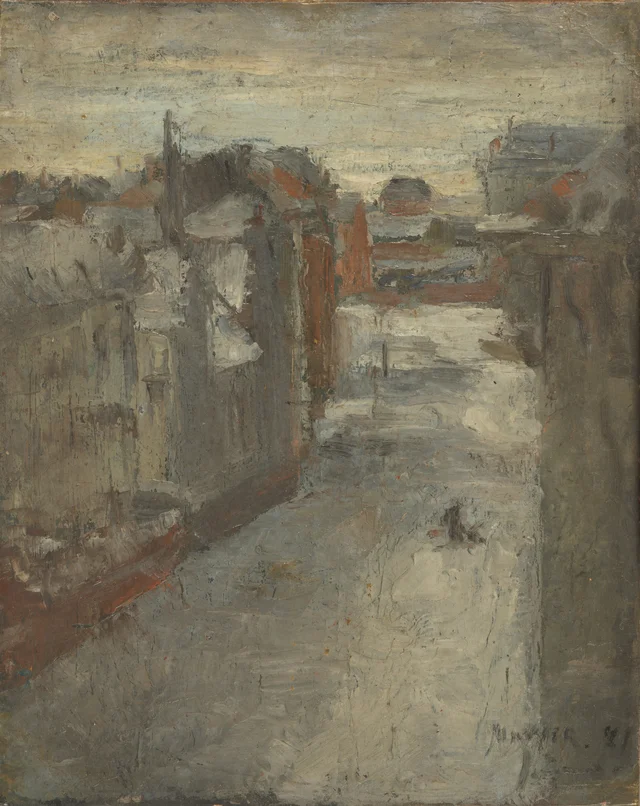 The Van Iseghemlaan in the snowJames Ensor, 1881
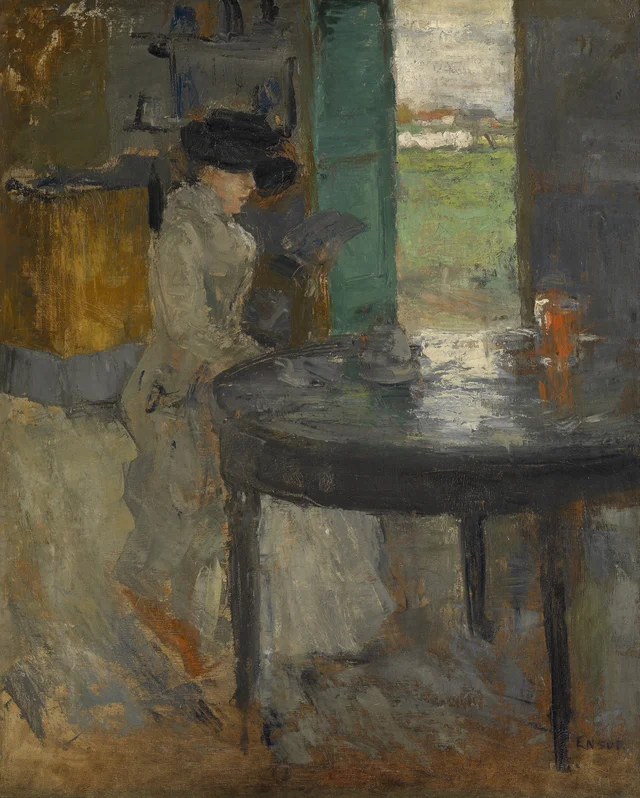 The WaitJames Ensor, 1880
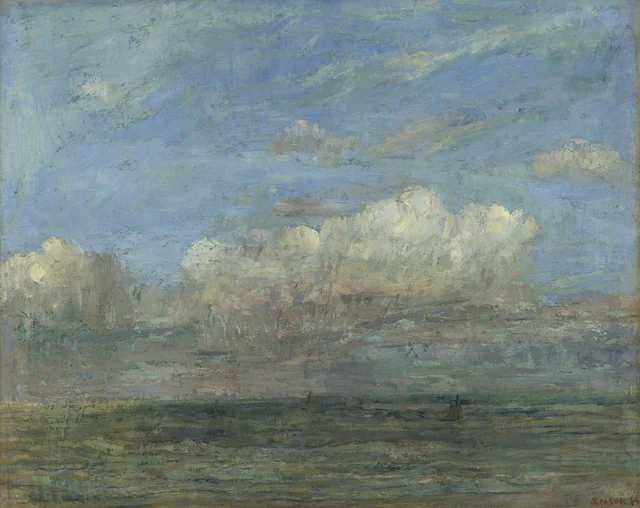 The White CloudJames Ensor, 1884
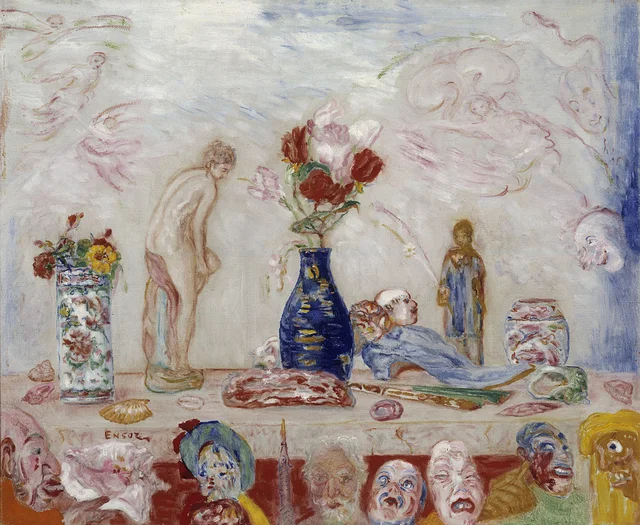 Under the Shadow of MasksJames Ensor, 1925
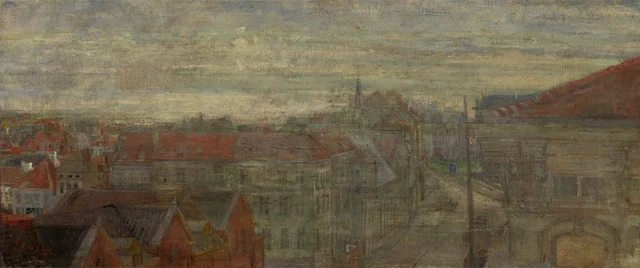 View of Flushing, luminous waves and vibrationsJames Ensor, 1890
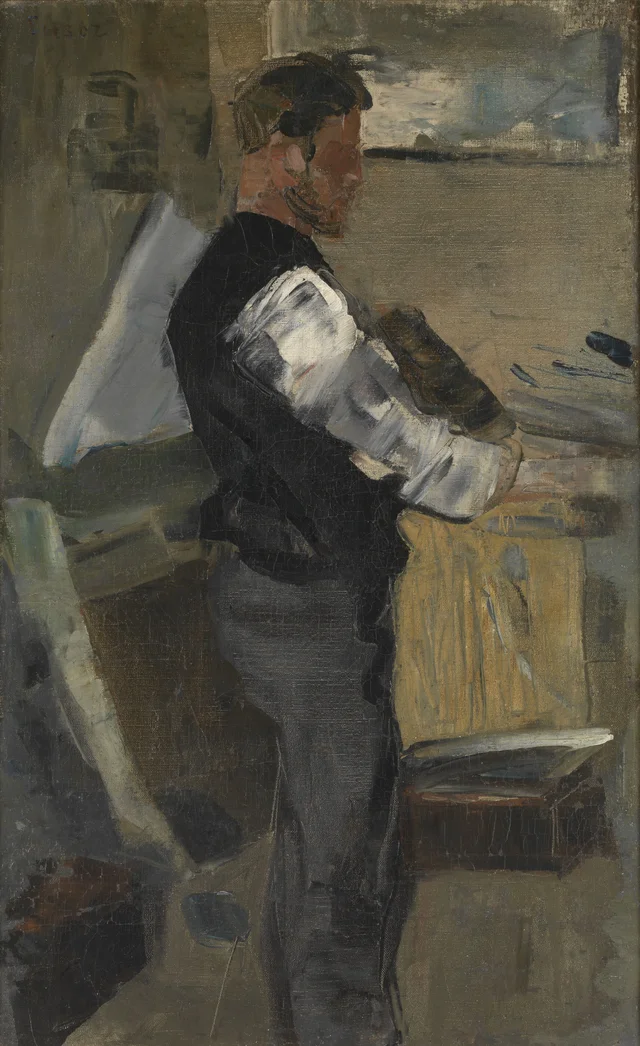 Willy Finch in the StudioJames Ensor, 1880
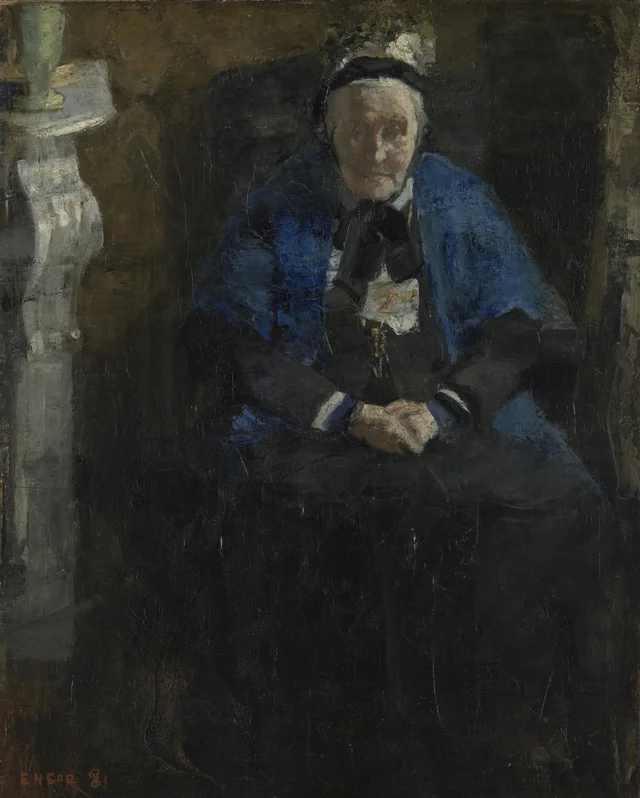 Woman with Blue ShawlJames Ensor, 1881
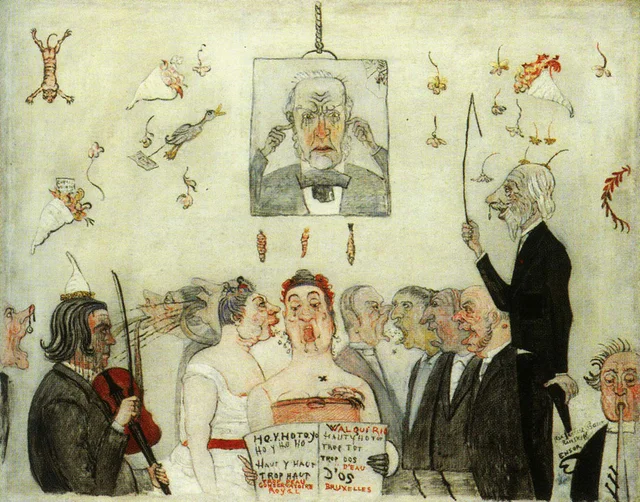 Au conservatoireJames Ensor, 1893
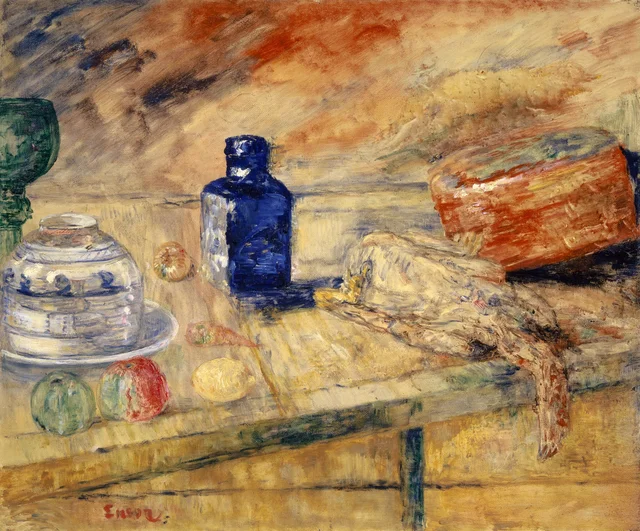 Blue Flask and ChickenJames Ensor, 1925
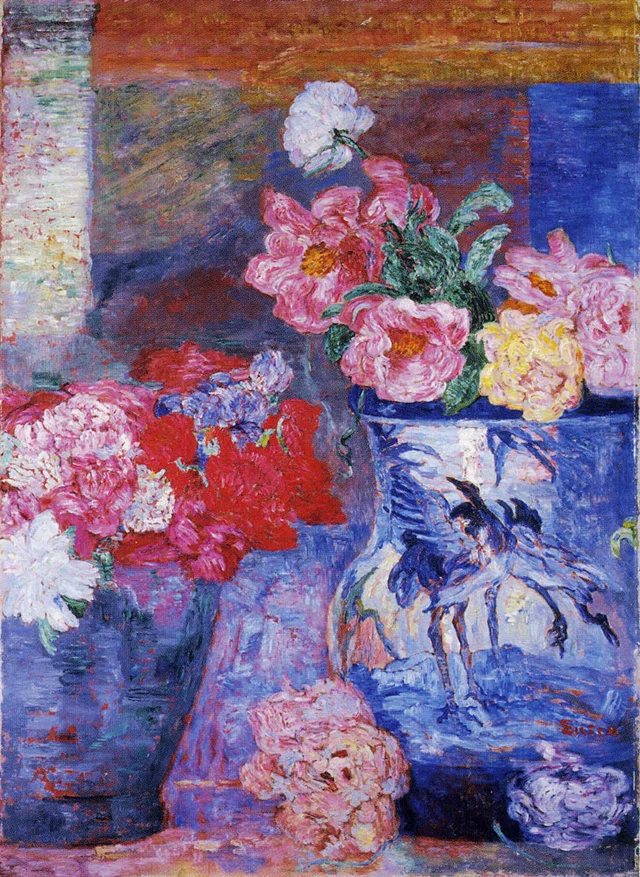 Flowers and blue vaseJames Ensor, 1909
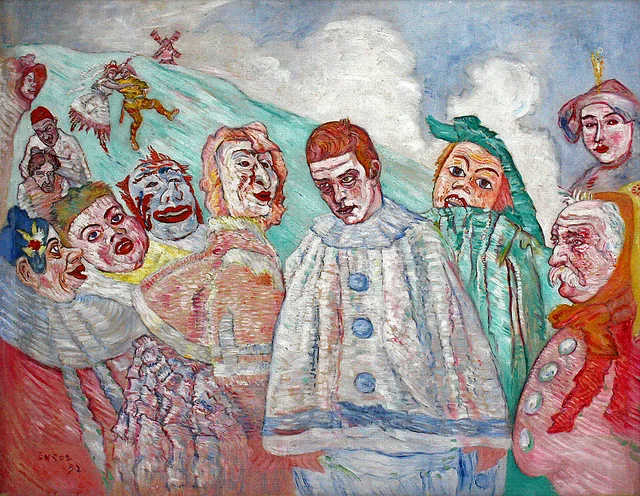 Pierrot's despairJames Ensor, 1910
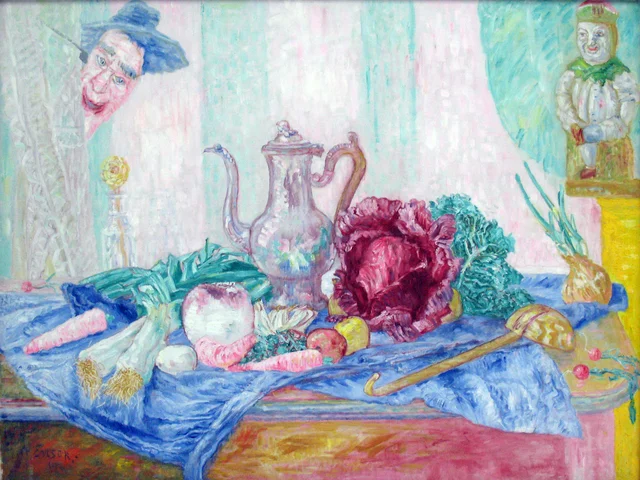 Still life with a cabbageJames Ensor, 1921
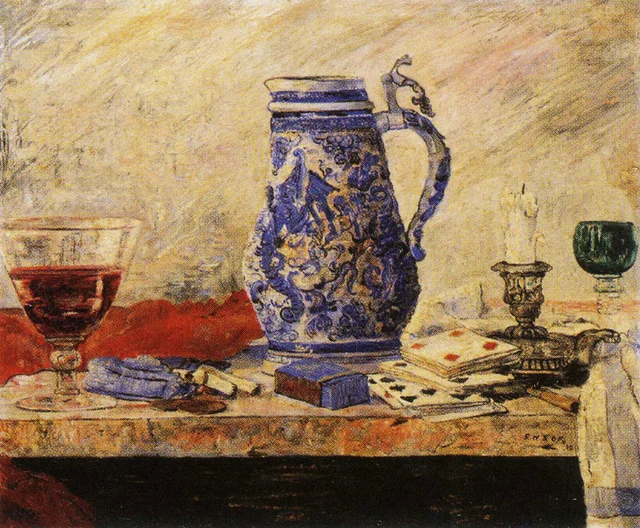 Still Life with Blue JarJames Ensor, 1890
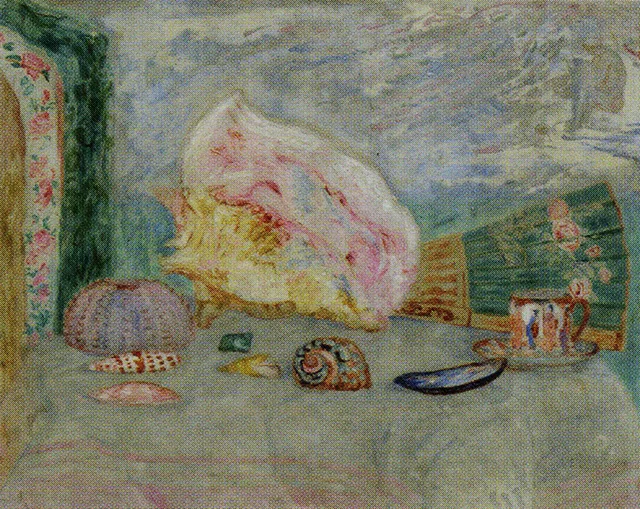 Still Life with Sea ShellsJames Ensor, 1923
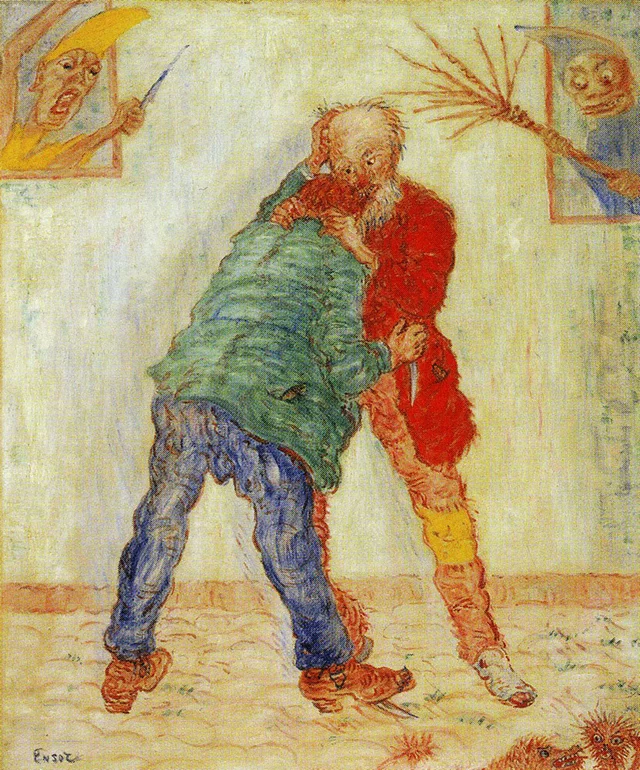 The FightJames Ensor, 1925
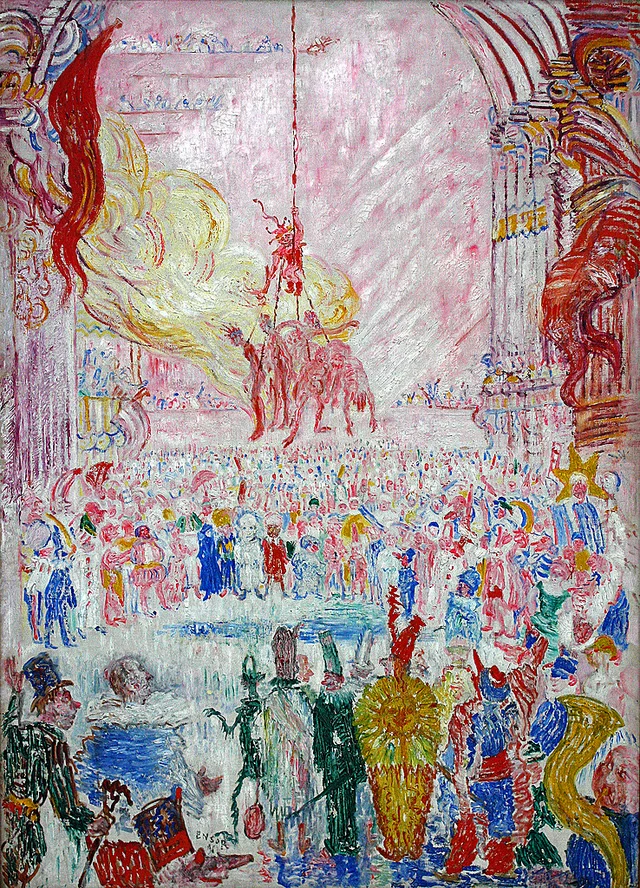 The Vengeance of Hop-FrogJames Ensor, 1896