Konstantinos Maleas
1879–1928 · Greece, Ottoman Empire · Post-Impressionism
The story
Maleas went to Paris in 1901 to study architecture and came out of it a painter, working until 1908 with Henri Martin, a French artist who built his pictures out of small separate touches of colour. He had grown up in Constantinople and gone to the Greek Orthodox school at the Phanar there, a long way from Athens, where the academic manner brought home from Munich still decided what a Greek painting looked like.
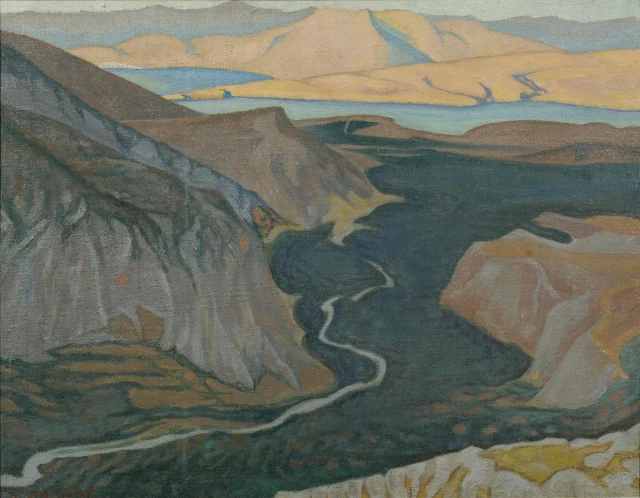
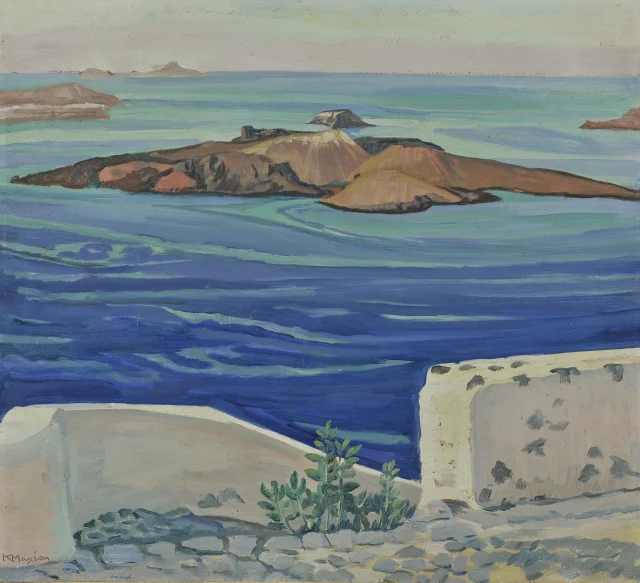
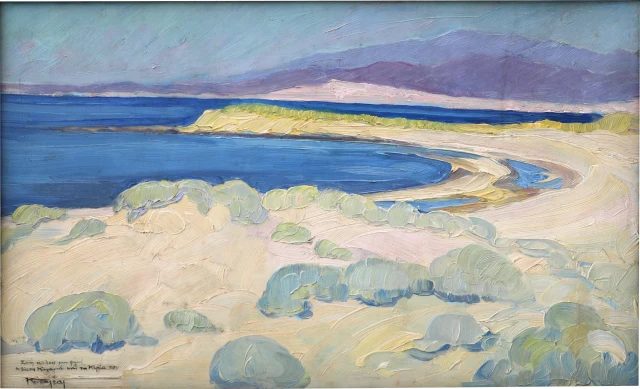
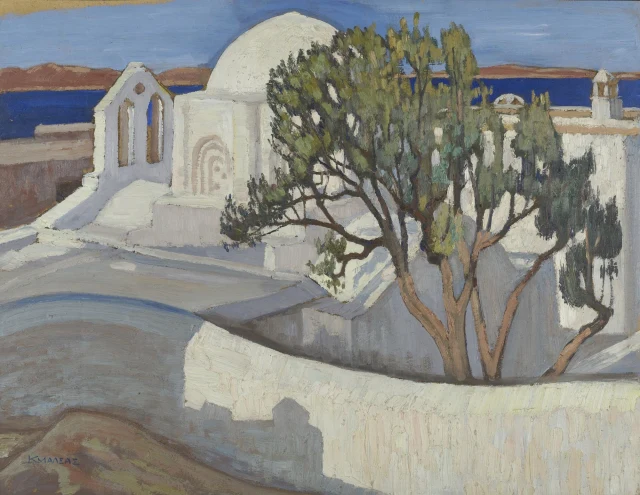
He returned in 1913, first to Thessaloniki, where the great fire of 1917 destroyed a number of his canvases, then to Athens. In that same year he became a founding member of Omada Techni, the Art Group, set up to put contemporary European painting in front of Greek audiences. He travelled constantly for his subjects — Delphi, Naxos, Santorini, Monemvasia, the Nile at Aswan — and reduced what he saw to broad flat areas of strong colour, with little modelling and almost no shadow.
In the long argument over which form of Greek should be written, he took the side of the spoken language and illustrated a primer in it. He was 49 when he died in Athens in 1928, and the National Gallery there holds 36 of his paintings, most of them landscapes.