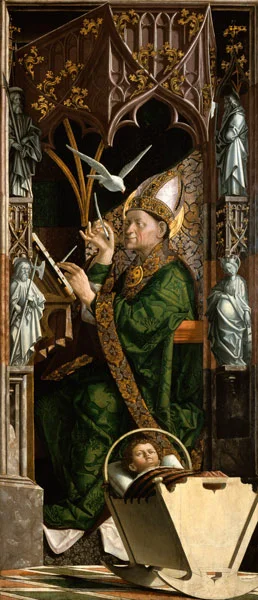
Michael Pacher
1435–1498 · Holy Roman Empire · Renaissance, Northern Renaissance, Gothic
The story
Michael Pacher worked in the Tyrol, in the mountains where German-speaking lands meet Italy, in the late 1400s, and that location shaped everything he made. He almost certainly crossed the Alps to Padua and saw the frescoes of Andrea Mantegna, the Italian master of hard, mathematical perspective, and he carried that new science of space back north, where painters were still working in the flatter Gothic manner.
Pacher was two craftsmen in one, a sculptor and a painter both, and his great surviving work uses both hands. The altarpiece he built for the pilgrimage church at St. Wolfgang, on a lake in the Salzkammergut region of Austria, took him about ten years and was finished around 1481. Its center is a carved and gilded wooden shrine crowded with life-size figures, framed by painted wings that open and close through the church year. It is one of the very few altarpieces of its kind still standing in the church it was made for.
Pacher died in 1498 in Salzburg, at work on another great altar that he left unfinished.
More articles
Works
8 works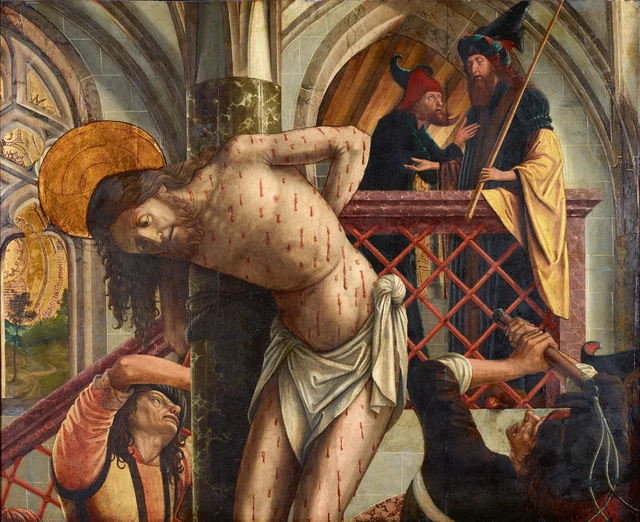 Flagellation of ChristMichael Pacher, 1497
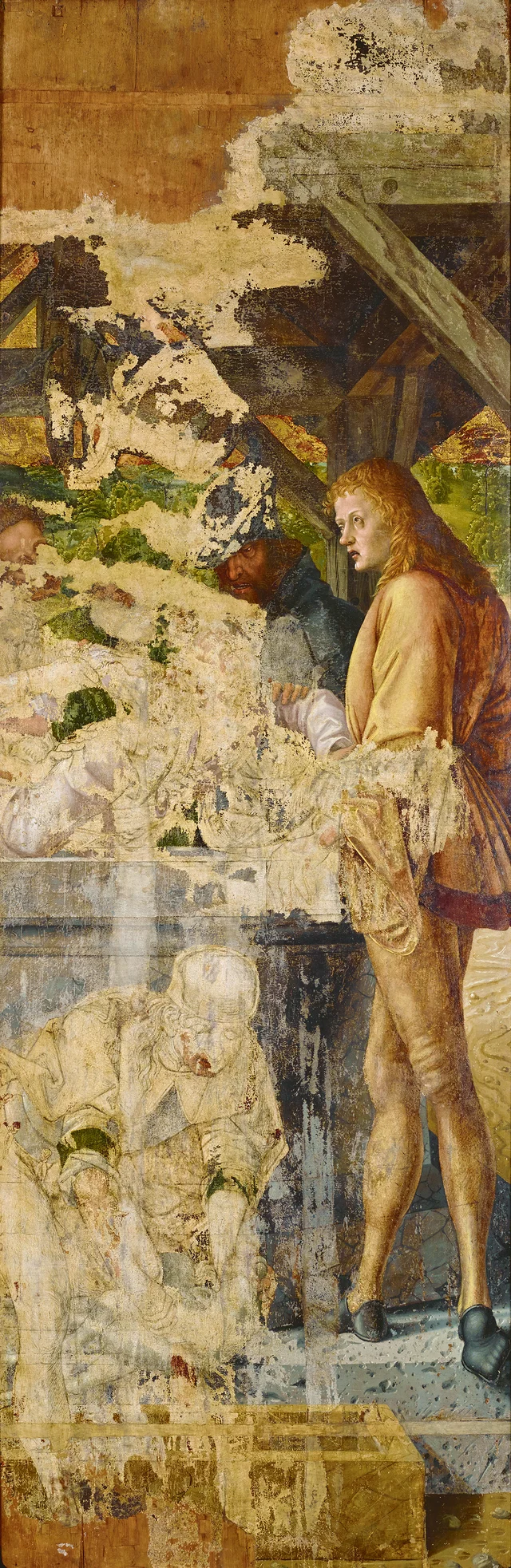 Joseph Is Thrown into the WellMichael Pacher, 1497
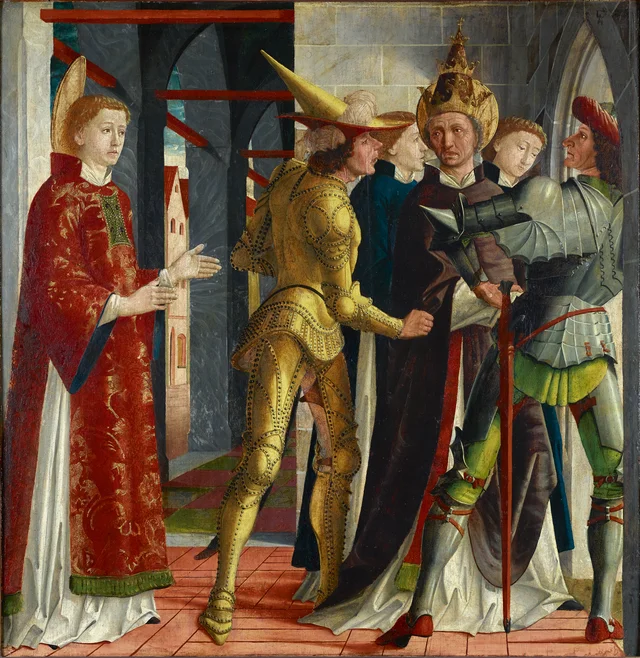 Pope Sixtus II. bids farewell to St. LawrenceMichael Pacher, 1465
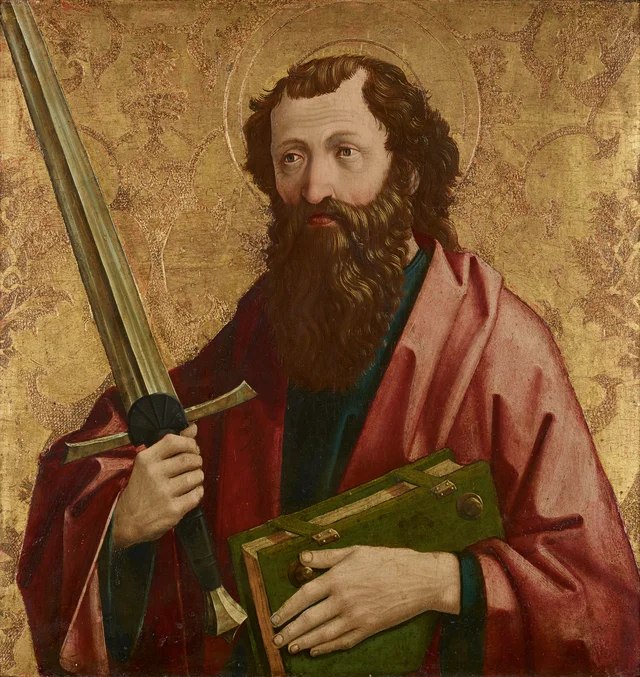 St. PaulMichael Pacher, 1465
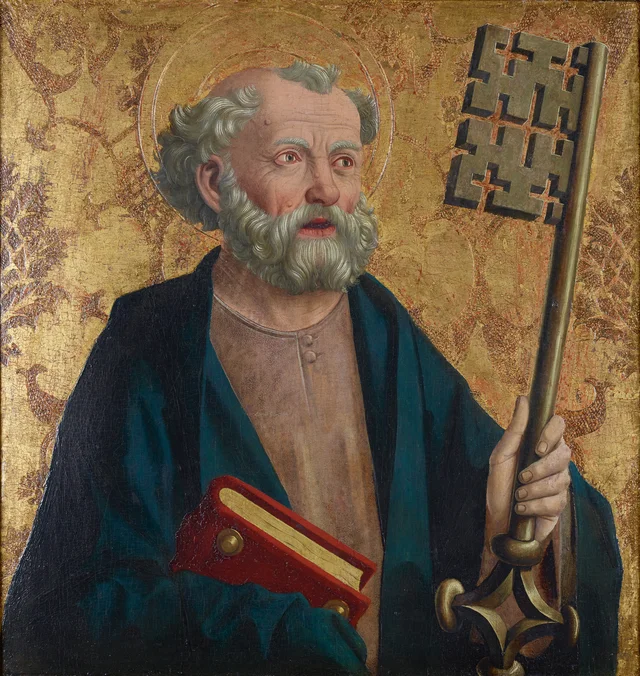 St. PeterMichael Pacher, 1465
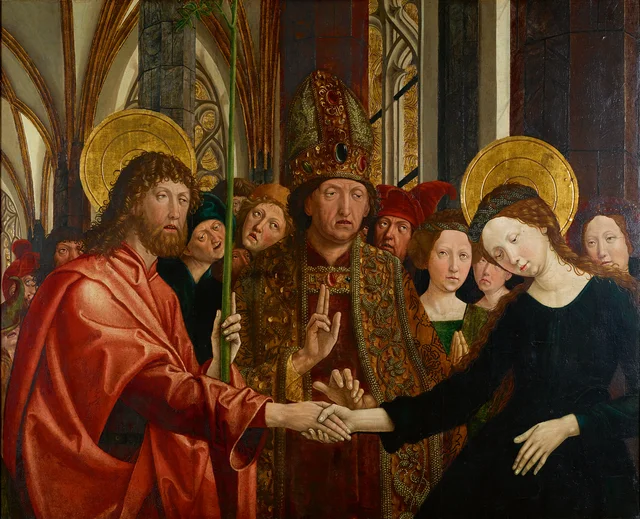 The marriage of MaryMichael Pacher, 1497
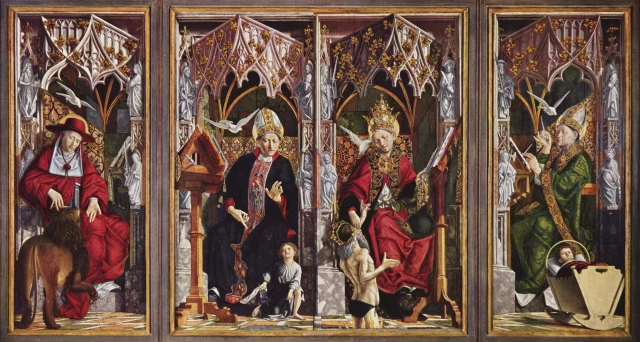 Altarpiece of the Church FathersMichael Pacher, 1480
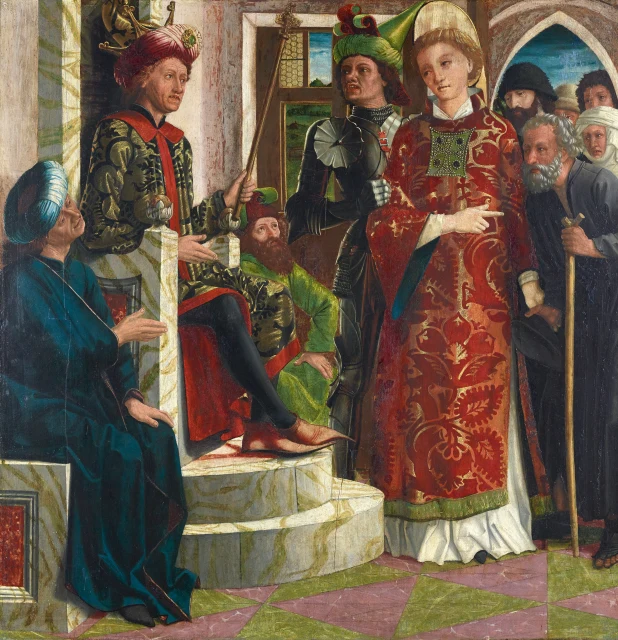 St Lawrence before the Emperor DeciusMichael Pacher, 1465