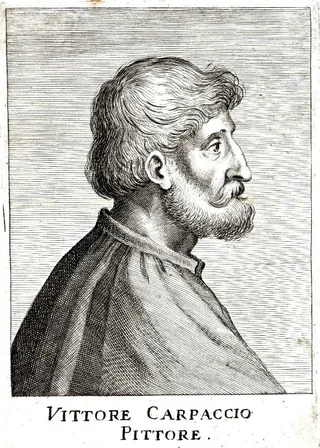
Vittore Carpaccio
Republic of Venice · Italian Renaissance, Venetian school, Early Renaissance
The story
Carpaccio was Venice's great storyteller in paint. In the 1490s a confraternity, one of the city's lay religious clubs, hired him to fill their meeting hall with the legend of Saint Ursula, a British princess who, the story went, sailed on a vast pilgrimage and was massacred with her companions at Cologne. He gave them nine large canvases.
What makes them hold you is that he set an ancient legend in the Venice around him. The harbours bristle with the masts of Venetian galleys, the ambassadors wear the clothes of his own day, and the scene where an angel wakes Ursula is really a portrait of a comfortable Venetian bedroom, with slippers by the bed and light from a window. His real subject was the texture of that world.
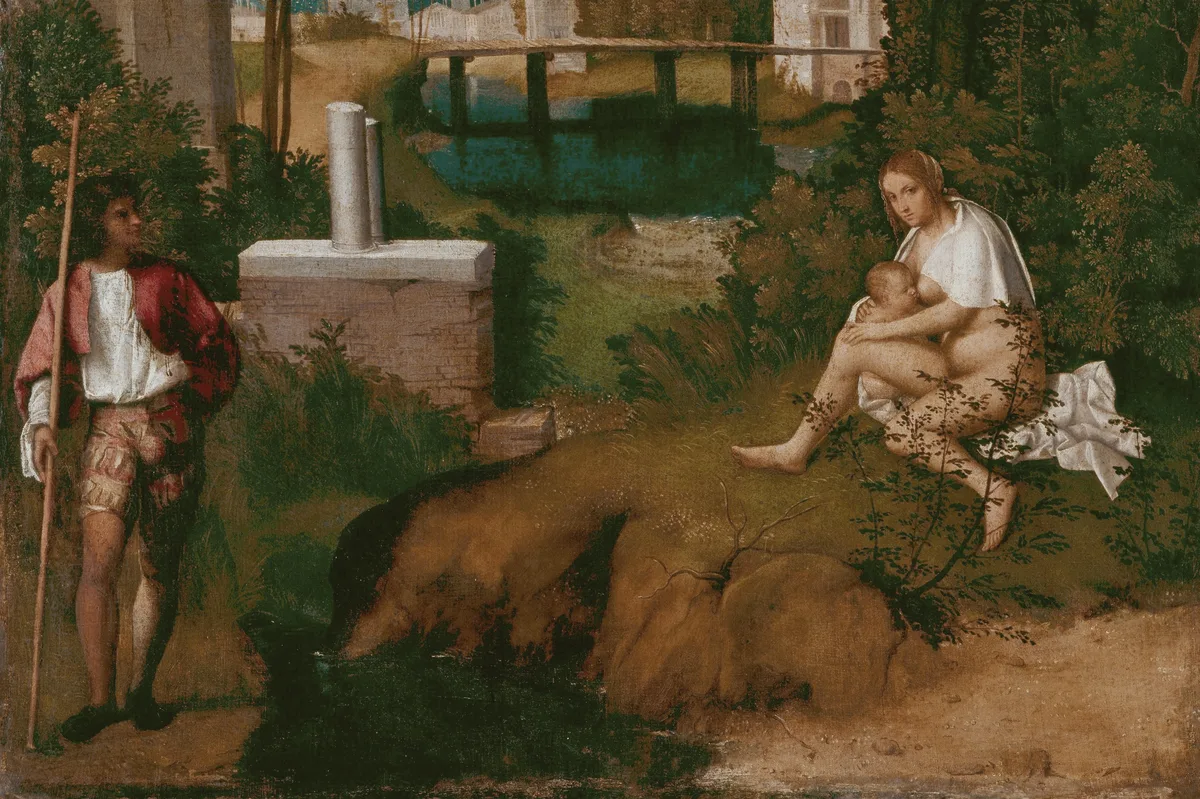
The cycle now hangs together in the Accademia gallery in Venice. Carpaccio kept working into the new century, but as younger men like Giorgione changed Venetian painting, his careful, crowded manner fell out of fashion, and the date of his death, around 1525 or 1526, went unrecorded at the time.
More articles
Works
23 works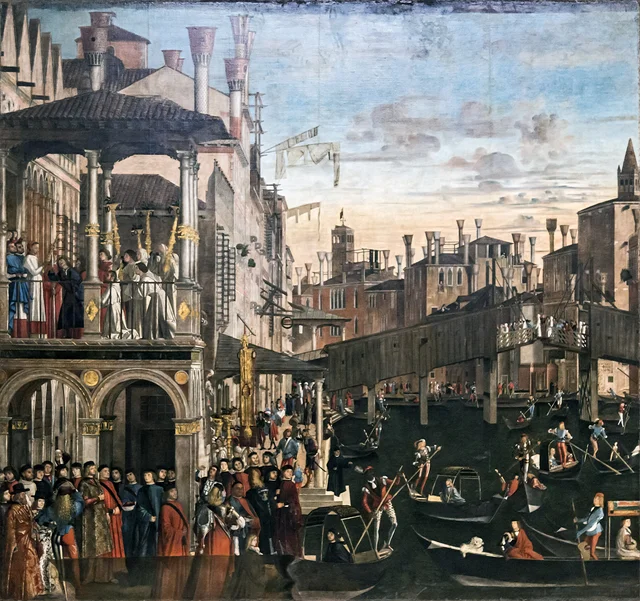 Miracle of the Holy Cross at the Rialto BridgeVittore Carpaccio, 1496
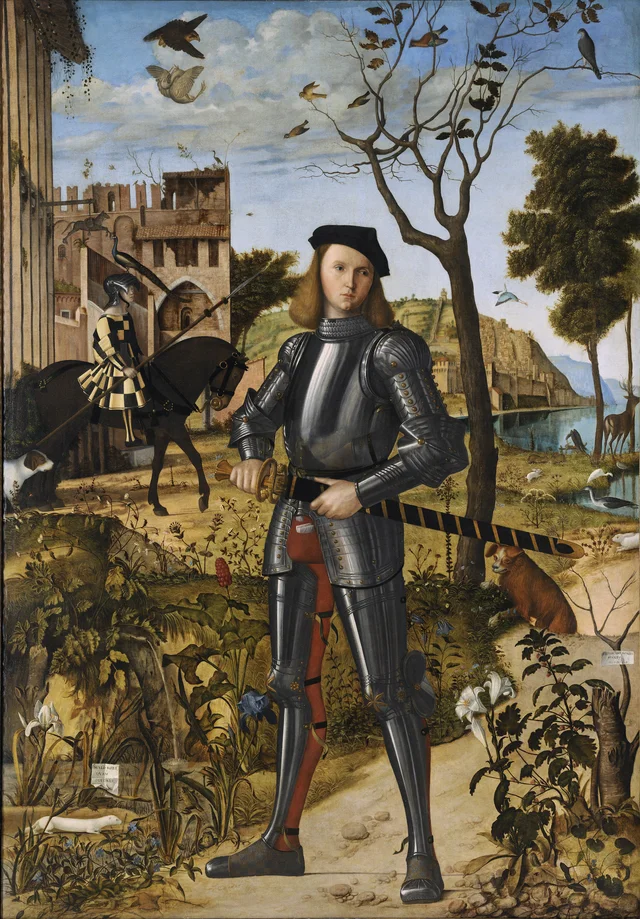 Portrait of a KnightVittore Carpaccio, 1510
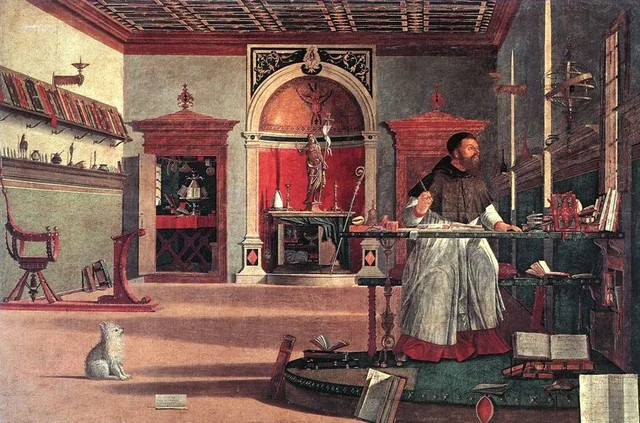 St. Augustine in His StudyVittore Carpaccio, 1502
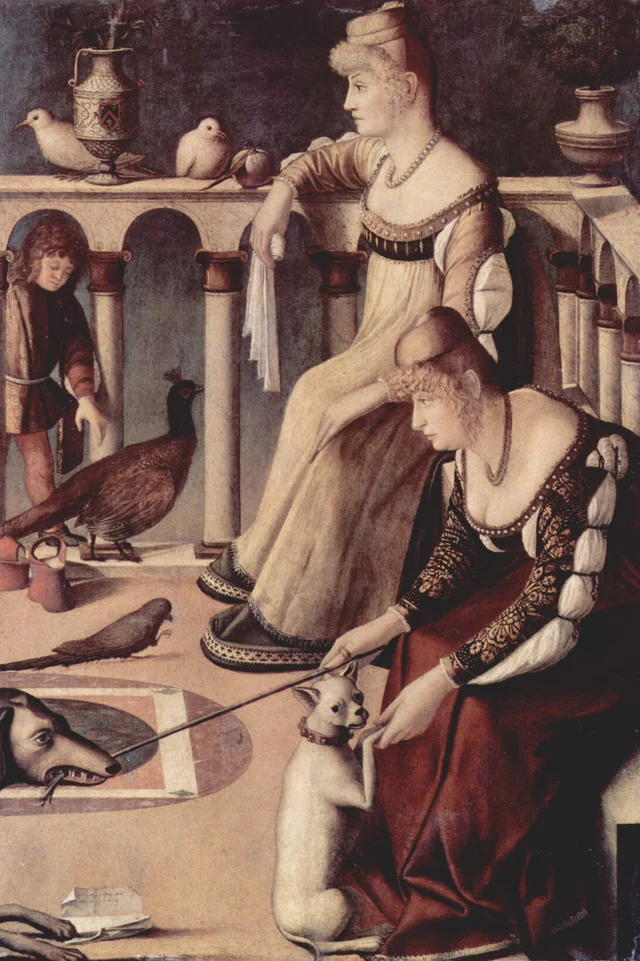 Two Venetian LadiesVittore Carpaccio, 1490
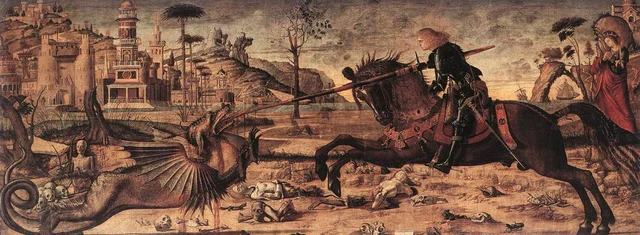 St. George and the DragonVittore Carpaccio, 1502
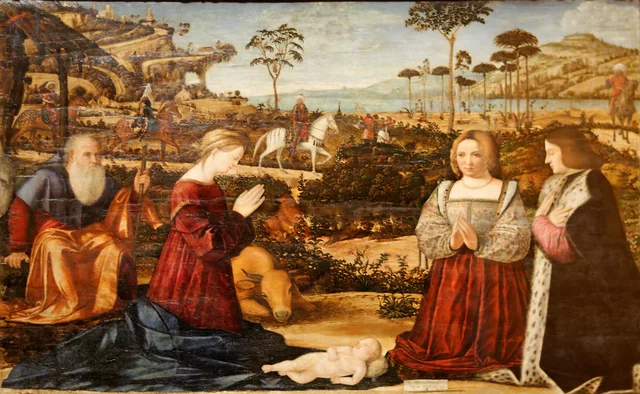 Holy Family and DonorsVittore Carpaccio, 1505
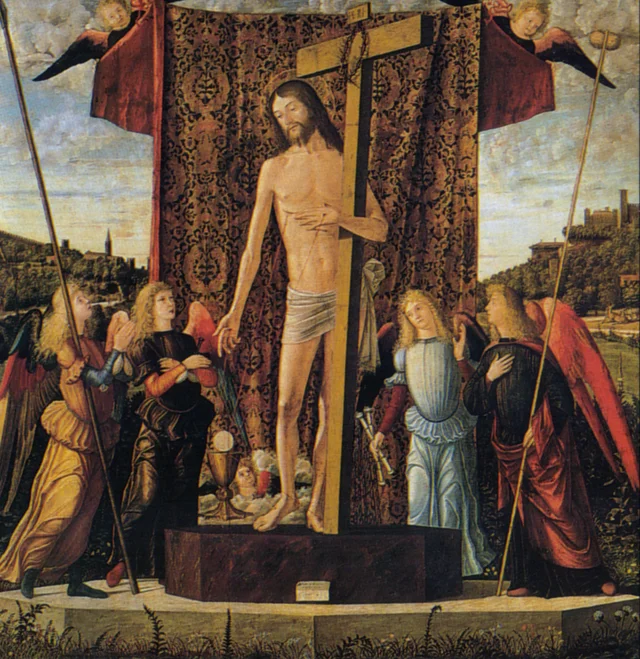 Christ between Four AngelsVittore Carpaccio, 1496
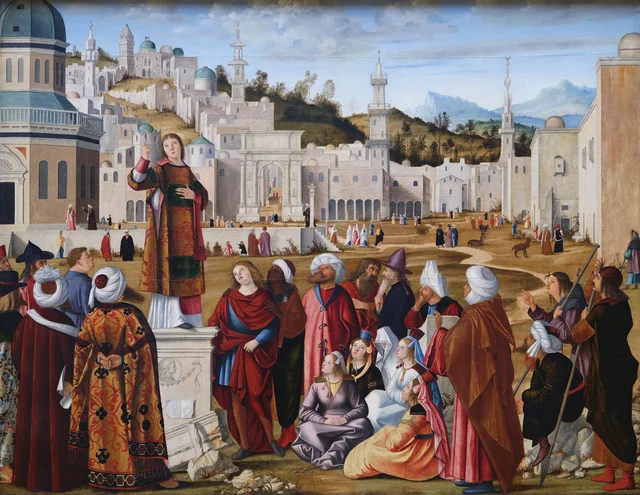 The Sermon of St. StephenVittore Carpaccio, 1514
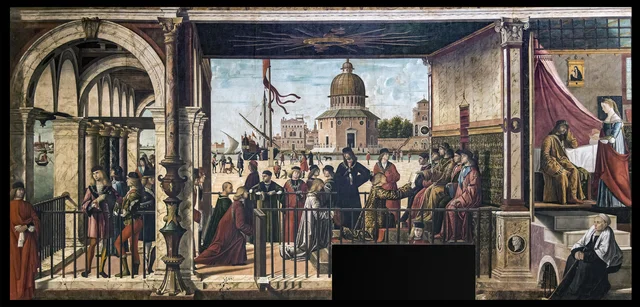 Arrival of the English AmbassadorsVittore Carpaccio, 1495
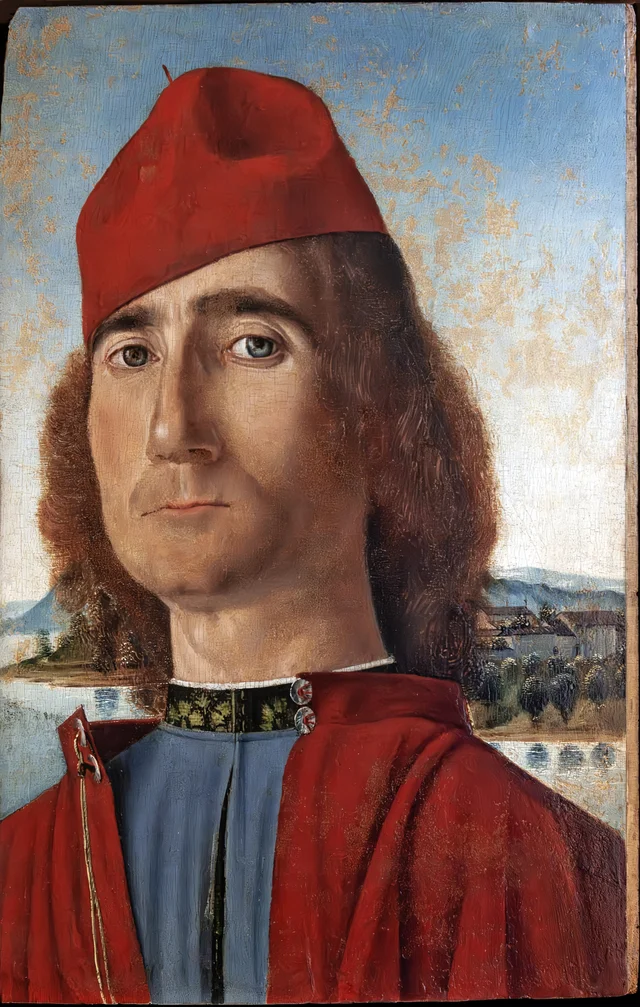 Man with Red HatVittore Carpaccio, 1490
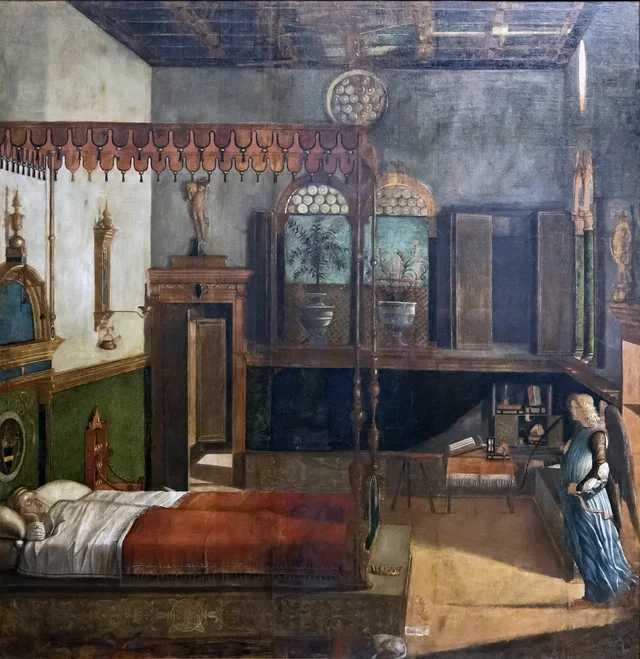 The Dream of St. UrsulaVittore Carpaccio, 1495
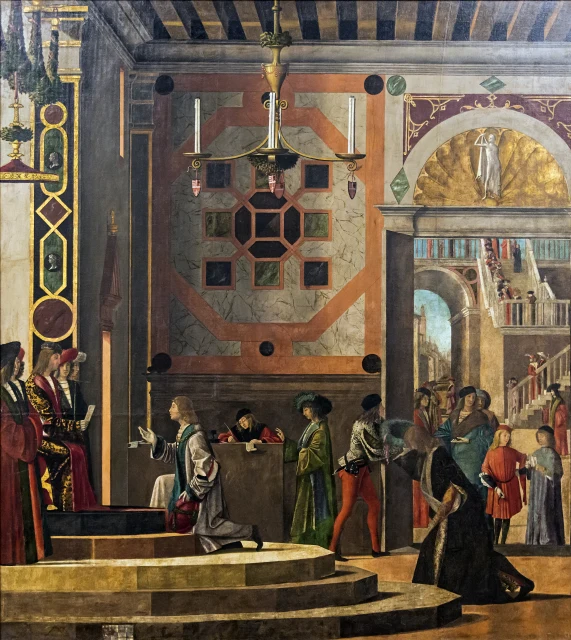 Ambassadors DepartVittore Carpaccio, 1495
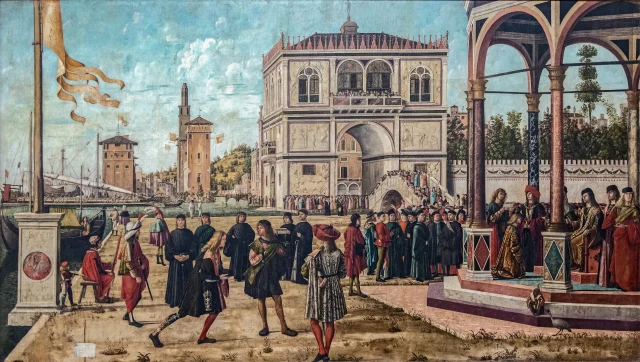 Ambassadors Return to the English CourtVittore Carpaccio, 1498
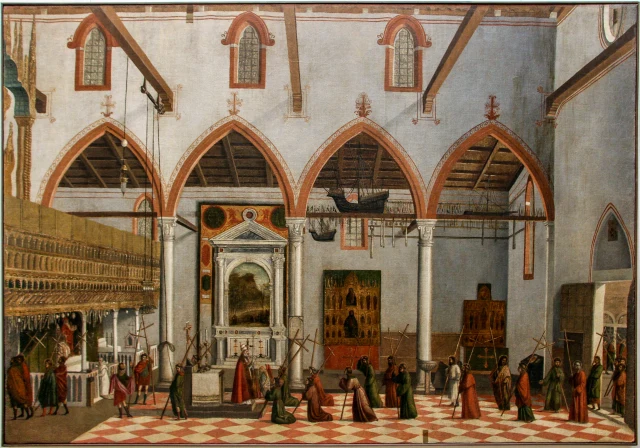 Apparition of the Crucified of Mount AraratVittore Carpaccio, 1515
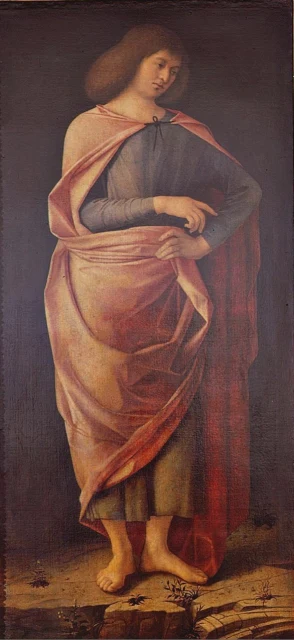 A ProphetVittore Carpaccio, 1510
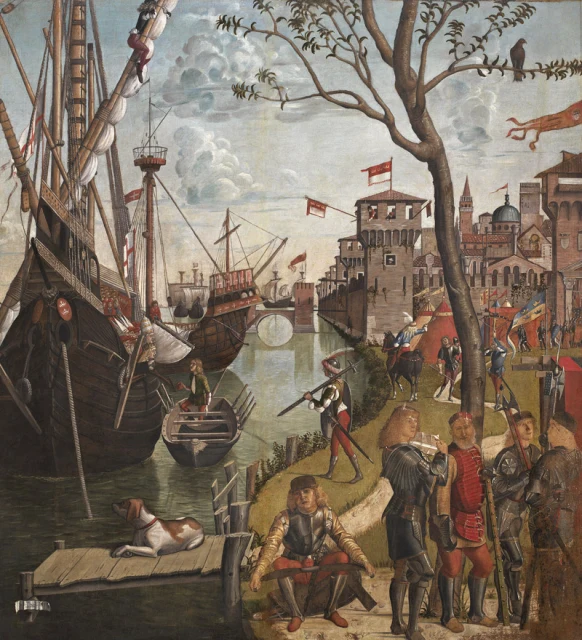 Arrival of the Pilgrims in CologneVittore Carpaccio, 1490
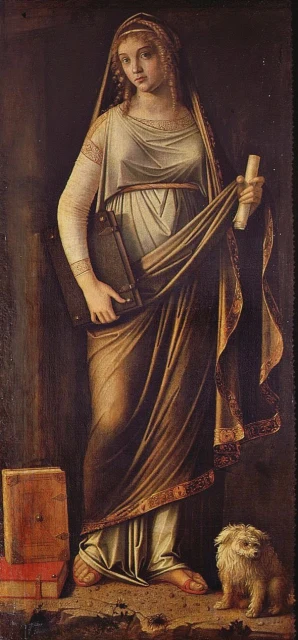 A SibylVittore Carpaccio, 1510
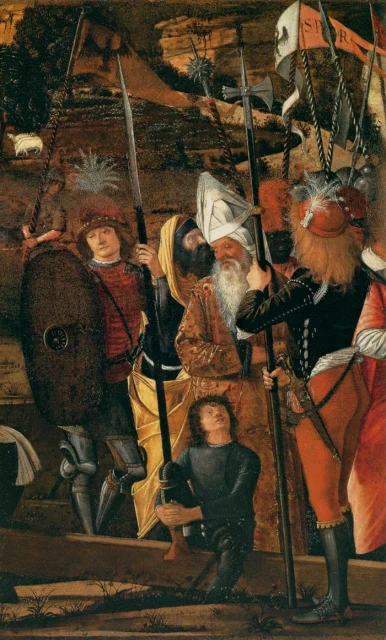 Group of Soldiers and Men in Oriental CostumeVittore Carpaccio, 1490
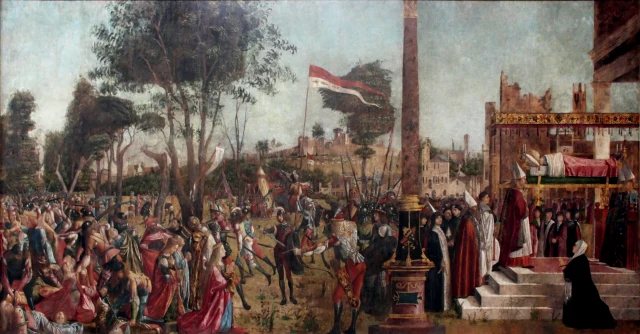 Martyrdom of the Pilgrims and Funeral of Saint UrsulaVittore Carpaccio, 1493
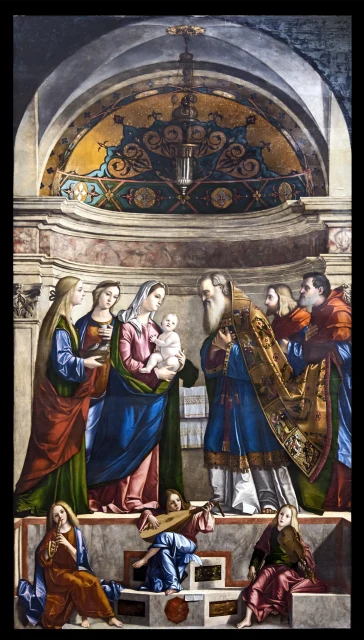 Presentation in the TempleVittore Carpaccio, 1510
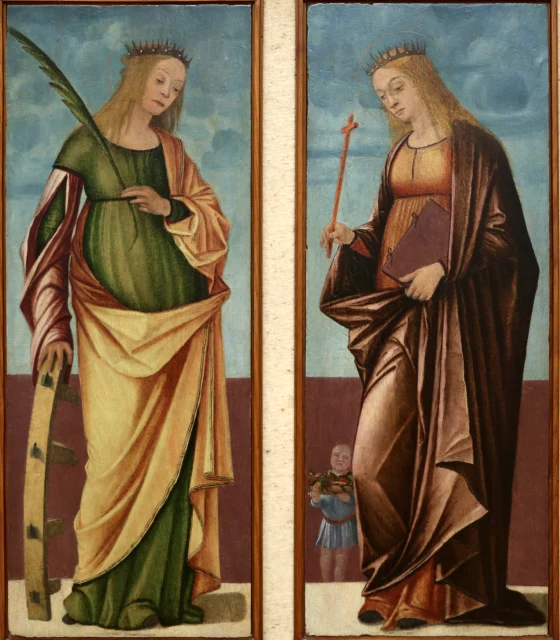 Saints Catherine and DorotheaVittore Carpaccio, 1488
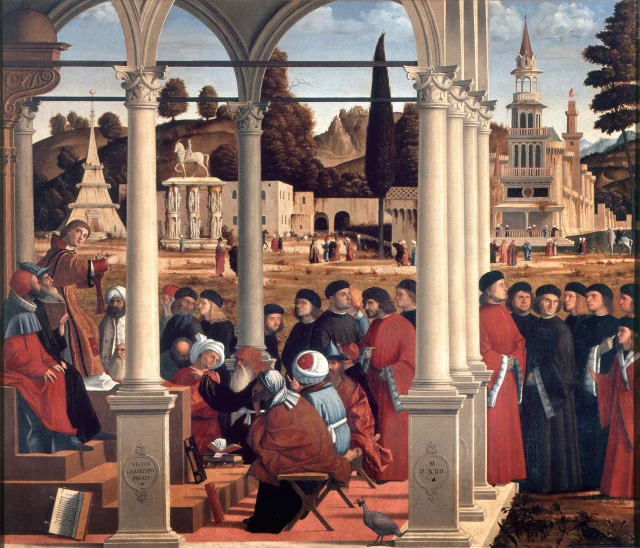 The Disputation of Saint StephenVittore Carpaccio, 1514
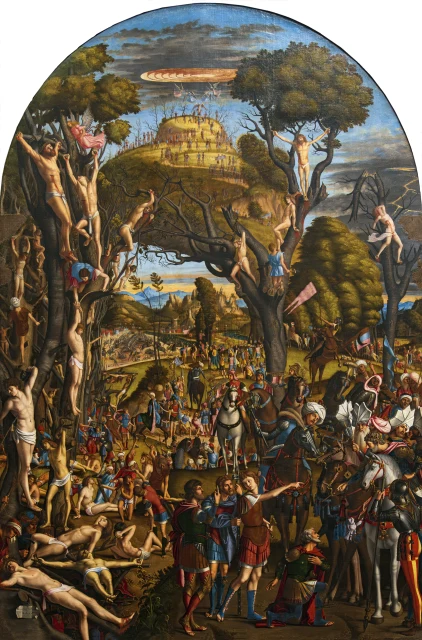 The Ten Thousand Martyrs of Mount AraratVittore Carpaccio, 1515