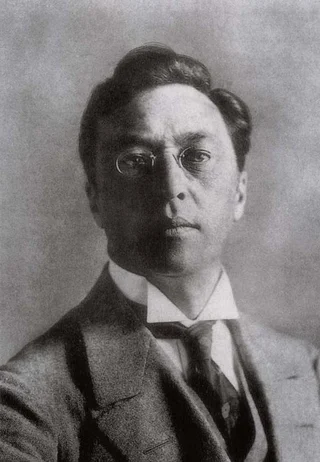
Wassily Kandinsky
1866–1944 · Russian Empire · Expressionism
The story
Wassily Kandinsky came to painting late and by choice. He was born in Moscow in 1866, trained as a lawyer, did well enough to be offered a university professorship in Roman law, and then at 30 turned it all down to move to Munich and learn to paint. He later pointed to two jolts that pushed him: a Monet haystack he could barely read as a haystack, and a Wagner opera that filled his head with colours while he listened.
That last part was no figure of speech. Kandinsky seems genuinely to have experienced sound as colour and colour as sound, and he came to believe a painting could work on a viewer the way music does, without needing to show any recognisable object at all. Around 1910 he began making some of the first purely abstract pictures in European art, canvases of floating patches and lines with titles borrowed from music, like Composition and Improvisation.
In 1911, with the painter Franz Marc, he founded a Munich circle called the Blue Rider, loosely bound by the idea that art should reach for the spiritual. The First World War scattered it and sent Kandinsky back to Russia. He returned to Germany in the 1920s to teach at the Bauhaus, the famous design school, where his shapes grew tighter and more geometric, full of circles and hard angles. When the Nazis closed the Bauhaus and branded his work degenerate, he left for Paris. He died just outside it, in Neuilly, in 1944.
More articles
Works
312 works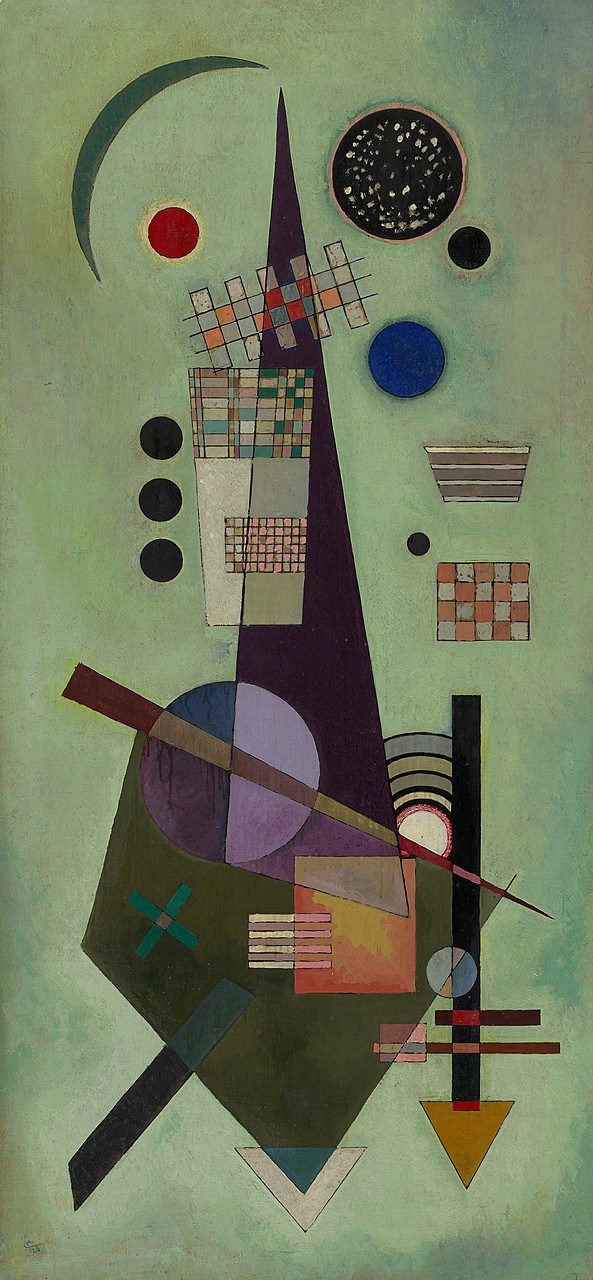 ExtendedWassily Kandinsky, 1926
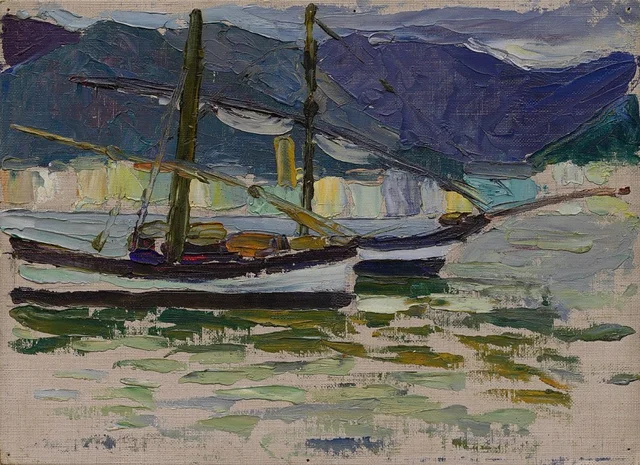 Fishing Boats, SestriWassily Kandinsky, 1905
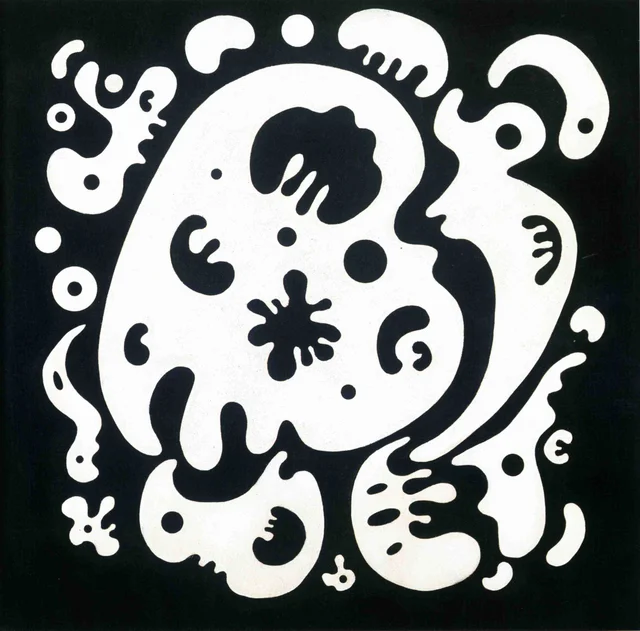 Formes noires sur blancWassily Kandinsky, 1934
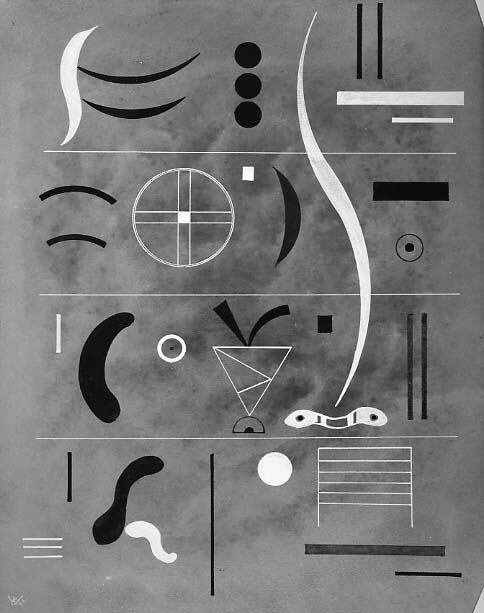 Four PartsWassily Kandinsky, 1932
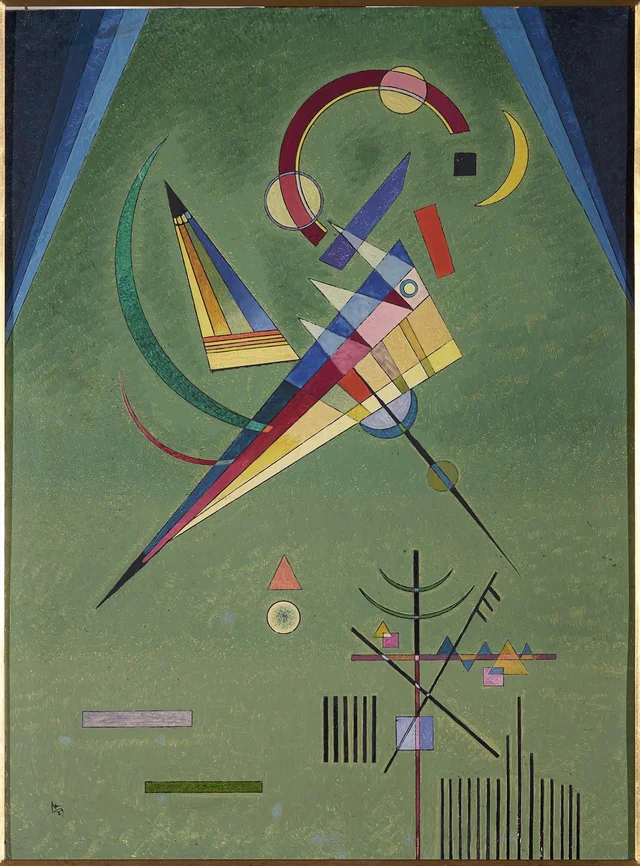 FreeWassily Kandinsky, 1927
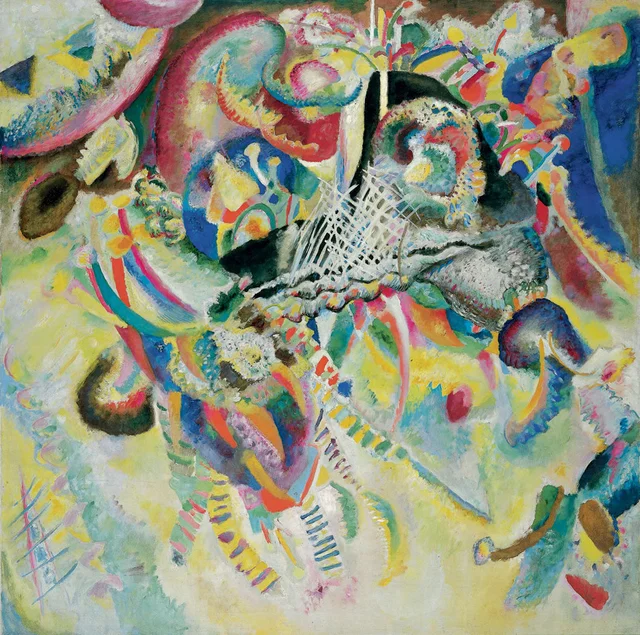 FugueWassily Kandinsky, 1914
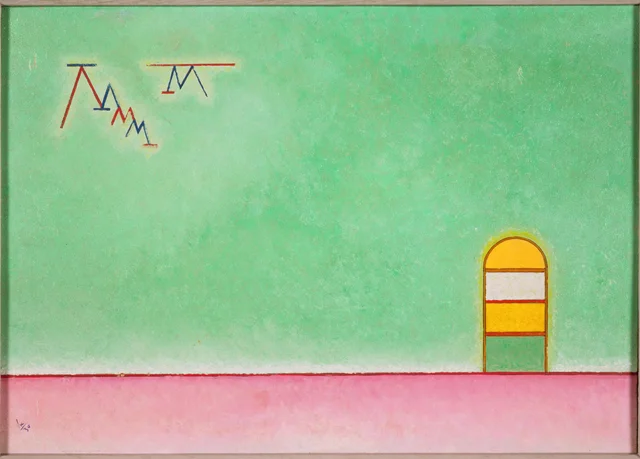 Green VoidWassily Kandinsky, 1930
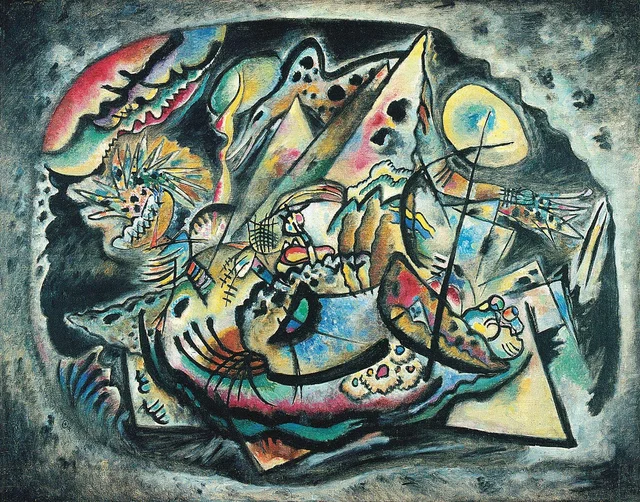 Grey OvalWassily Kandinsky, 1917
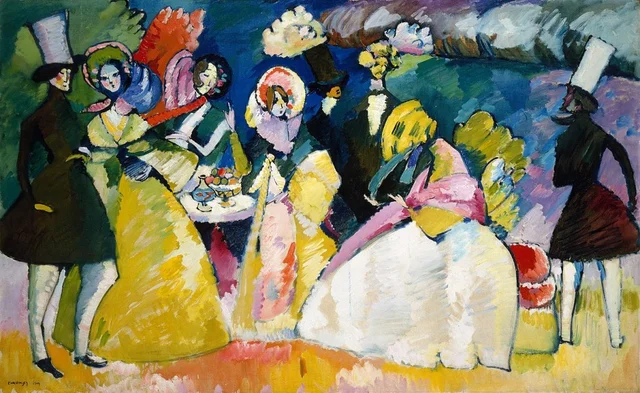 Group in CrinolinesWassily Kandinsky, 1909
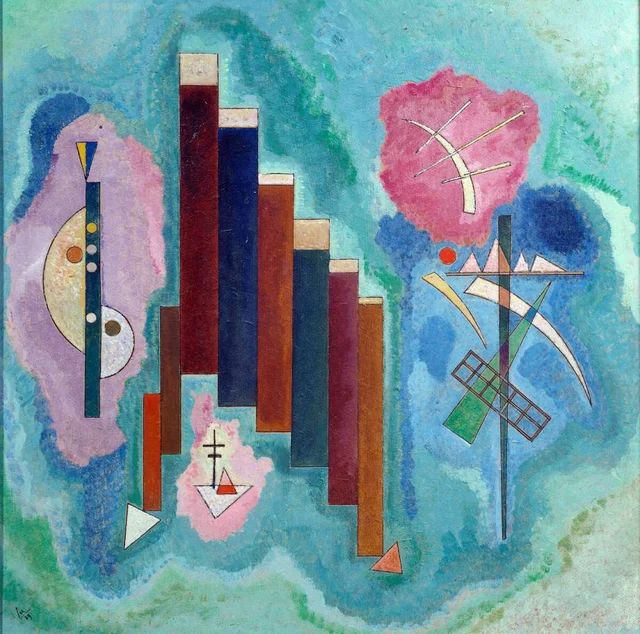 Herunter 476Wassily Kandinsky, 1929
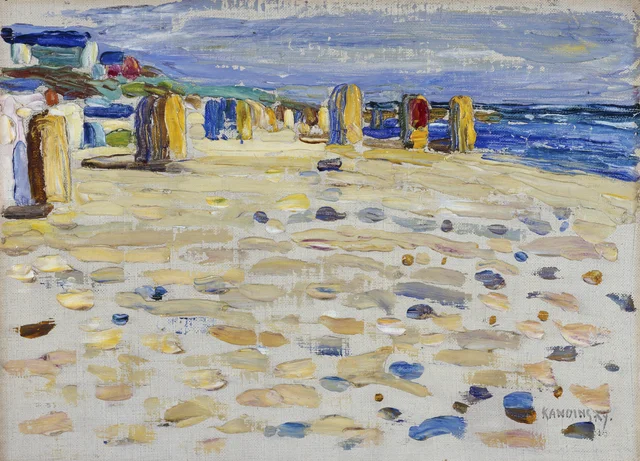 Holland - Beach chairsWassily Kandinsky, 1904
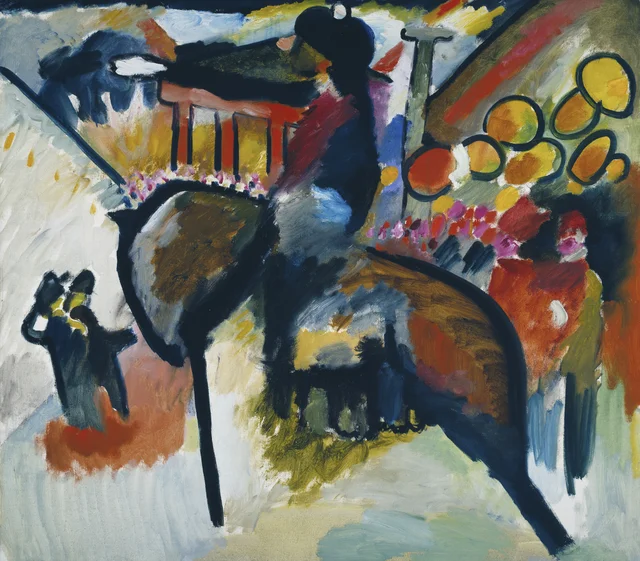 Impression IV (Constable)Wassily Kandinsky, 1911
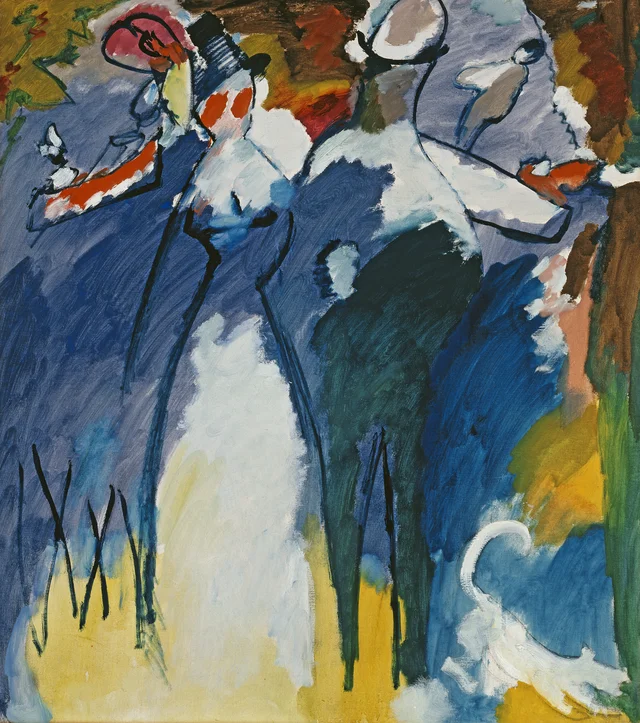 Impression VI (Sunday)Wassily Kandinsky, 1911
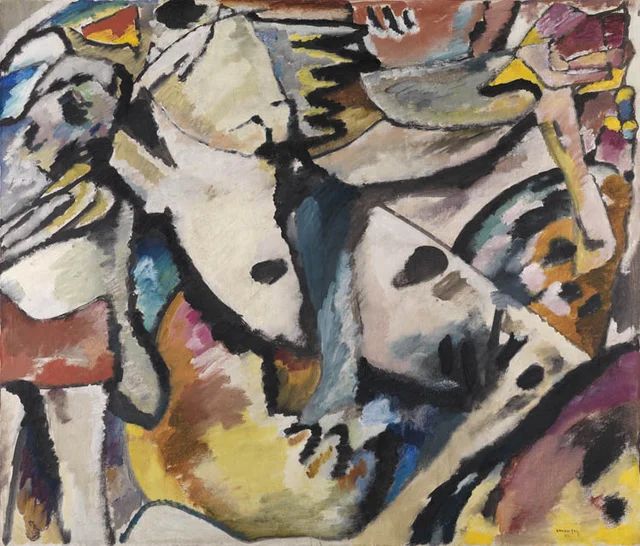 Improvisation 13Wassily Kandinsky, 1910
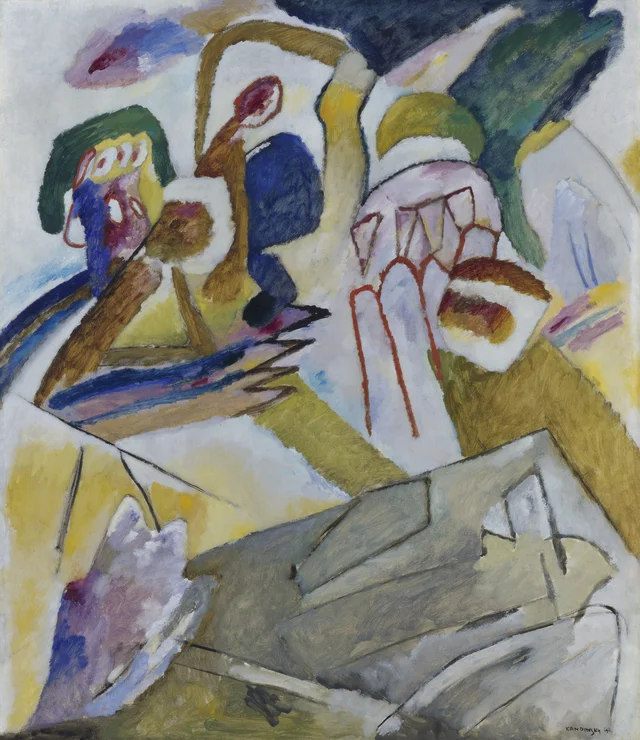 Improvisation 18 (with gravestone)Wassily Kandinsky, 1911
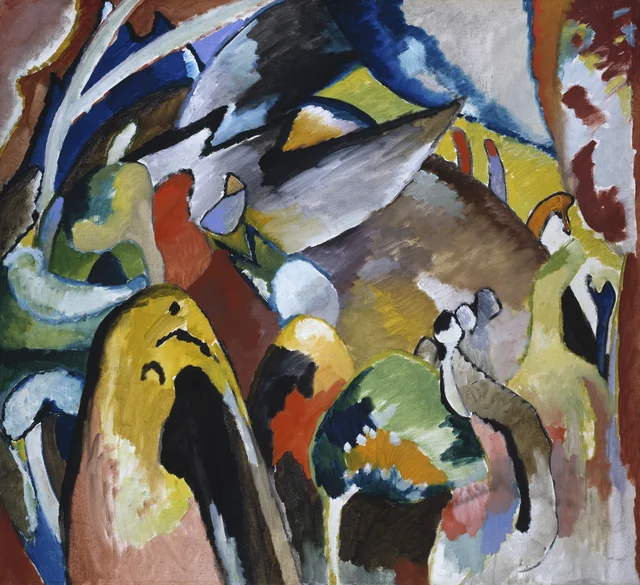 Improvisation 19aWassily Kandinsky, 1911
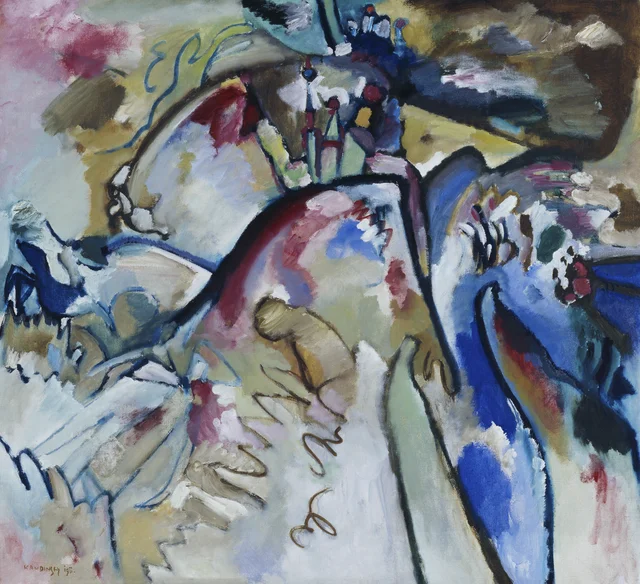 Improvisation 21aWassily Kandinsky, 1911
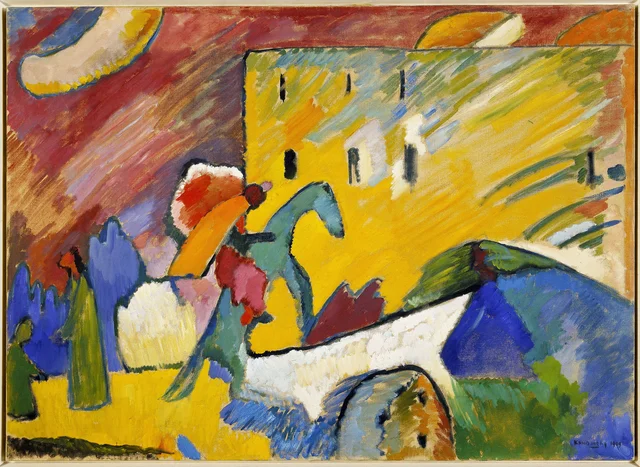 Improvisation 3Wassily Kandinsky, 1909
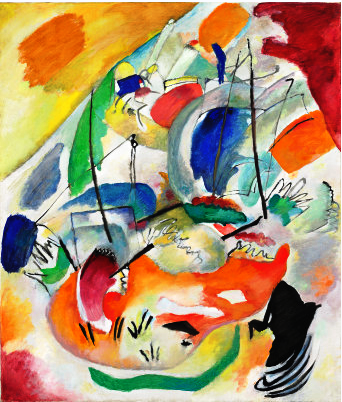 Improvisation 31 (Sea Battle)Wassily Kandinsky, 1913
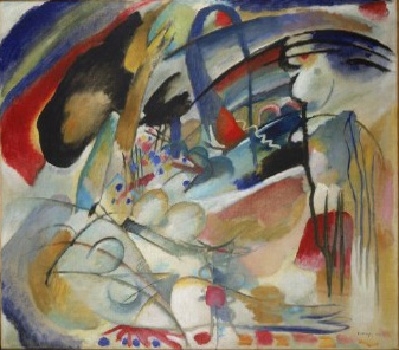 Improvisation 33 (Orient I)Wassily Kandinsky, 1913
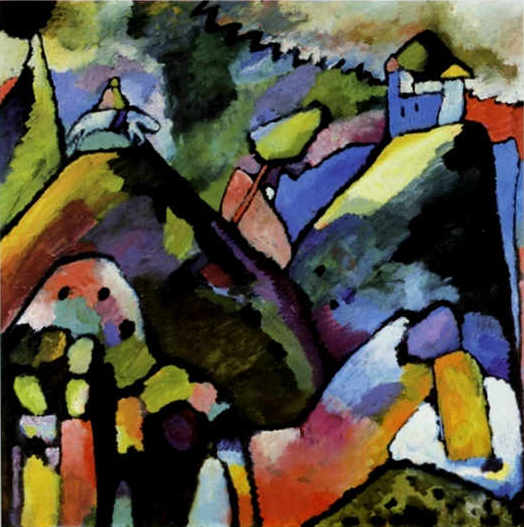 Improvisation 9Wassily Kandinsky, 1910
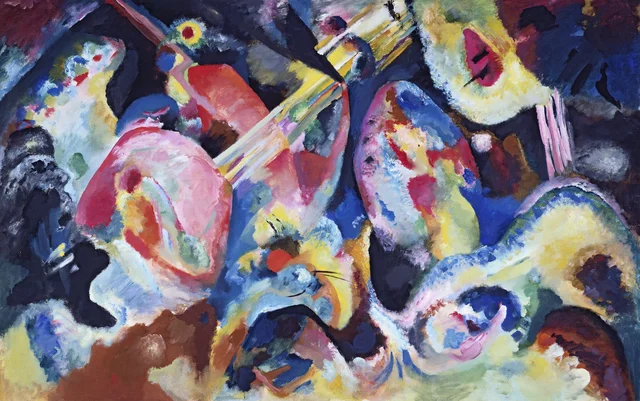 Improvisation DelugeWassily Kandinsky, 1913
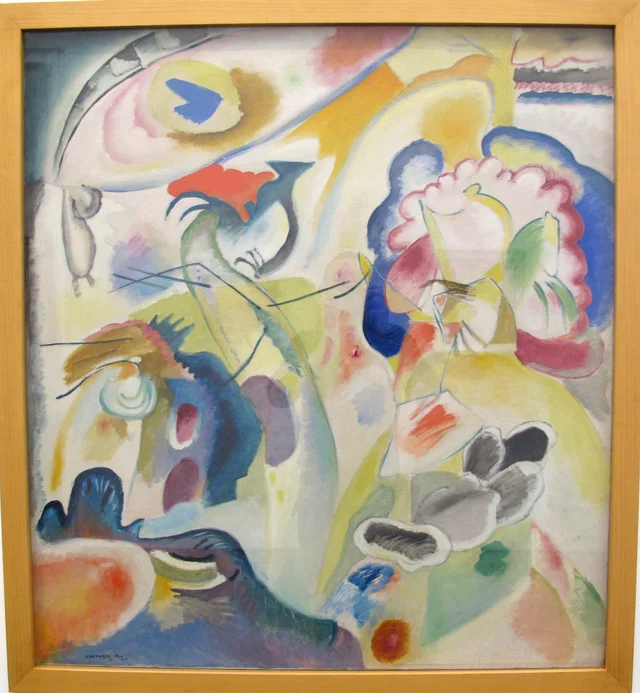 Improvisation No. 29 (The Swan)Wassily Kandinsky, 1912
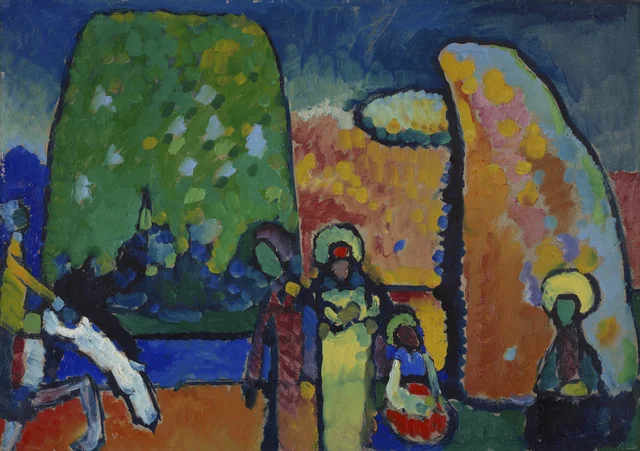 Improvisation No. 2 Funeral March (study)Wassily Kandinsky, 1909
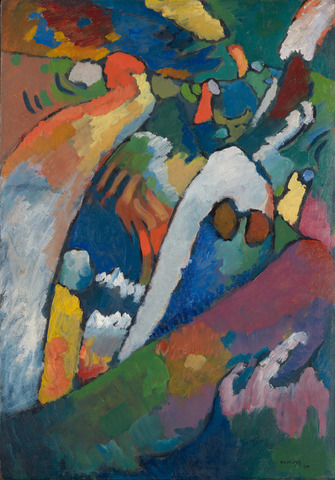 Improvisation No. 7 (Storm)Wassily Kandinsky, 1910