Awakening Slave
Details
The story
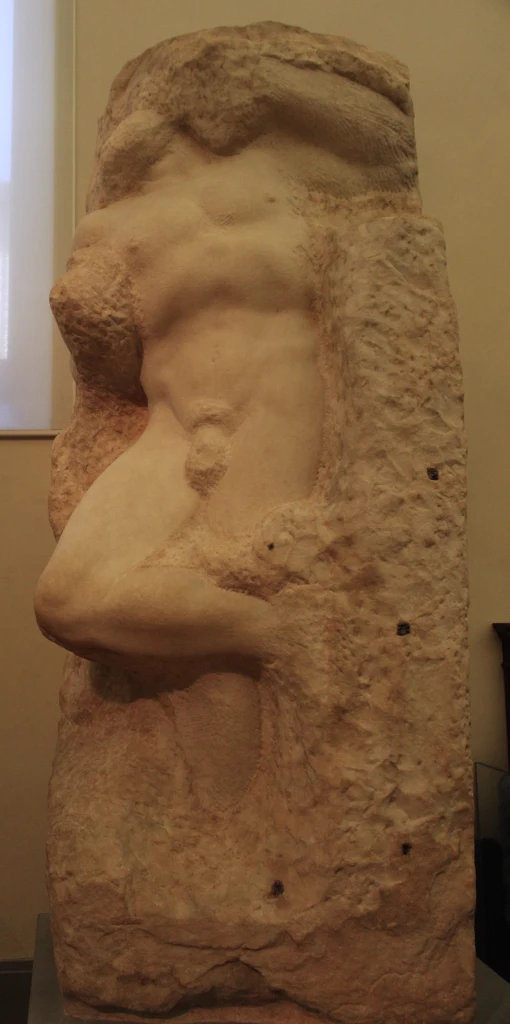
In August 1530 Florence surrendered after a siege of nearly a year, and the Medici came back to rule the city. Michelangelo had spent the siege designing the republic's defences. He went into hiding, was pardoned by the Medici pope Clement VII, and went back to his chisels. This captive, meant for the tomb of Pope Julius II, is generally dated to the years just after. A torso and one bent leg push forward, and the head is still lost in the rough stone at the top. The surface keeps a record of the tools, the pitted gouges of the pointed chisel and then the fine parallel furrows of the toothed claw chisel, crossing the thigh and the stone around it. The name Awakening comes from the pose, a body stretching as if it were waking up inside the block.