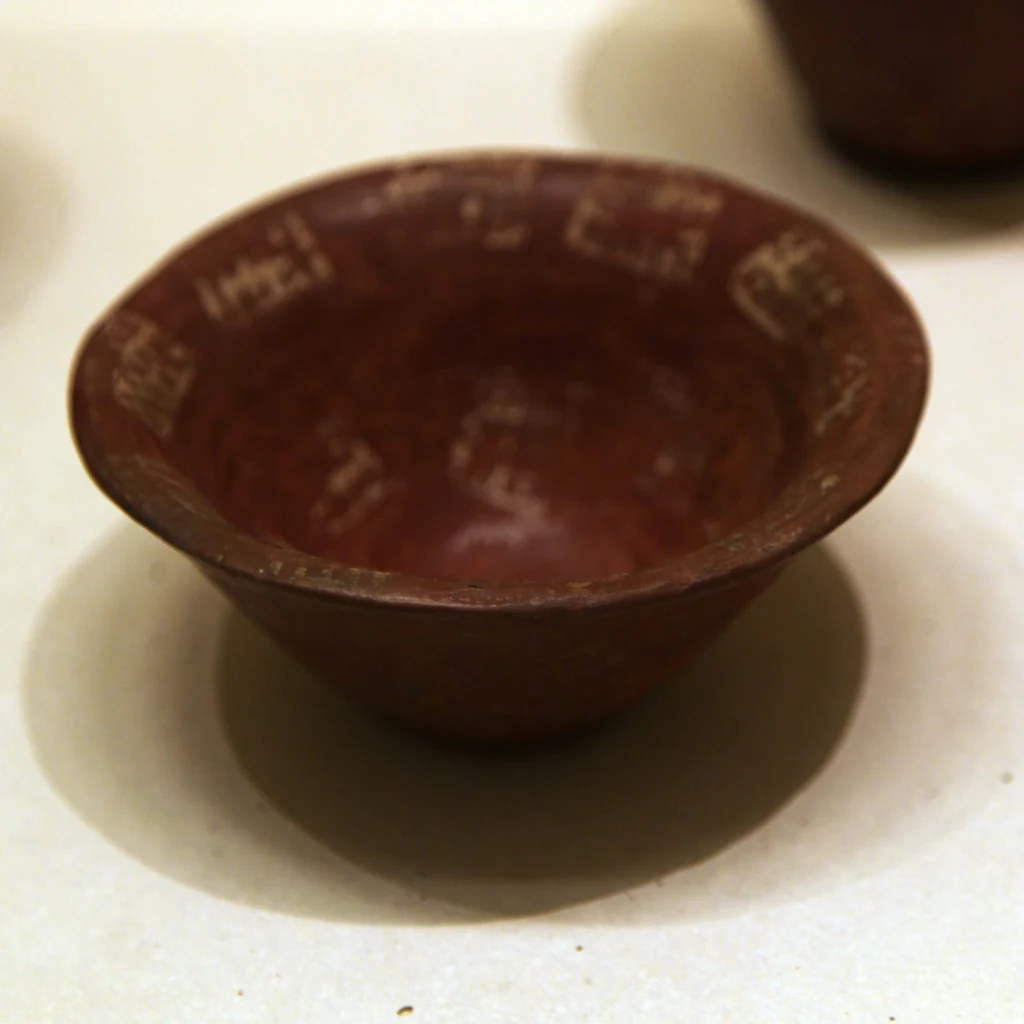
Cup with Painted Rectangles and Crosshatching
Details
The story
This cup is small enough to rest in a cupped hand, a little over 5 centimetres high and less than 12 across. It was made in Upper Egypt in the early Naqada period, roughly 3800 to 3600 BC, some five centuries before the country was first united under one king. The potter coated it in red slip, polished part of the surface, and painted it in cream with a band of rectangles and a crosshatched pattern like a net.
The Louvre records its findspot as Gebelein, south of Luxor on the Nile, a place whose Predynastic cemeteries have produced some of the best-known finds of the period, among them the bodies of men buried in the hot sand there more than 5,000 years ago and naturally preserved by it, now in the British Museum.
Louise and François Maspero gave the cup to the Louvre in 1953. In 2022 it was cited in a study of the traces of use on Predynastic pottery, research that asks whether such vessels served the living before they were placed in graves.
More works by Unknown Egyptian artist (Naqada period)
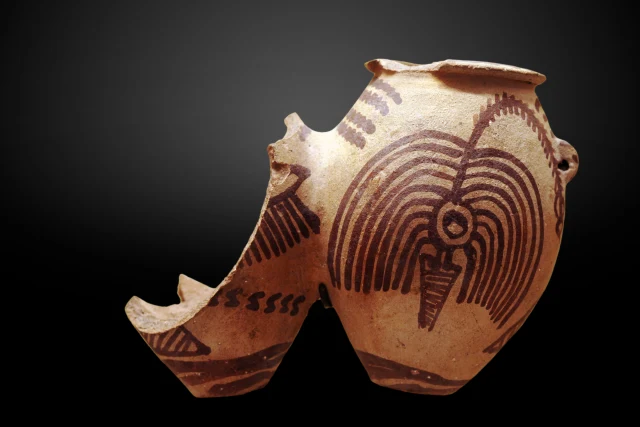 Double Vase with Boat and Plant DecorationUnknown Egyptian artist (Naqada period), -3400
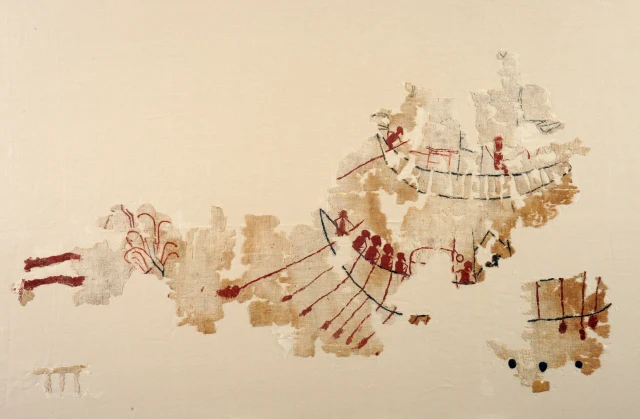 Gebelein Painted LinenUnknown Egyptian artist (Naqada period), -3475
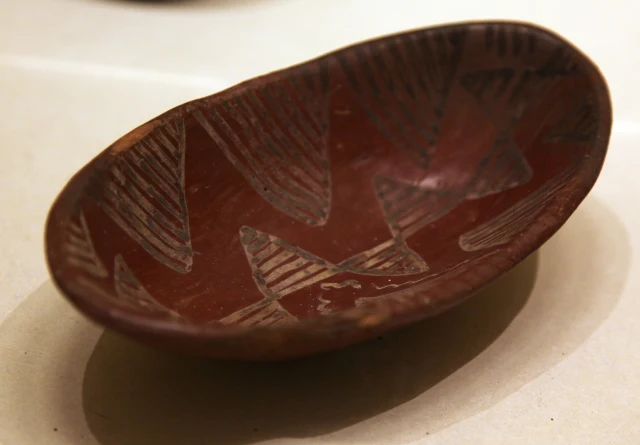 Oval Dish with Painted Zigzag and Hatched DecorationUnknown Egyptian artist (Naqada period), -3700
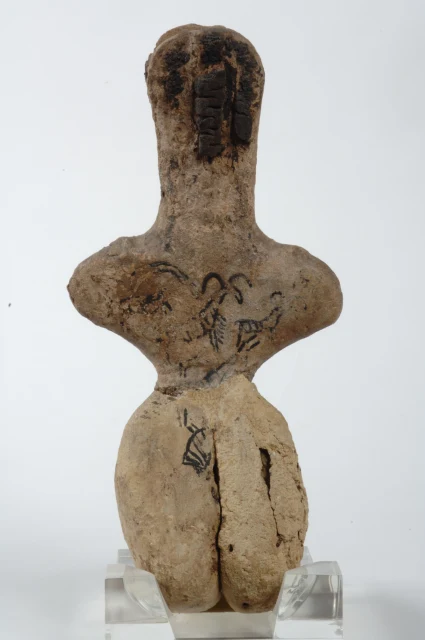 Predynastic Female Figure with a Beaked FaceUnknown Egyptian artist (Naqada period), -3500