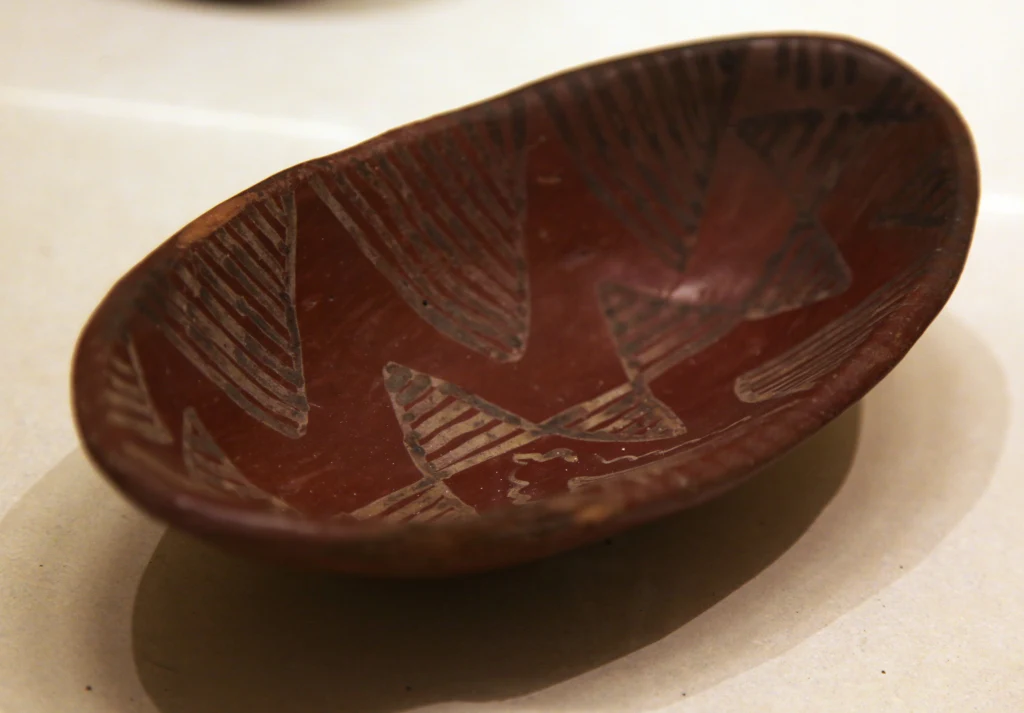
Oval Dish with Painted Zigzag and Hatched Decoration
Details
The story
This little red dish, under 20 centimetres long, was found at Gebelein, south of Thebes in Upper Egypt, in January 1885. That year the site was explored by Gaston Maspero, the French Egyptologist then in charge of Egypt's antiquities service. The dish reached the Louvre almost a century later, in 1972, as a gift, and the museum's records name the donor as François Maspero.
The Louvre dates it by its style to the Naqada period, between about 3800 and 3600 BC, more than five centuries before Egypt was first united under a single king. The potter coated it with red slip and polished it to a soft sheen, then painted the inside in cream with hatched bands that meet in sawtooth zigzags. Red pottery with pale painted lines like these is known as white cross-lined ware, a name given by Flinders Petrie, the British archaeologist who used changing pottery styles to put the early cemeteries of Egypt in order. Ware of this kind is among the earliest painted pottery made in Egypt.
More works by Unknown Egyptian artist (Naqada period)
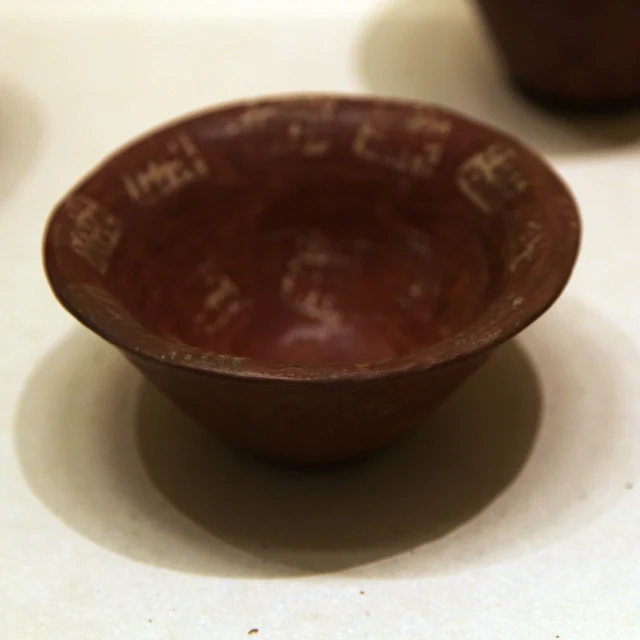 Cup with Painted Rectangles and CrosshatchingUnknown Egyptian artist (Naqada period), -3700
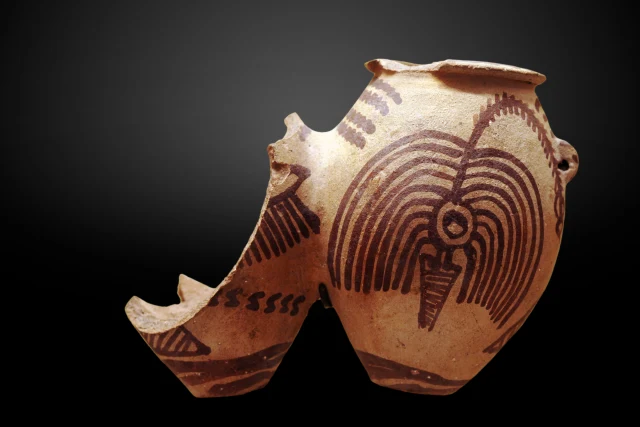 Double Vase with Boat and Plant DecorationUnknown Egyptian artist (Naqada period), -3400
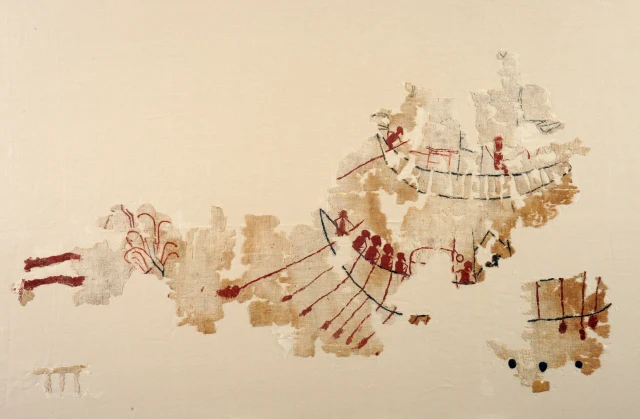 Gebelein Painted LinenUnknown Egyptian artist (Naqada period), -3475
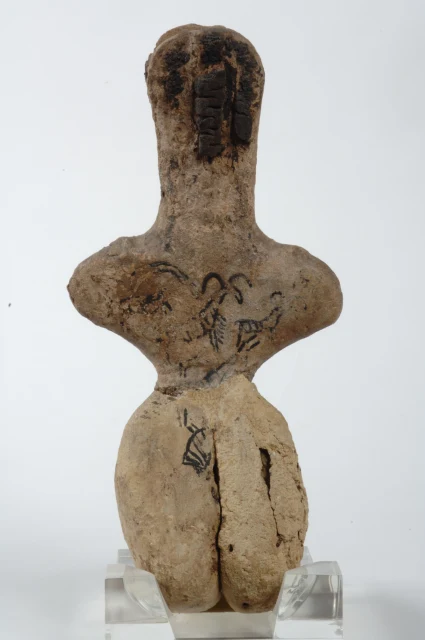 Predynastic Female Figure with a Beaked FaceUnknown Egyptian artist (Naqada period), -3500