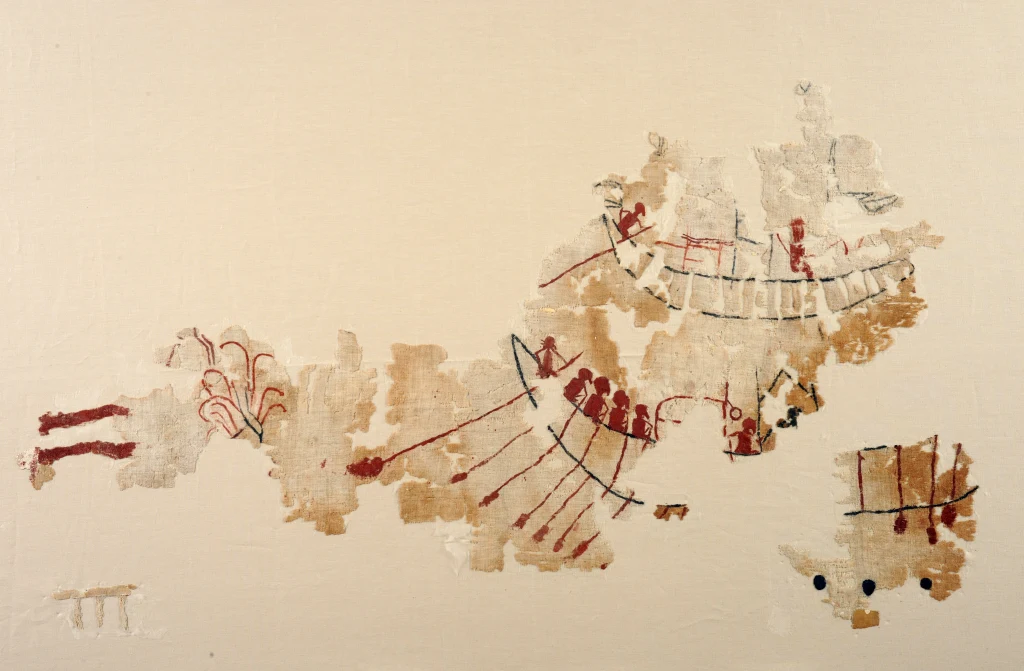
Gebelein Painted Linen
Details
The story
This cloth was painted between about 3600 and 3350 BC, in the period archaeologists call Naqada II, centuries before the first Egyptian writing and before the country was united under one king. It was excavated in 1930 at Gebelein, some 30 kilometres south of Luxor, by the Italian archaeologist Giulio Farina, working for the museum in Turin, and only fragments of it survive. Researchers who have studied it describe it as possibly the oldest painting on cloth preserved today.
The scenes take place on the bank of the Nile. There is a procession of boats, a group of figures who may be dancing or mourning, and the hunting of a hippopotamus. Some scholars have seen in the boat procession an early form of the Heb-Sed, the festival that in later centuries renewed the power of a reigning king, and the hippo hunt may have been a ritual too. Researchers from Italy's National Research Council have examined the weave of the linen and are building a 3D model of its surface.
More works by Unknown Egyptian artist (Naqada period)
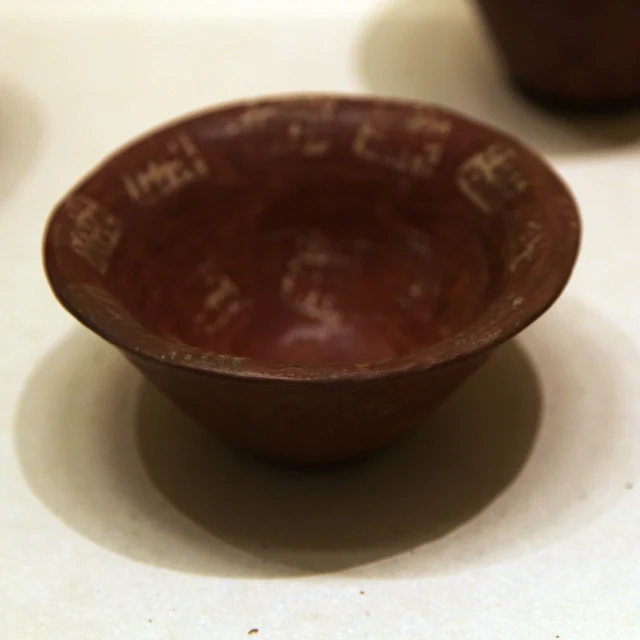 Cup with Painted Rectangles and CrosshatchingUnknown Egyptian artist (Naqada period), -3700
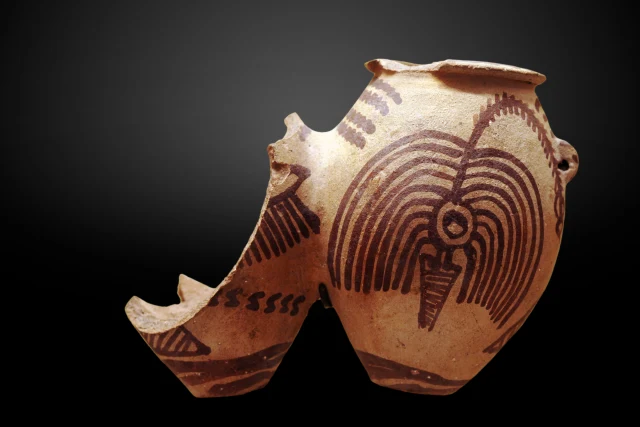 Double Vase with Boat and Plant DecorationUnknown Egyptian artist (Naqada period), -3400
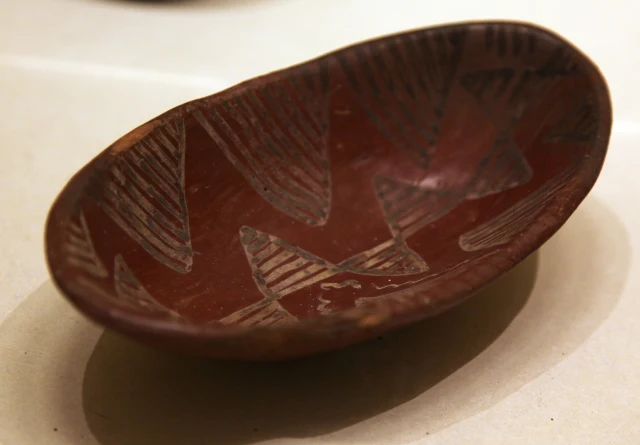 Oval Dish with Painted Zigzag and Hatched DecorationUnknown Egyptian artist (Naqada period), -3700
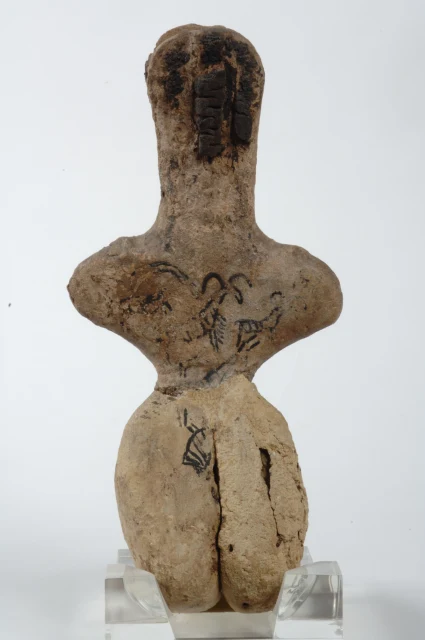 Predynastic Female Figure with a Beaked FaceUnknown Egyptian artist (Naqada period), -3500