
East Pediment of the Temple of Aphaia, Aegina
Details
The story
In 490 BC an Athenian army beat the Persians at Marathon. The museum dates this group of figures from the temple of Aphaia on Aegina to that same moment, around 490 BC, roughly ten years after the west gable in Room VII. In that short gap Greek sculpture changed. The museum calls the west gable still late Archaic and this east gable already early Classical, and it knows no other monument where the turn from one style to the next can be followed so clearly.
The story here is the older one. A generation before the Iliad, Heracles led a first war against Troy and took the city, and at his side fought Telamon, son of Aeacus, the legendary king of Aegina. So the island again placed its own royal line in the gable. Telamon was the father of Ajax, the hero of the later war.
Compare the fighters with those in the west room. There the bodies are held in tidy, almost ornamental poses, and the wounded keep the calm Archaic smile. Here the figures turn more freely in space, and the fallen sink under their own weight with faces that have lost that smile.
More works by Unknown Greek sculptor (Archaic)
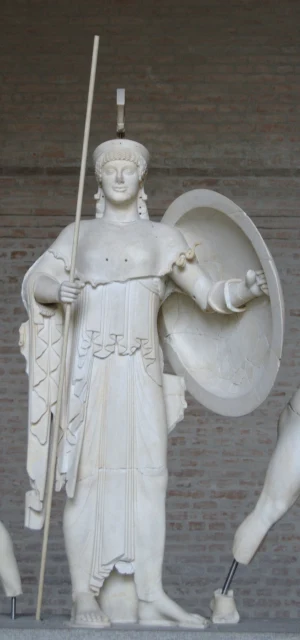 Athena from the West Pediment of the Temple of AphaiaUnknown Greek sculptor (Archaic), -500
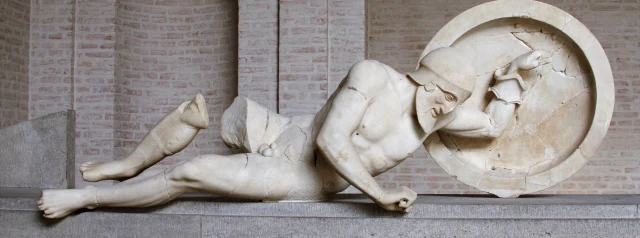 Dying Warrior ("Laomedon") from the East Pediment of the Temple of AphaiaUnknown Greek sculptor (Archaic), -490
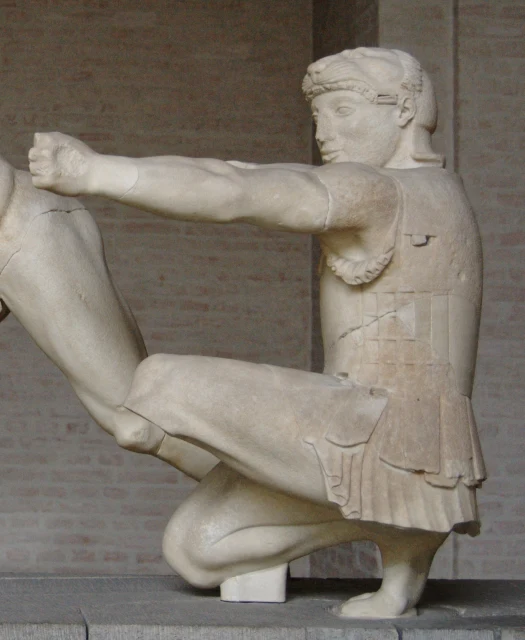 Herakles the Archer from the East Pediment of the Temple of AphaiaUnknown Greek sculptor (Archaic), -490
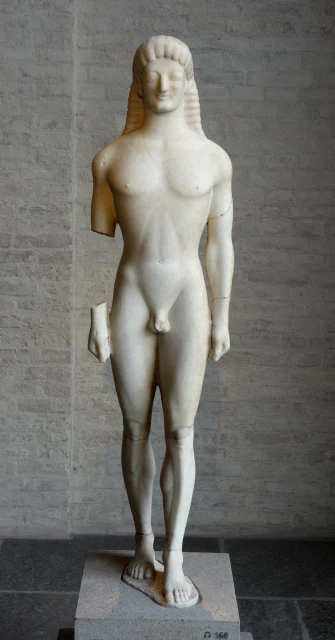 Kouros of TeneaUnknown Greek sculptor (Archaic), -560
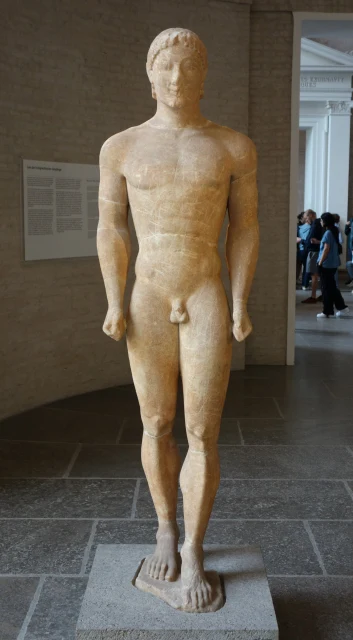 Munich KourosUnknown Greek sculptor (Archaic)