Vincent van Gogh · PD
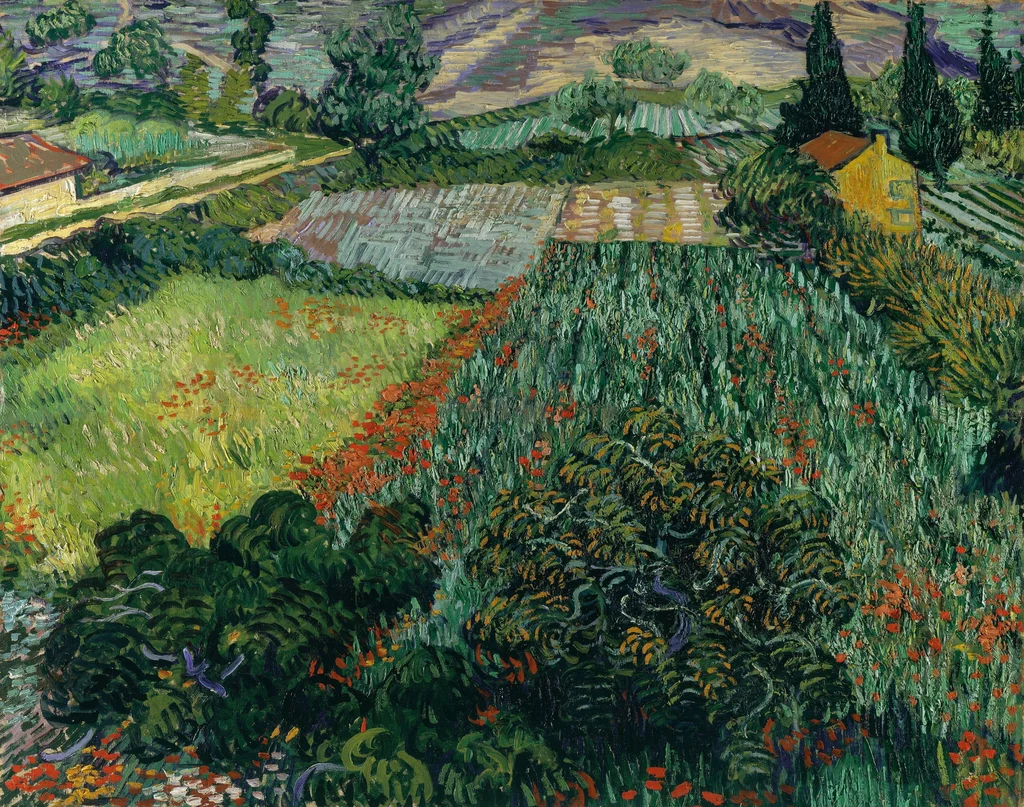
Field with Poppies
Details
The story
In the spring of 1911 this canvas set off one of the loudest art quarrels in Germany before the First World War. Gustav Pauli, director of the Kunsthalle Bremen, had bought it that year for 30,000 marks, with money from the museum's supporters and the state. The one member of the art society's board who voted against it, the Worpswede painter Carl Vinnen, went public. In April he published A Protest of German Artists, a pamphlet backed by more than 120 painters and critics who claimed German museums were overpaying for French art. Within months the younger generation answered in print, among them August Macke, Franz Marc, Max Pechstein and Wassily Kandinsky.
The picture itself comes from a quieter moment. In May 1889 Van Gogh had gone into the asylum at Saint-Rémy in Provence, and in early June, once he was allowed to paint outside its walls, this field was one of his first subjects. He looks down from slightly raised ground across a hollow of wheat, laid on in thick paint where the red of the poppies is set hard against the green.