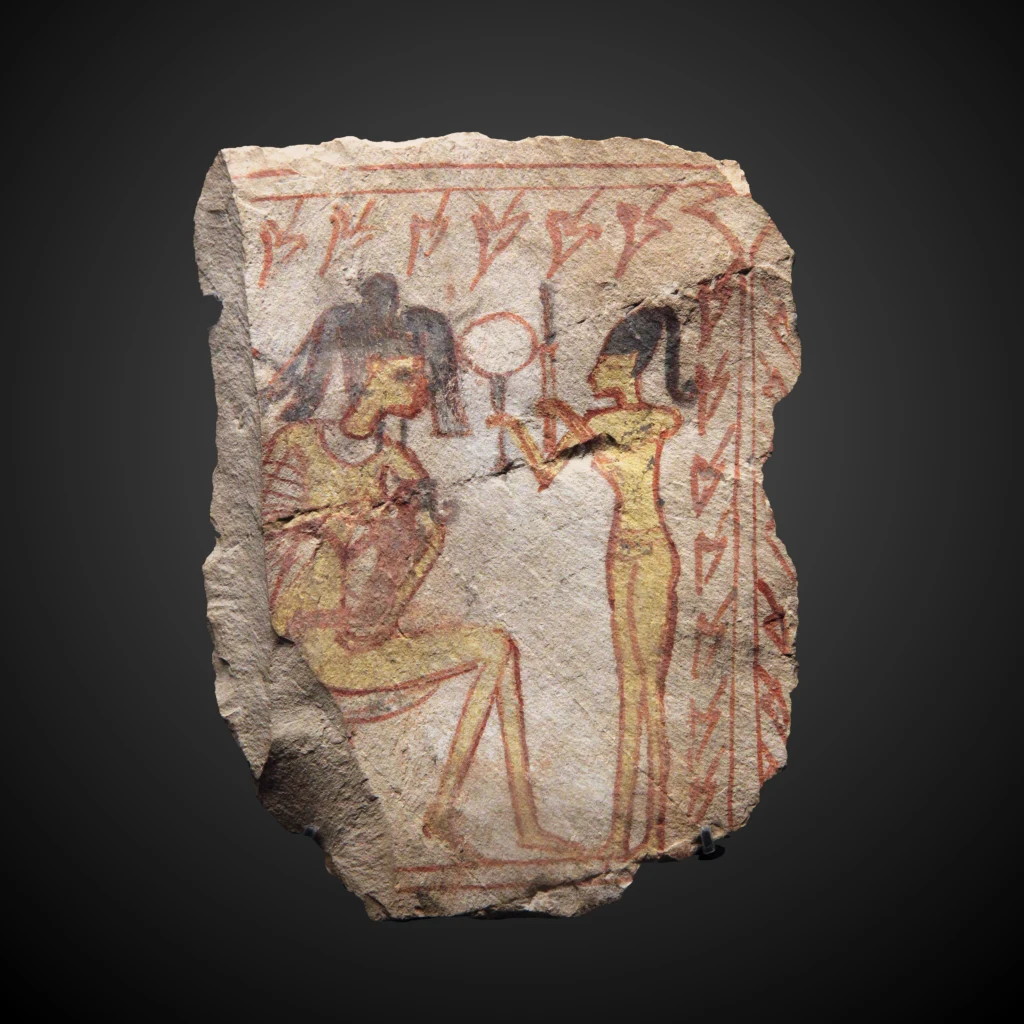
Figured Ostracon: Servant Presenting a Mirror to Her Mistress
Details
The story
This chip of limestone, about the size of a hand, comes from Deir el-Medina, the village on the west bank at Thebes where the craftsmen who cut and painted the royal tombs in the Valley of the Kings lived with their families. Flakes of limestone lay everywhere there, free for the taking, and in the Ramesside age, the 13th to 11th centuries BC, the villagers used them like scrap paper for notes, accounts and sketches. This one shows a scene among women. A mother sits nursing a child, and a naked servant girl, wearing only a belt, holds out a mirror and a tube of kohl, the black eye paint. A climbing convolvulus frames them. Many ostraca from the village show women and babies in settings like this, and Egyptologists still argue over whether they record ordinary home life or the rites that surrounded childbirth. The flake was once in the Fouad I Agricultural Museum in Cairo, and it came to the Louvre as a gift in 1952.
More works by Unknown Egyptian artist (Ramesside period)
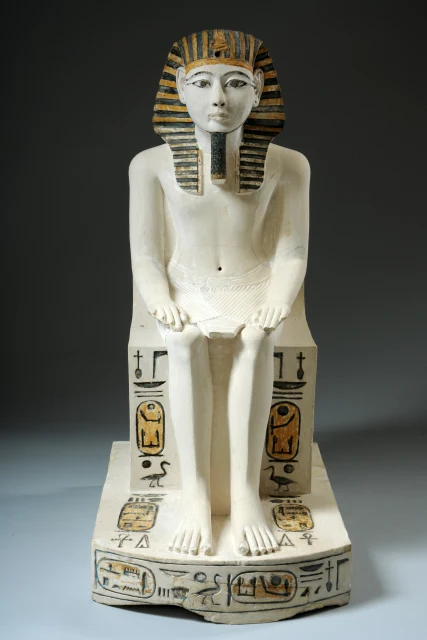 Cult Statue of Amenhotep IUnknown Egyptian artist (Ramesside period), -1242
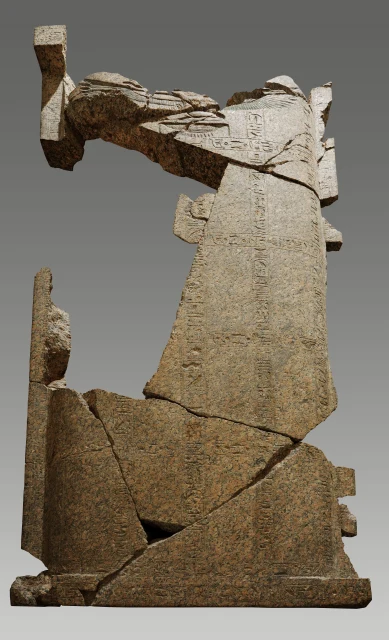 Lid of the Sarcophagus of Queen NefertariUnknown Egyptian artist (Ramesside period), -1246
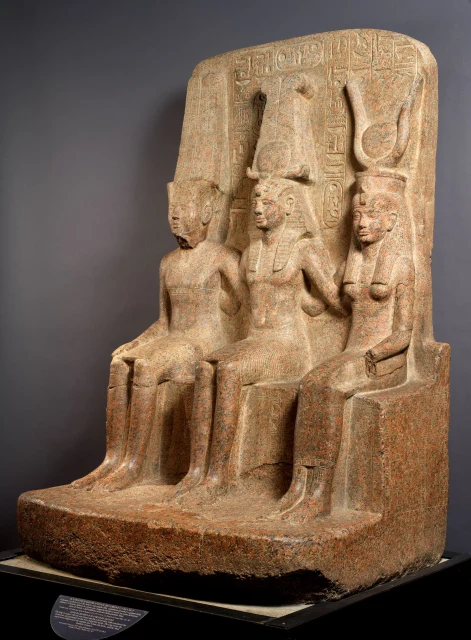 Ramesses II Seated between Amun and MutUnknown Egyptian artist (Ramesside period), -1246
 Sarcophagus Lid of Prince KhaemwasetUnknown Egyptian artist (Ramesside period), -1168
 Standard-bearing Statue of RamoseUnknown Egyptian artist (Ramesside period), -1184