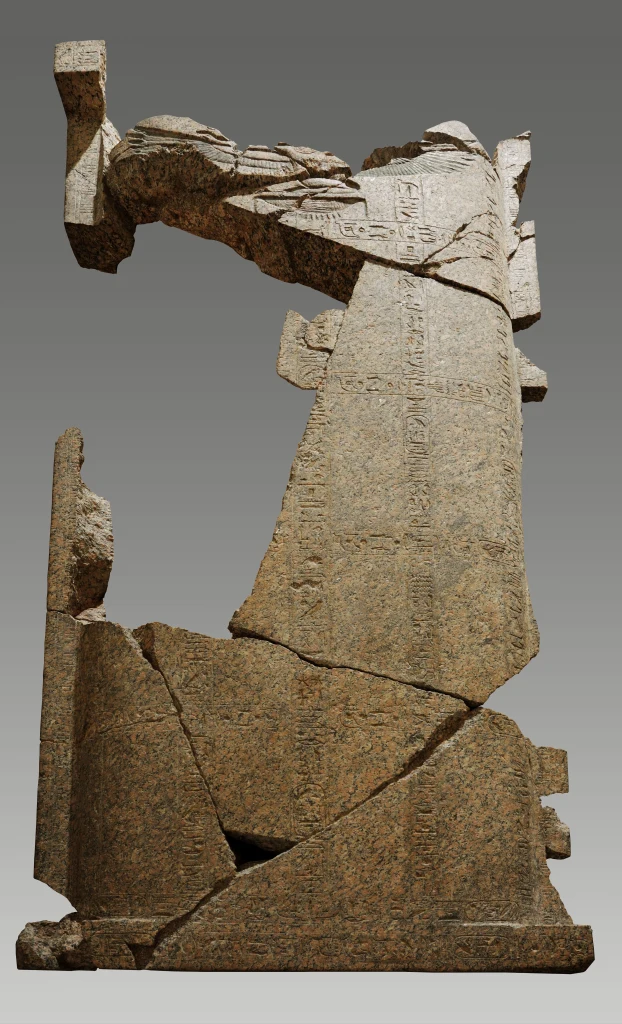
Lid of the Sarcophagus of Queen Nefertari
Details
The story
At Abu Simbel, Ramesses II had a temple cut into the rock for his principal wife, Nefertari, and the goddess Hathor, beside his own, and on its front her statues stand as tall as his. In the Valley of the Queens she was given a tomb whose wall paintings are counted among the finest in Egypt. In the middle of its burial chamber, which the Egyptians called the golden hall, stood her sarcophagus of pink granite, inscribed with her name.
When Schiaparelli's mission reached the tomb in 1904, it lay open. Robbers had been there long before, probably already in antiquity, and they had smashed the sarcophagus. Only some pieces were recovered, several of them from the lid, and these are the pieces you see here. The museum dates them to the reign of Ramesses II, from 1279 to 1213 BC.
The paintings on the walls survived the robbery. Between 1988 and 1992 they were conserved by Egypt's antiquities service together with the Getty Conservation Institute.
More works by Unknown Egyptian artist (Ramesside period)
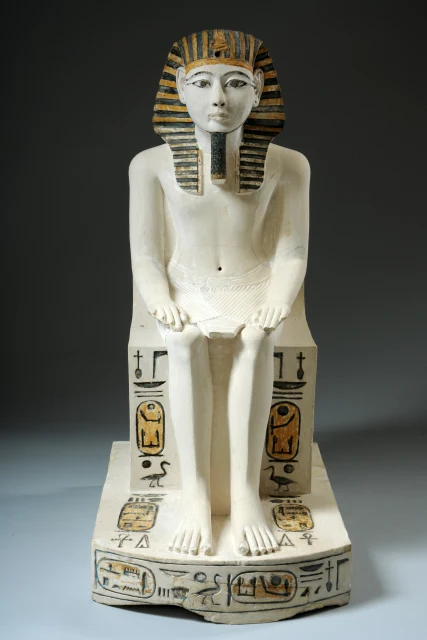 Cult Statue of Amenhotep IUnknown Egyptian artist (Ramesside period), -1242
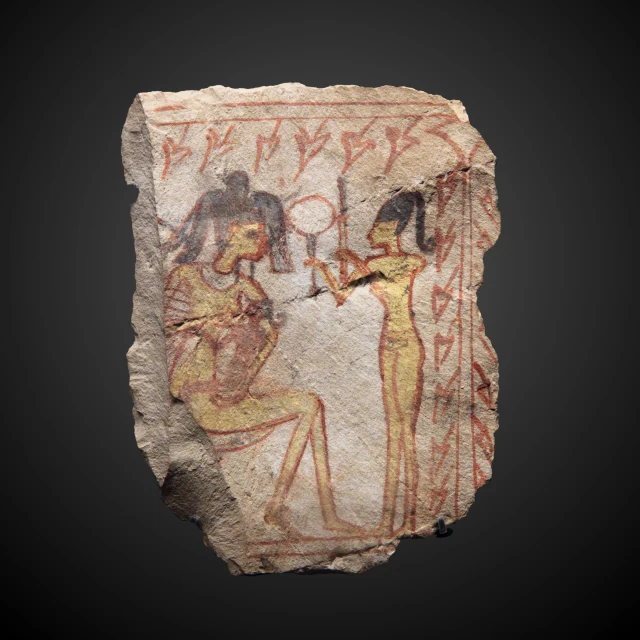 Figured Ostracon: Servant Presenting a Mirror to Her MistressUnknown Egyptian artist (Ramesside period), -1182
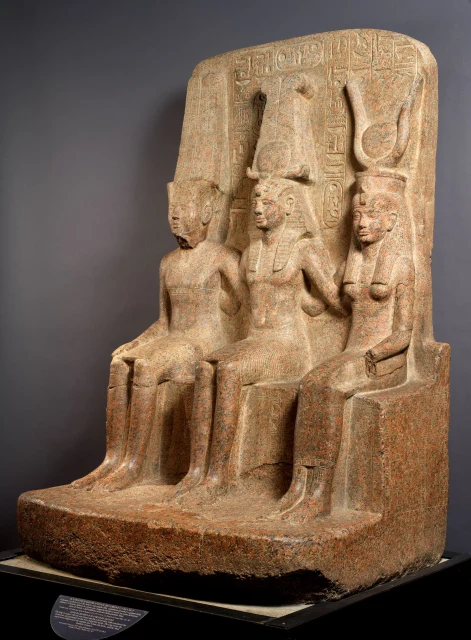 Ramesses II Seated between Amun and MutUnknown Egyptian artist (Ramesside period), -1246
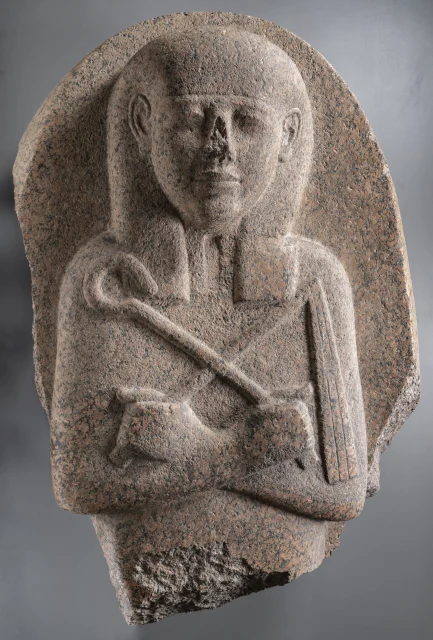 Sarcophagus Lid of Prince KhaemwasetUnknown Egyptian artist (Ramesside period), -1168
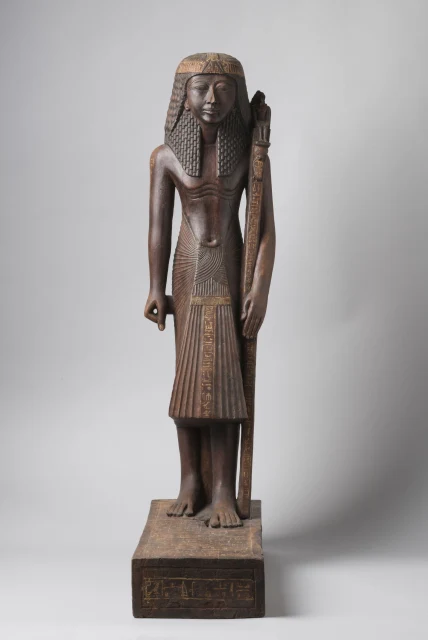 Standard-bearing Statue of RamoseUnknown Egyptian artist (Ramesside period), -1184