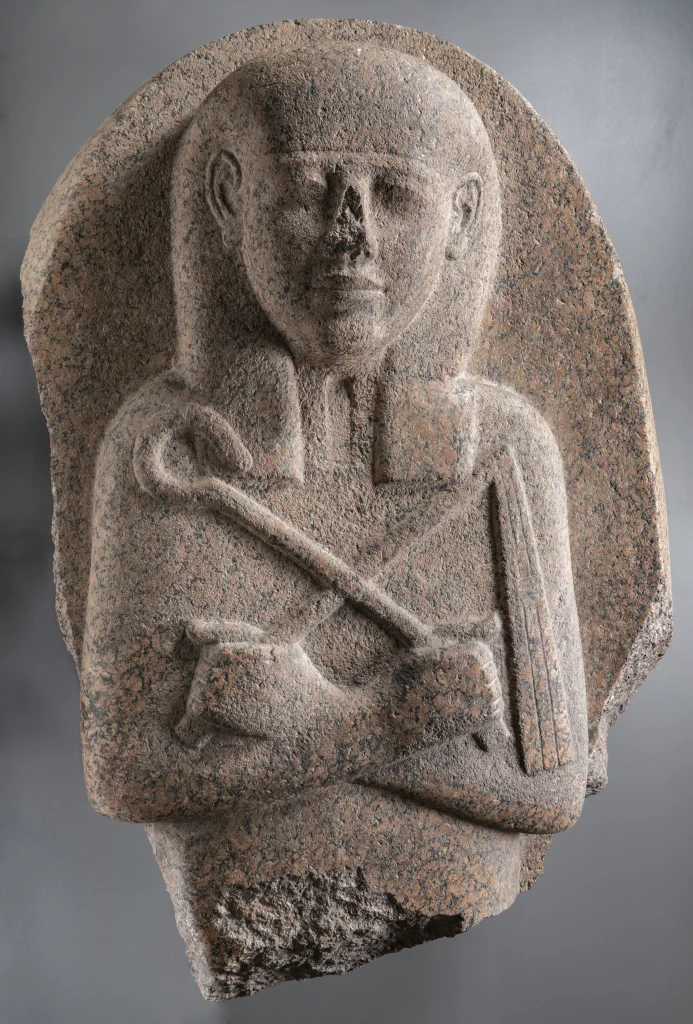
Sarcophagus Lid of Prince Khaemwaset
Details
The story
Ramesses III, who ruled Egypt in the 12th century BC, modelled himself on Ramesses II, the great king of the century before, even in the names he gave his children. Several of his sons were named after sons of Ramesses II, and this prince is one of them. The first Khaemwaset is remembered as high priest of Ptah at Memphis. His namesake served the same god in the same city, though as a sem priest, one of the priests who performed funerary rites.
He outlived his father. The inscriptions on his sarcophagus name his brother, Ramesses IV, so he was probably buried in that reign, and the museum dates the lid between 1187 and 1149 BC. Its outline has the shape of a royal cartouche, the oval ring drawn around a king's name.
His tomb in the Valley of the Queens was found by Schiaparelli's mission in 1903, open and plundered. Centuries after his burial it had been reused as a hiding place for other coffins, and his own grave goods were lost. Of his burial, the museum notes, this fragment of the sarcophagus is all that remains.
More works by Unknown Egyptian artist (Ramesside period)
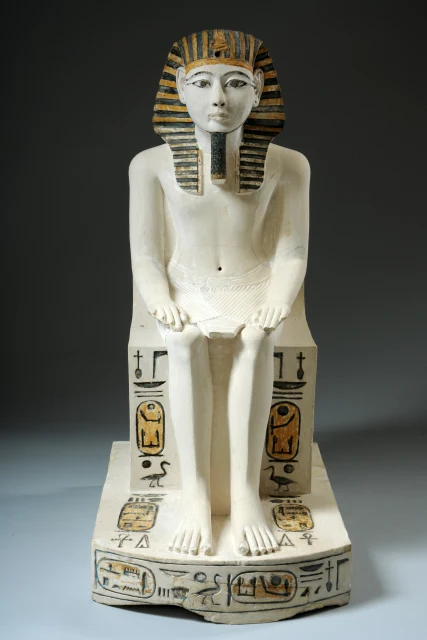 Cult Statue of Amenhotep IUnknown Egyptian artist (Ramesside period), -1242
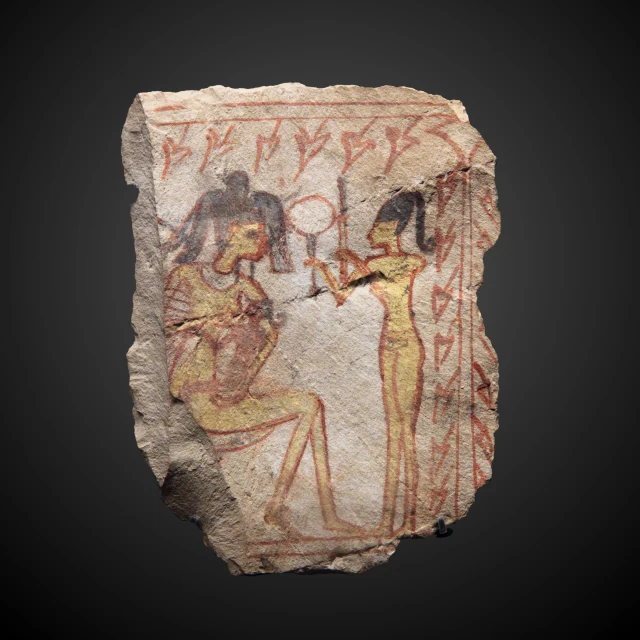 Figured Ostracon: Servant Presenting a Mirror to Her MistressUnknown Egyptian artist (Ramesside period), -1182
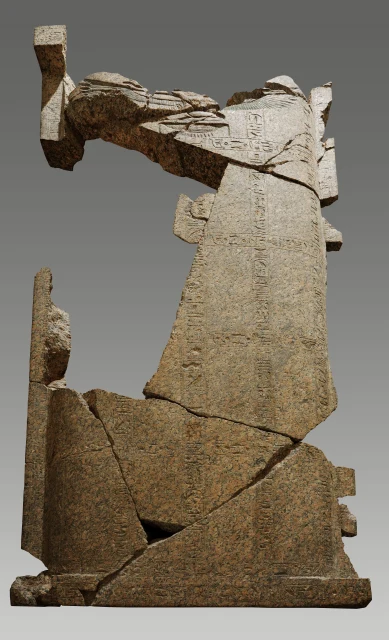 Lid of the Sarcophagus of Queen NefertariUnknown Egyptian artist (Ramesside period), -1246
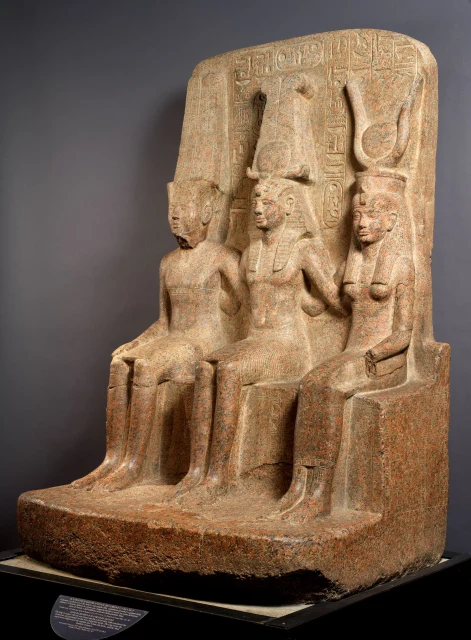 Ramesses II Seated between Amun and MutUnknown Egyptian artist (Ramesside period), -1246
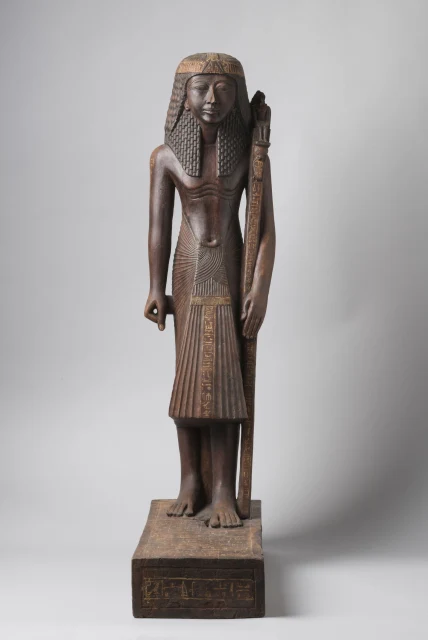 Standard-bearing Statue of RamoseUnknown Egyptian artist (Ramesside period), -1184