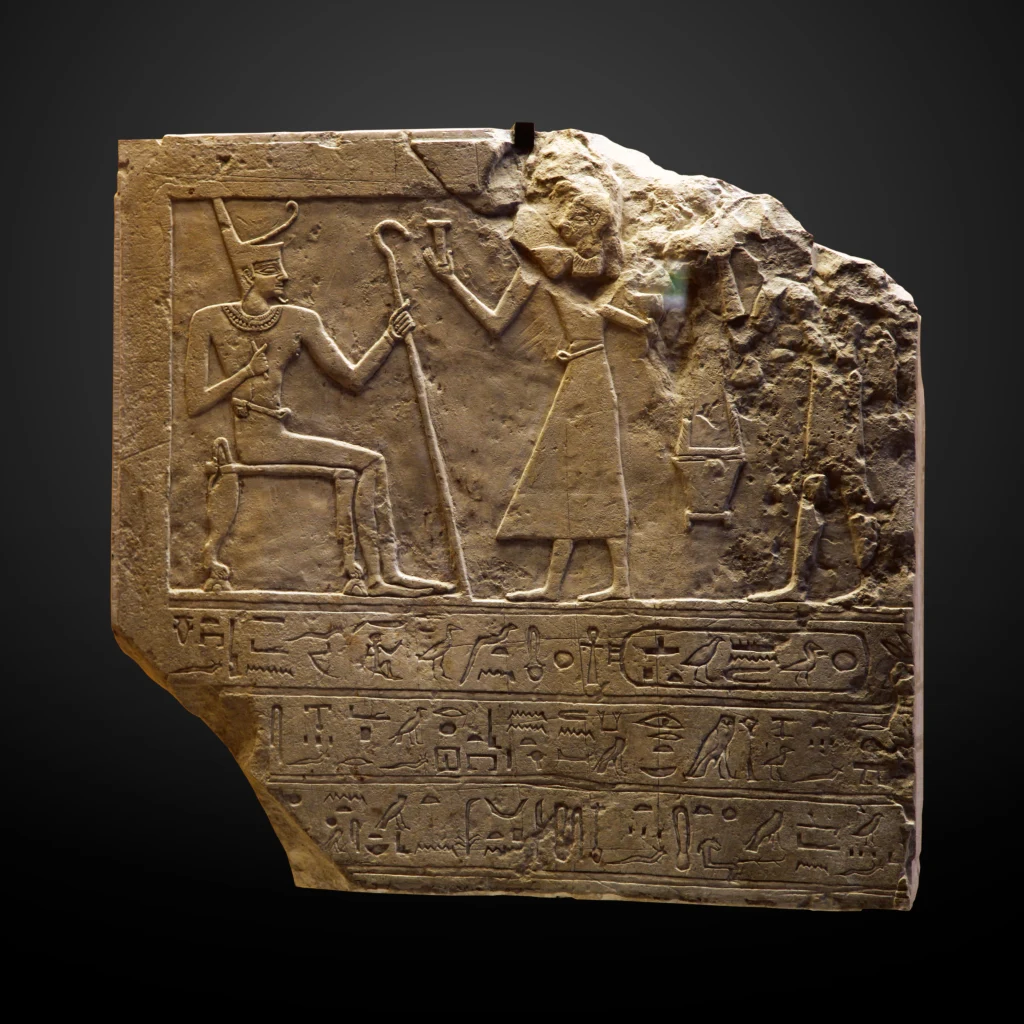
Fragmentary Stela with an Offering Scene before King Mentuhotep II
Details
The story
The king seated on this stone is Nebhepetre Mentuhotep II, the Theban ruler who brought Egypt back under one crown after a long period of division and so opened what historians call the Middle Kingdom. He wears the red crown and the short royal beard and holds a staff. A man in a kilt and a broad collar stands before him offering a vessel, and another follows with jars slung from a yoke across his shoulders.
The stela was cut down from a larger slab at some point, and the Louvre records that the king's Horus name was still visible on it before that happened. For this king the detail matters, because Mentuhotep changed his Horus name more than once during his long reign, and it can help place a monument within it. What survives is his throne name, Nebhepetre, with lines of a conventional autobiography in sunk hieroglyphs beside figures carved in raised relief. The fragment came to the Louvre in 1881 as a gift from the Société de Numismatique, a Paris society of coin collectors.
More works by Unknown Egyptian artist (Middle Kingdom)
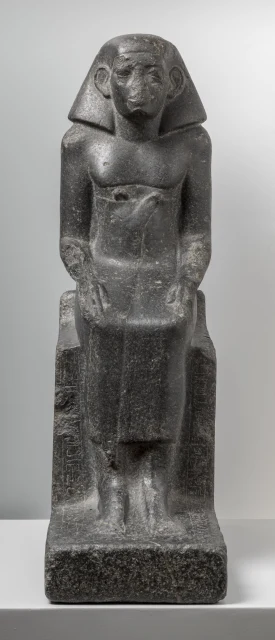 Statue of Kheperka, Overseer of FieldsUnknown Egyptian artist (Middle Kingdom), -1754
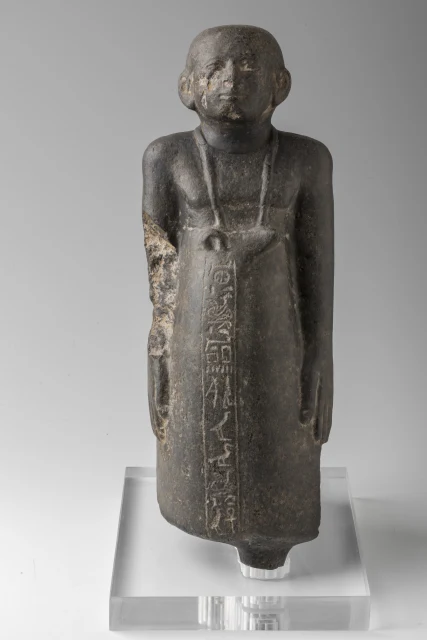 Statue of the Vizier IymeruUnknown Egyptian artist (Middle Kingdom), -1725
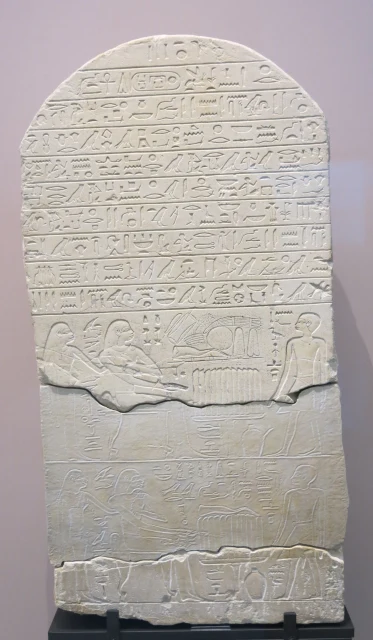 Stela of ImenyUnknown Egyptian artist (Middle Kingdom), -1883
 Stela of Iri Receiving an OfferingUnknown Egyptian artist (Middle Kingdom), -1882
 Stela of Sakherty, Overseer of the TreasuryUnknown Egyptian artist (Middle Kingdom), -1915