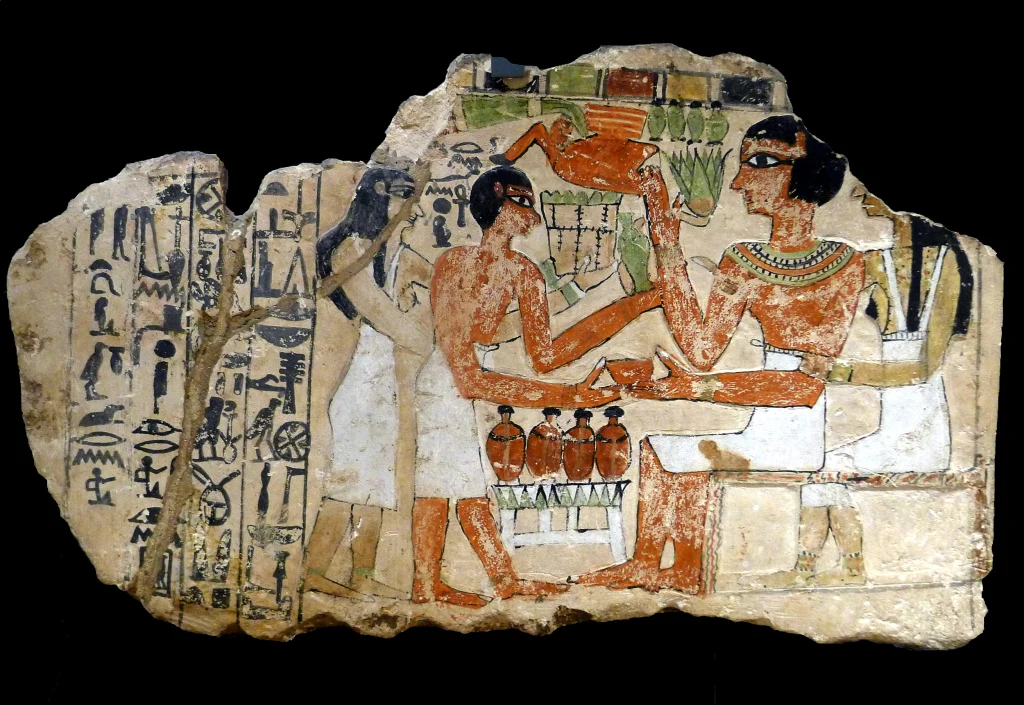
Stela of Iri Receiving an Offering
Details
The story
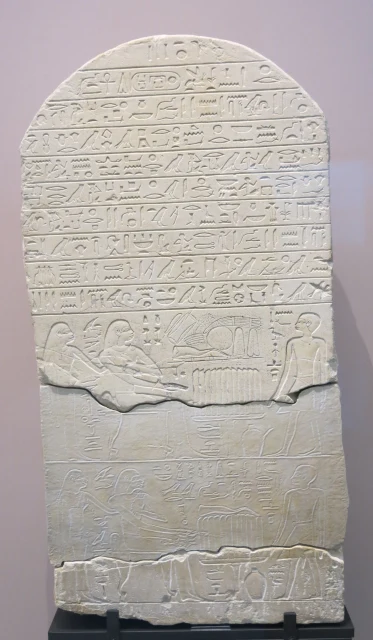
Egyptologists do not agree on when this stone was carved, and their dates lie some 500 years apart. In 1990 Christiane Ziegler, later head of the Louvre's Egyptian department, placed it in the First Intermediate Period, the age of divided rule that ended around 2050 BC. In 2004 the Italian Egyptologist Gloria Rosati put it at the end of the Middle Kingdom, in the late 12th or the 13th Dynasty, and in 2017 Alexander Ilin-Tomich settled on the reigns of Senusret I or Amenemhat II, early in the 12th. Both later studies suggest that it came from Rizeiqat, near Gebelein, south of Thebes. The scene itself is plain to read. Iri sits at his funerary meal while a cupbearer in a white kilt holds out a bowl, above four jars on a stand, a basket, lotus flowers and a leg of beef, and the painted colours are still unusually fresh. The Egyptologist Jacques Jean Clère saw the stone at a dealer's shop in Luxor in 1935, and the Louvre bought it in 1981. It is shown today in the study gallery of the Old Kingdom rooms.
More works by Unknown Egyptian artist (Middle Kingdom)
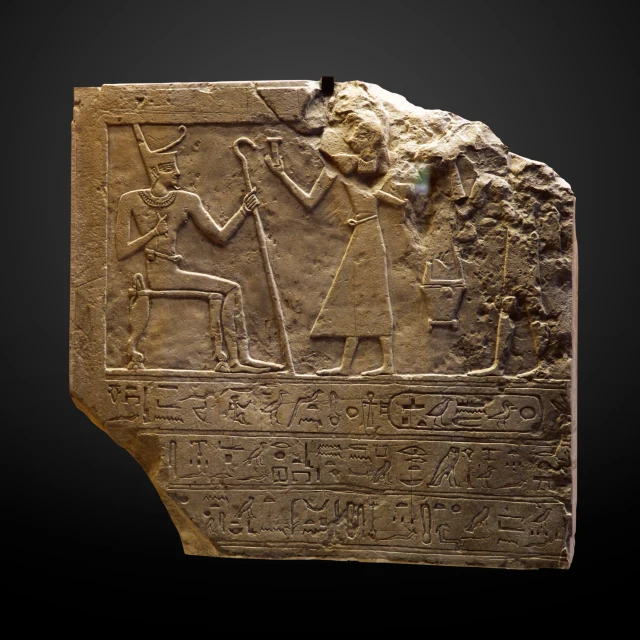 Fragmentary Stela with an Offering Scene before King Mentuhotep IIUnknown Egyptian artist (Middle Kingdom), -2019
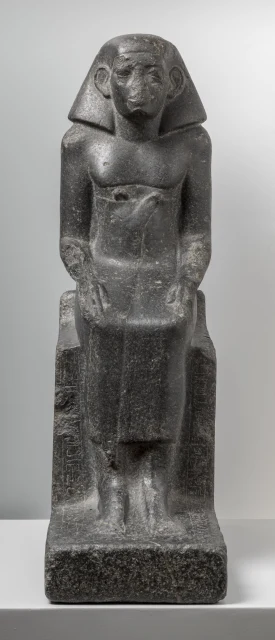 Statue of Kheperka, Overseer of FieldsUnknown Egyptian artist (Middle Kingdom), -1754
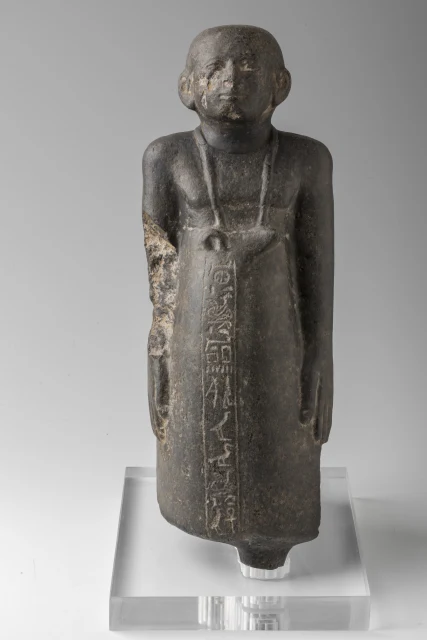 Statue of the Vizier IymeruUnknown Egyptian artist (Middle Kingdom), -1725
 Stela of ImenyUnknown Egyptian artist (Middle Kingdom), -1883
 Stela of Sakherty, Overseer of the TreasuryUnknown Egyptian artist (Middle Kingdom), -1915