Gladiator Mosaic
Details
The story
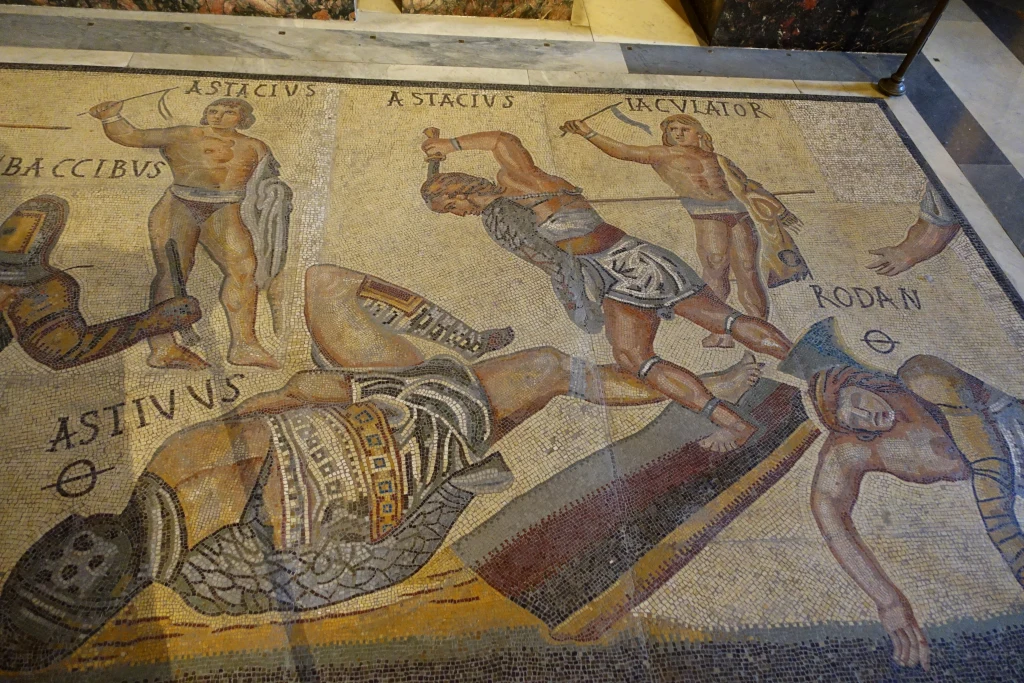
This floor was laid in the late 3rd or early 4th century, while gladiator games were still a gift that wealthy Romans gave their public. In 325 Constantine, the first Christian emperor, issued a law against such bloody spectacles, though in Rome the games carried on for decades. The mosaic once ran along a vaulted corridor in a villa on the Via Casilina, just outside the city, and its makers wrote each fighter's name beside him. Next to some names is the Greek letter theta, a circle crossed by a bar, marking the men who died. Astivus and Rodan both carry it, in the panel where the net-fighter Astacius has just brought Astivus down. Excavators working for the Borghese family found the panels on their Torrenova estate in 1834. When restorers set them into the floor of the Galleria Borghese entrance hall in 1839, they moved some of the figures around, so the arrangement you see today is partly theirs.