Mosaic of the Doves
Details
The story
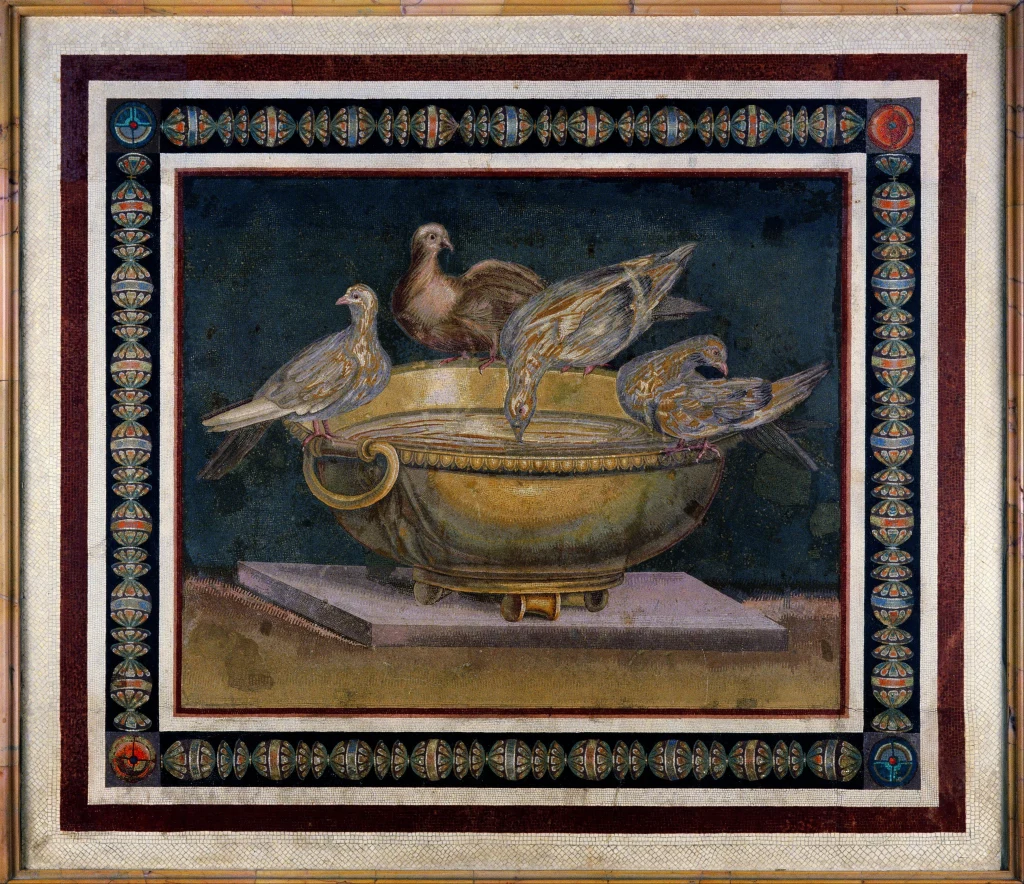
Around 77 AD Pliny the Elder, writing his vast encyclopedia, named the most celebrated mosaicist of all. He was Sosos, who had worked more than two centuries earlier at Pergamon, the Greek royal city in Asia Minor. Pliny singled out one detail of his work, a dove drinking from a bowl and darkening the water with the shadow of its head, while other doves sun and preen themselves on the rim.
Sosos's own floor is lost. This panel repeats his idea, and the museum describes it as a version of a Pergamene work of the 2nd century BC attributed to him. It was the centrepiece of a floor at Hadrian's Villa near Tivoli, the country palace of an emperor known for his love of Greek art, and it is set with exceptionally small tesserae.
In April 1737 Monsignor Giuseppe Alessandro Furietti, a churchman digging at the villa, brought it to light and believed he had found the floor Sosos made himself. The border that framed it was cut into smaller panels, and one of them is now in the Victoria and Albert Museum in London. The doves went on to become a favourite subject of Rome's micromosaic workshops, copied in miniature for foreign travellers.