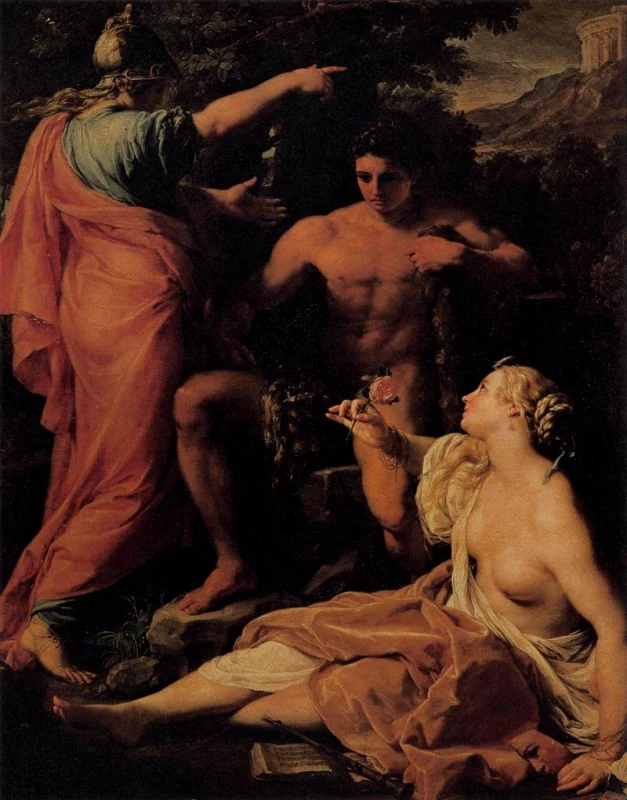
Hercules at the Crossroads
Details
The story
The story is older than the painting by about 2,000 years. The Greek sophist Prodicus told it and Xenophon wrote it down: the young Hercules meets two women on a road, one offering an easy life and one offering a hard one, and has to choose. Eighteenth-century Europe used the fable constantly, in opera, in schoolbooks and on the walls of houses that wanted to look serious.
The Marquis Gerini ordered this version from Pompeo Batoni in 1740, and the museum's record reads the figures off for you. Virtue wears the helmet of Minerva and points to the road ahead. Pleasure sits on the ground and holds out a rose, with a flute beside her, playing cards for idleness and a mask for deception.
Batoni finished it in 1742. The Gerini sold it to the grand dukes in 1818, and it has moved around Florence ever since, reaching the Gallery of Modern Art on the second floor of this palace in 1972.
More works by Pompeo Batoni
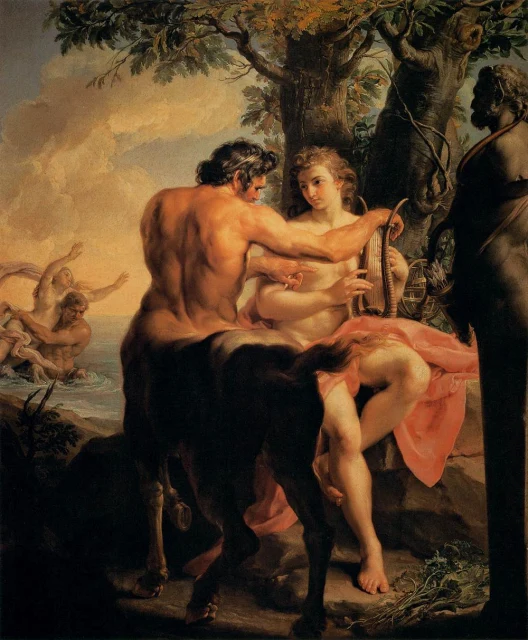 Achilles and the Centaur ChironPompeo Batoni, 1746
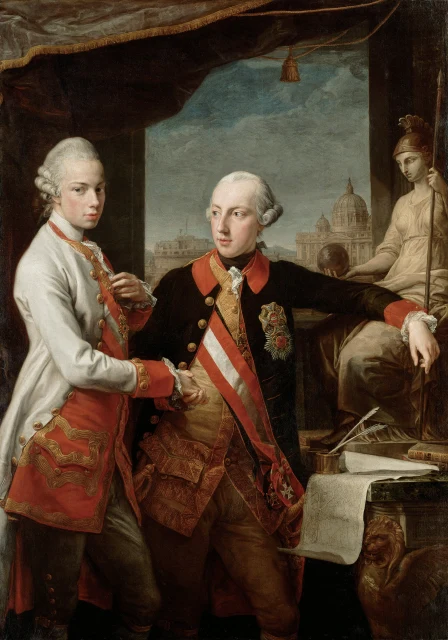 Emperor Joseph II with Grand Duke Pietro Leopoldo of TuscanyPompeo Batoni, 1769
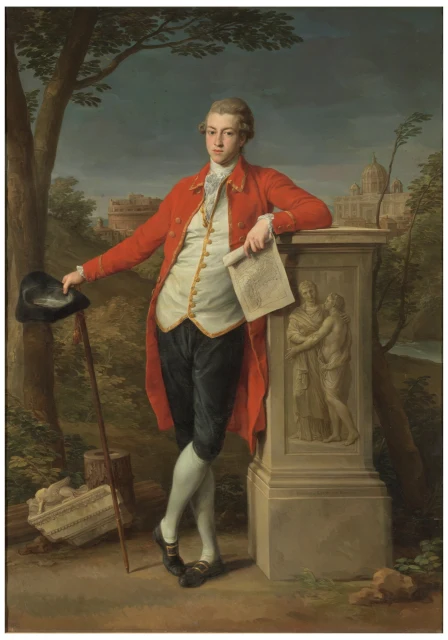 Francis Basset, 1st Baron de DunstanvillePompeo Batoni, 1778
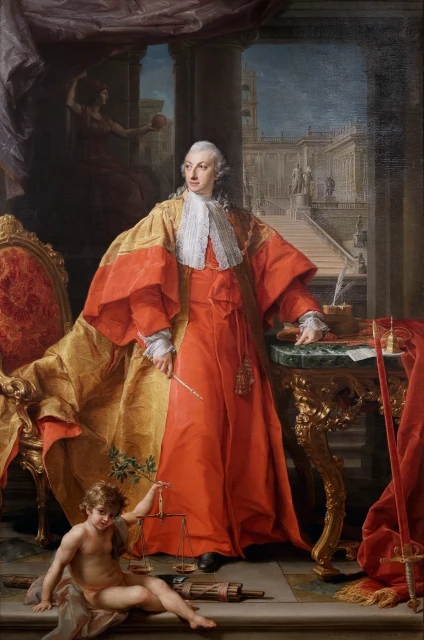 Portrait of Abbondio Rezzonico, Senator of RomePompeo Batoni, 1766
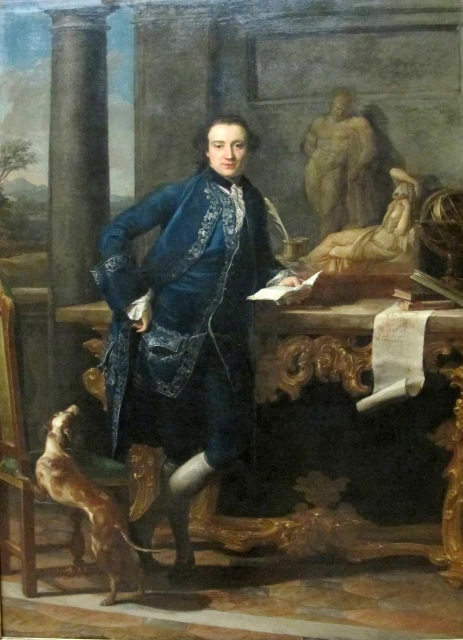 Portrait of Charles John CrowlePompeo Batoni, 1762