Herm of Sappho
Details
The story
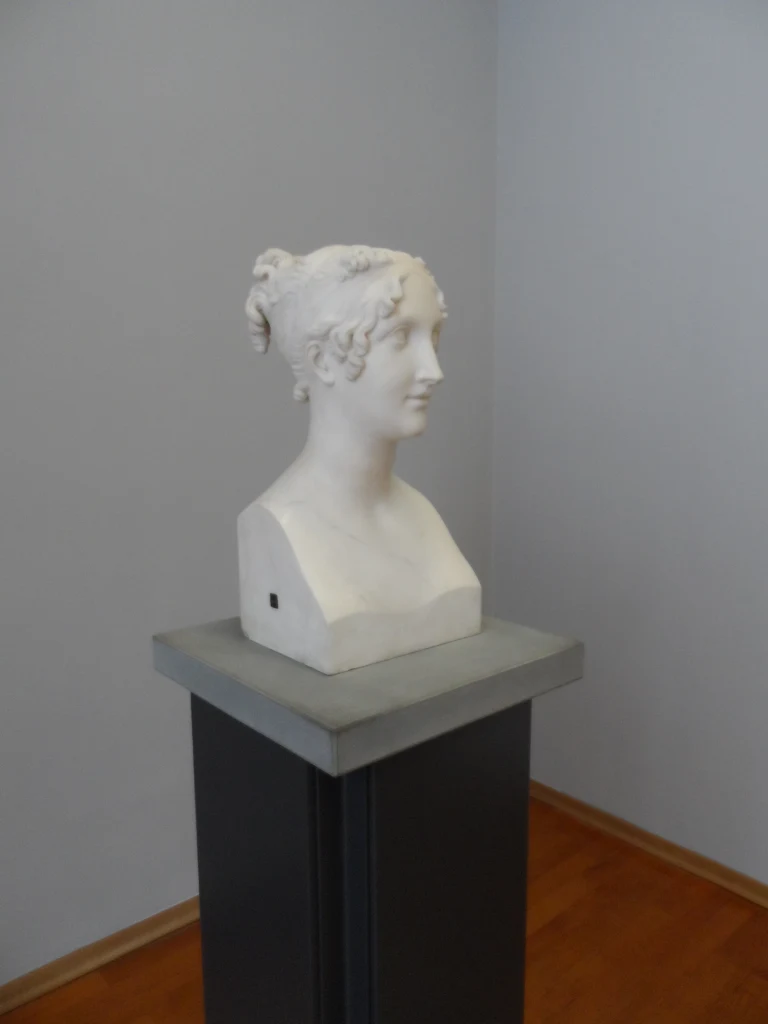
In March 1820 this marble arrived in Turin for the Marquis Tancredi Falletti di Barolo, a Piedmontese nobleman and collector who had ordered it from Canova's studio in Rome. When it was shown in the city that year, critics praised exactly what you can still see in it, a face that belongs to no one in particular. Canova had worked from a living model, yet softened the features into the ideal beauty described by Winckelmann, the German scholar who taught Europe to admire Greek sculpture more than half a century earlier.
That suited the subject. Sappho, the poet of Lesbos who lived around 600 BC, left verses but no likeness, so any face given to her is imagined. In the last decade of his life Canova carved many of these ideal heads and herms, a head rising from a squared pillar in the ancient manner, and this one was delivered about two years before he died. Plaster casts of it survive in the Museo Correr in Venice and in the cast gallery at Possagno, his home town.