Perseus Triumphant
Details
The story
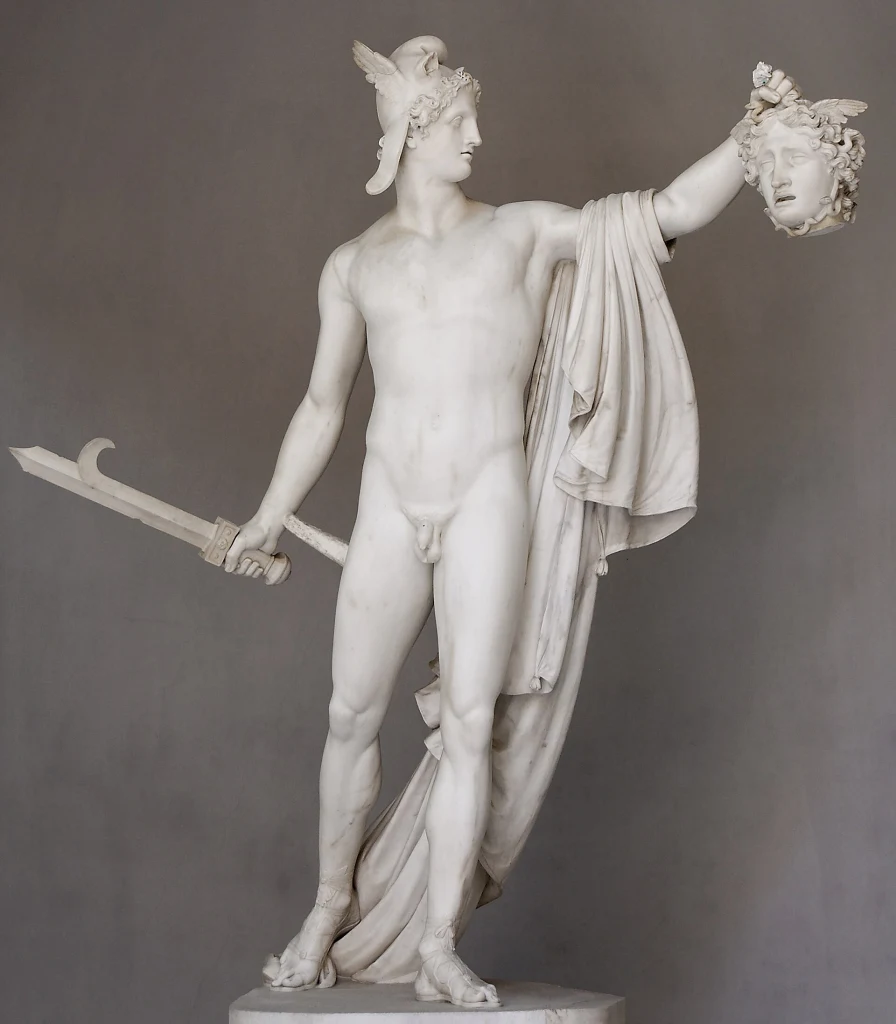
In 1797, under the Treaty of Tolentino, the Papal States had to hand over a hundred works of art to the French Republic, and among the statues that left this courtyard for Paris was the Apollo Belvedere. Its pedestal stood empty. A few years later Pope Pius VII placed on it a newly carved marble by Antonio Canova, a Perseus holding up the severed head of the Gorgon Medusa.
The statue had not been made for the pope. Canova carved it in a few months, between the end of 1800 and the beginning of 1801, for a member of the Tribunate, one of the assemblies of Napoleon's France. It was then ceded to the Cisalpine Republic, the French-backed state in northern Italy, for the new Bonaparte Forum planned in Milan. In the end the pope bought it, and according to the Metropolitan Museum it was the first modern work to enter the Vatican collections.
Canova had taken the stance, the proportions and the expression of his hero from the Apollo itself, so the figure on the pedestal answered the statue that was missing. Perseus wears the winged cap and winged sandals he was given for his task, and holds the sword. Since the Apollo came back from Paris in 1816, both have stood in this courtyard, each in its own corner cabinet.